
Primates in Laboratories
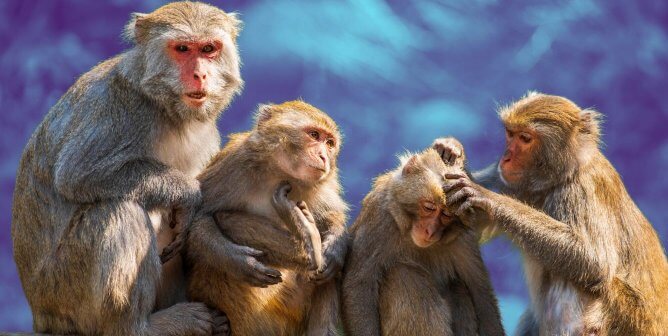
Every year in the U.S., more than 113,000 primates are imprisoned in laboratories, where most of them are abused and killed in invasive, painful, and terrifying experiments. While it is well known that primates are sensitive, intelligent beings, experimenters treat them as if they were disposable pieces of laboratory equipment.
How Primates End Up in Laboratories
Primates abused in experiments are bred in government or commercial facilities, born in laboratories, or captured in the wild in countries such as China, Cambodia, and the island of Mauritius.
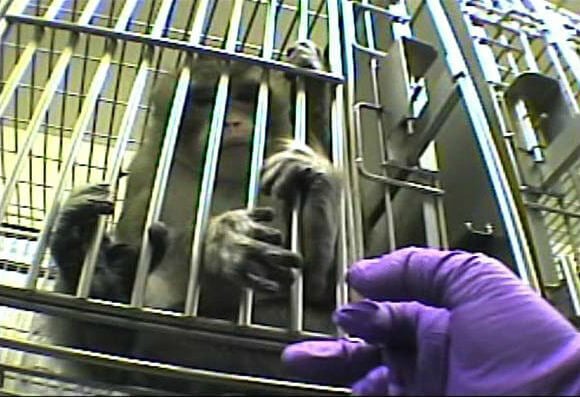
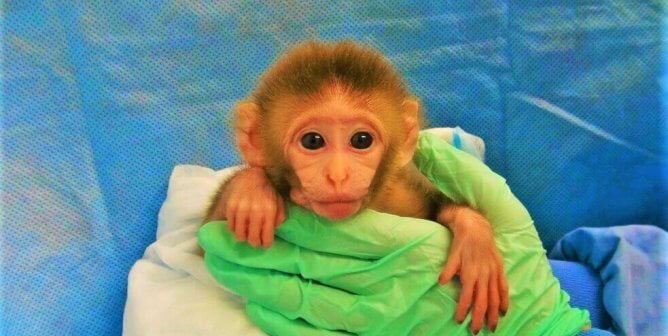
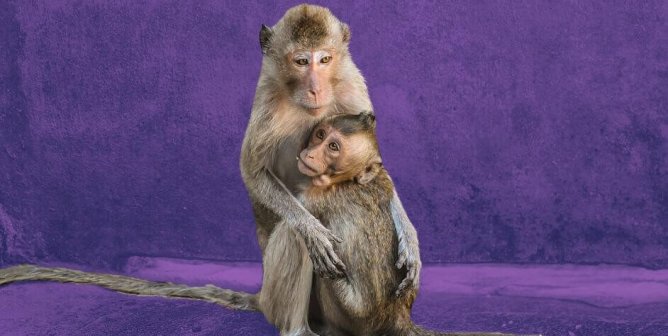
Babies born in laboratories are forcibly torn from their screaming mothers and permanently separated from them—usually within three days of birth. Numerous investigations have found that in order to abduct primates from their homes in the wild, trappers often shoot mothers from trees, stun the animals with dart guns, and then capture the babies, who cling, panic-stricken, to their mothers’ bodies. Some wildlife traders catch whole primate families in baited traps. The animals are packed into tiny crates with little to no food or water and are taken to filthy holding centers, where they await long and terrifying trips in the cargo holds of passenger airlines. Their destination: laboratories like Covance or Charles River Laboratories, laboratory dealers like Primate Products, Inc., or primate breeding centers.
Deprivation
After enduring a traumatic separation from their families and/or homes, primates in laboratories are usually confined to barren steel cages—a far cry from the lush forests and savannahs where they would otherwise live. In their natural habitats, primates may travel for miles, foraging for a variety of foods, socializing with family and friends, climbing hills, swinging from vines, swimming in rivers, scampering across fields, and cavorting with their companions.
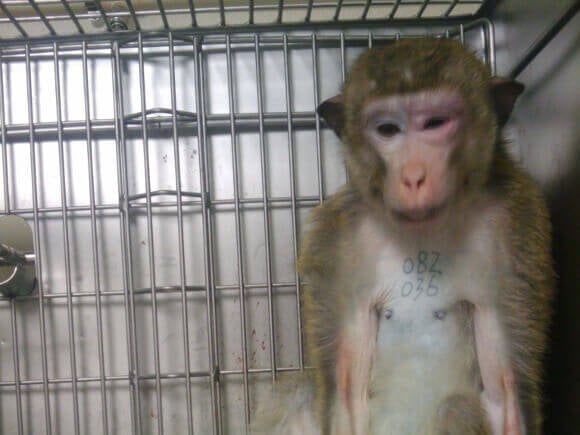
In laboratories, these animals have barely enough room to sit, stand, lie down, or turn around. The rich days full of sensory stimulation that they should be experiencing are replaced by days that are devoid of color, scent, and almost every other type of environmental enrichment. At most, the primates in laboratories are given cheap plastic toys, scratched mirrors, and the occasional slice of apple or banana.
Loneliness, Boredom, and Insanity
Research shows that 90 percent of primates in laboratories exhibit abnormal behaviors that are caused by the physical abuse, psychological stress, social isolation, and barren confinement that they are forced to endure. Many go insane, rocking back and forth, pacing endlessly in the cages, and engaging in repetitive motions such as back-flipping. They even engage in acts of self-mutilation, including tearing out their own hair or biting their own flesh.
Video footage taken inside Covance, the University of Utah, and the Oregon National Primate Research Center illustrates the extent of the insanity that can result when primates are completely deprived of meaningful sensory stimulation.
Pain and Misery
Besides having their most fundamental needs and desires disregarded, primates imprisoned in laboratories are subjected to painful and traumatic procedures, including the following:
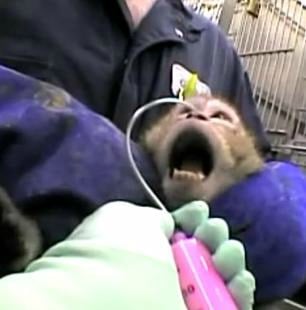
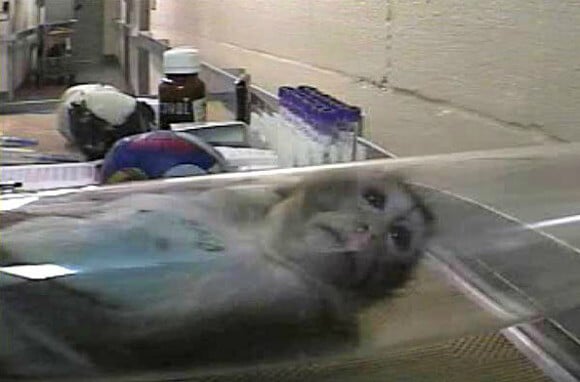
- Pharmaceutical tests: In these tests, thick gavage tubes are forced up primates’ nostrils or down the animals’ throats so that experimental drugs can be pumped into their stomachs—even though the National Institutes of Health reports that animal tests have an appalling 95 percent failure rate in predicting the safety and/or effectiveness of pharmaceuticals. Video footage taken by a whistleblower inside SNBL reveals the anguish and trauma that monkeys used in pharmaceutical tests endure.
- Vaccine tests: Rhesus monkeys are given infectious diseases and then used as test subjects for experimental vaccines. Even though decades of these experiments on primates have failed to produce effective vaccines for humans, monkeys are still infected with HIV-like diseases that cause them to suffer acute weight loss, major organ failure, breathing problems, and neurological disorders before they die excruciatingly painful deaths or are killed.
- Military experiments and training: In recent experiments conducted by the military, primates were exposed to anthrax and infected with botulism and bubonic plague. In archaic chemical casualty training exercises that were ended after protests from PETA, squirrel monkeys were poisoned with nerve agents that caused them to convulse, even though human-patient simulators exist and provide more effective training.
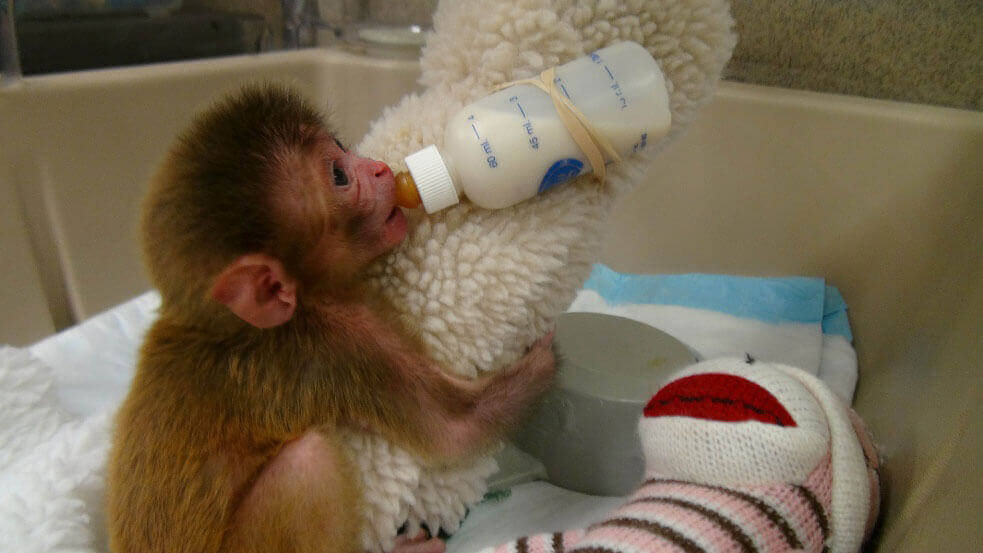
- Maternal-deprivation experiments: These unbelievably cruel studies began more than five decades ago when Harry Harlow infamously pulled baby primates away from their mothers, giving them only rag dolls or noxious wire “mothers” as substitutes. Even though we know the negative implications of separating babies from their mothers, similar experiments are conducted today at places such as the National Institutes of Health, Oregon National Primate Research Center, Wake Forest University, the University of Wisconsin-Madison, and the University of Washington, where infant monkeys are torn from their mothers in order intentionally to cause psychological trauma and examine the harm that results. In some recent egregious studies, experimenters looked at the connection between maternal deprivation and whether the baby monkeys became right-handed or left-handed or how it affected the animals’ alcohol-drinking behavior later in life.
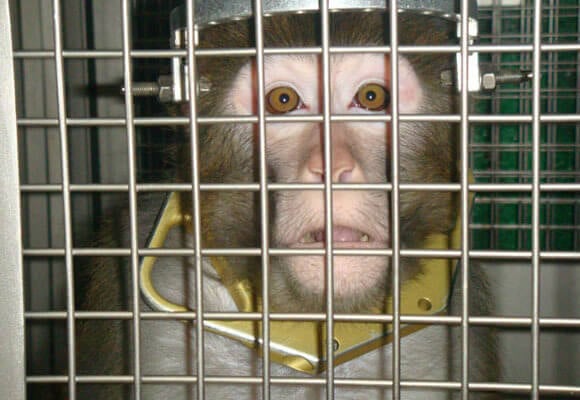
- Invasive brain experiments: In disturbingly common experiments at universities across the country—including the University of Utah, the University of California—San Francisco, and the University of Washington, monkeys have holes drilled into their skulls, metal restraint devices screwed into their heads, and electrodes inserted into their brains. Experimenters at Columbia University caused strokes in baboons by removing their left eyeballs and using the empty eye sockets to clamp critical blood vessels leading to their brains. Some animals have portions of their brains destroyed or removed to impair their cognitive function or cripple them. These sensitive, intelligent animals then have their bodies immobilized in restraint chairs and their heads bolted into place as they are forced to perform a variety of behavioral tasks while their brain activity is recorded. In order to coerce the monkeys to cooperate, they are sometimes deprived of water for up to 24 hours at a time. When the experiments conclude, most of the animals are killed and their brains are removed and dissected.
Urgent Alerts
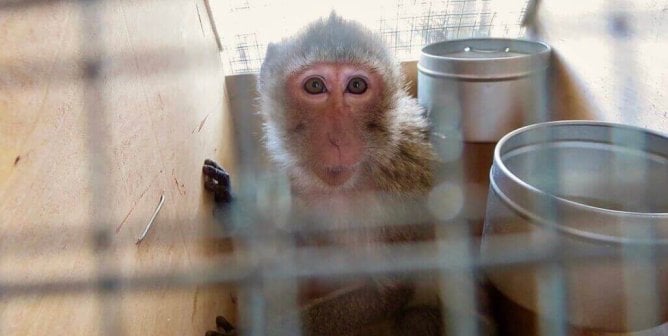
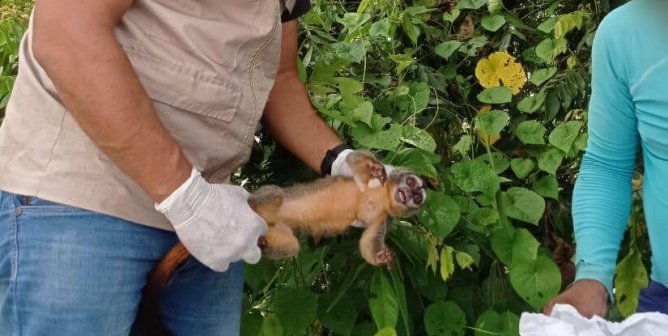
PETA shut down one miserable lab in Colombia and got the authorities to rescue all the animals. Now, we’ve uncovered another. We need your help to stop it from killing any more monkeys.