8 Roadside Zoos Exploiting Elephants for Rides, Painting, and Bathing Encounters
What’s wrong with elephant rides, painting, and bathing encounters? Elephants don’t naturally paint pictures, give rides, or pose for photos with tourists. To force them into these activities, exhibitors have relied on painful “training” methods, including stabbing them with metal weapons called bullhooks, electric shocks, intimidation, and physical punishment.
The stress and trauma of captivity and being forced to interact with humans can lead these animals to exhibit abnormal and harmful types of behavior, such as constant swaying and increased aggression. Most captive elephants die decades short of their species’ natural life expectancy. A true sanctuary would never force animals to perform, let the public get close enough to feed or bathe them, and they certainly don’t use “training” methods that involve weapons. Legitimate sanctuaries give animals space, safety, autonomy, companionship, and the freedom to make their own choices.
These U.S. roadside zoos and elephant attractions force elephants into activities that no reputable sanctuary would offer:
1. The Preserve, Texas
Formerly Have Trunk Will Travel
Notorious elephant exploiter Have Trunk Will Travel, known for this undercover video of trainers hitting, jabbing, chaining, and shocking elephants under the guise of “training,” moved from California to Texas following the enactment of California’s bullhook ban and rebranded itself as “The Preserve.”
Don’t be fooled: “The Preserve” is no refuge.
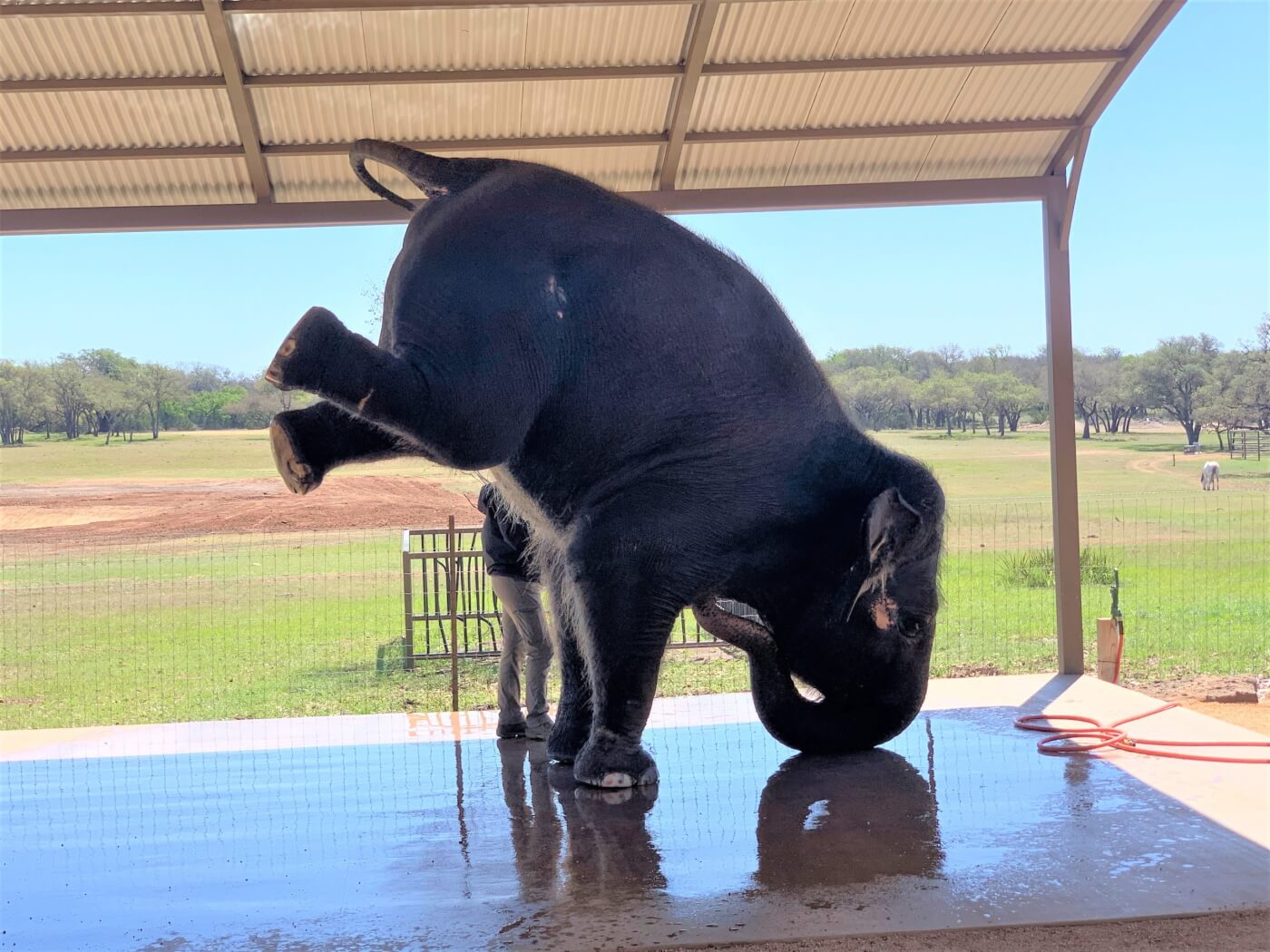
The elephants here have been rented out for film and TV are now used for stunts such as bathing, painting, standing on their heads, and playing instruments, all while trainers prod them with bullhooks.
In 2021, elephants Tai and Dixie died within months of each other at The Preserve. The two had spent their lives being forced to give rides and perform on demand. Traffickers took Tai and Dixie from their homes and families in Asia as infants and sold them to humans who chained, beat, and exploited them for “entertainment” as adults.
Following their deaths, The Preserve acquired an elephant named Becky from Carson and Barnes Circus, where she was abused for decades. The Preserve renamed her Sophie and now inexplicably keeps her hidden away for much of the time.
Instead of giving elephants peace, The Preserve uses them as moneymakers, forcing them to do headstands, paint, and perform other unnatural acts.
2. Two Tails Ranch, Florida
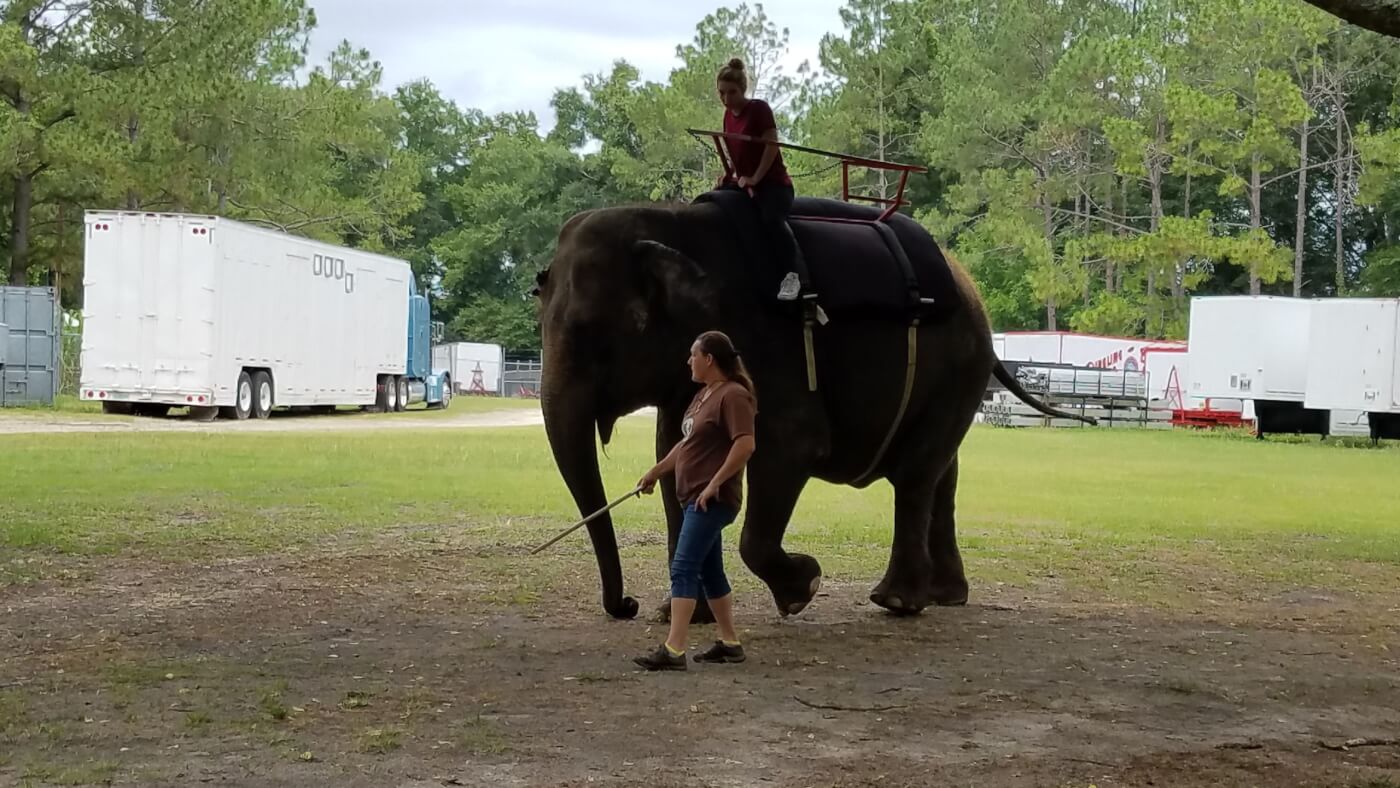
At Two Tails Ranch, operated by Patricia Zerbini, workers force elephants into giving rides, photo opportunities, and “extreme encounters” at $200 a pop.
A visitor to the ranch was nearly killed in 2013 by Rajah, a male elephant who had apparently been so aggressive toward humans and other elephants that he was kept in chains for weeks after his arrival from Ringling Bros.
This visitor approached Rajah’s unattended enclosure through an open gate, and Rajah pulled her against the bars with his trunk. Some of the woman’s skin ripped off her body, and she suffered a collapsed lung, spleen damage, and broken ribs.
The Zerbinis have a long history of dangerous elephant attacks involving serious injury and at least one human death, yet they continue to operate. An elephant named Roxy was forced to give rides at Two Tails Ranch, even though she once stepped on a circus worker outside a Tarzan Zerbini Circus performance and broke his pelvis. Roxy later died at the facility.
Multiple elephants exhibited by Two Tails and Tarzan Zerbini have been quarantined because of tuberculosis infection or exposure. The USDA has cited both exhibitors for failing to meet the federal Animal Welfare Act’s minimum standards of care.
3. Endangered Ark Foundation, Oklahoma
This compound for Carson & Barnes Circus misleadingly claims to be a “retirement ranch” for elephants, yet it still sends elephants on the road to perform in circuses and uses them for painting, bathing, feeding, and photo ops.
Carson & Barnes is infamous for hurting the animals in its care, having racked up nearly 150 animal welfare violations as well as fines, lawsuits, and animal-abuse incidents stretching back to 1975.
In this horrific undercover video, handlers can be seen shocking elephants with electric prods and hitting them with bullhooks until they scream, all in the name of “training.”
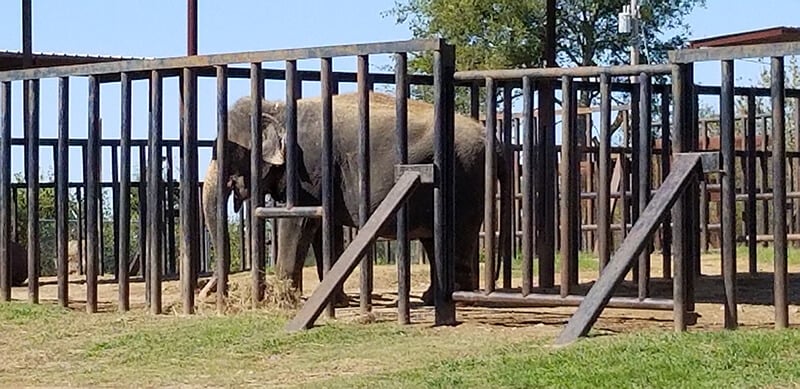
In 2016, Carson & Barnes paid a $16,000 civil penalty to the USDA for improper handling of elephants on two occasions. One incident involved three elephants escaping, injuring themselves, and damaging property.
Carson & Barnes also has an abysmal record of failing to provide elephants with adequate veterinary care, valid tuberculosis testing, treatment for skin and foot problems, or shade in 89-degree weather.
In 2021, a woman alleged that she was seriously injured during an encounter with an elephant at the Endangered Ark Foundation.
4. Wilstem Wildlife Park, Indiana
At this roadside zoo, visitors can pay for bathing, feeding, toenail painting, “walk encounters,” and photo interactions with elephants Cindy, Vickie, Betty, and Janice.
These elderly elephants are owned by the family behind the Carden Circus, which carted them around the country for decades.
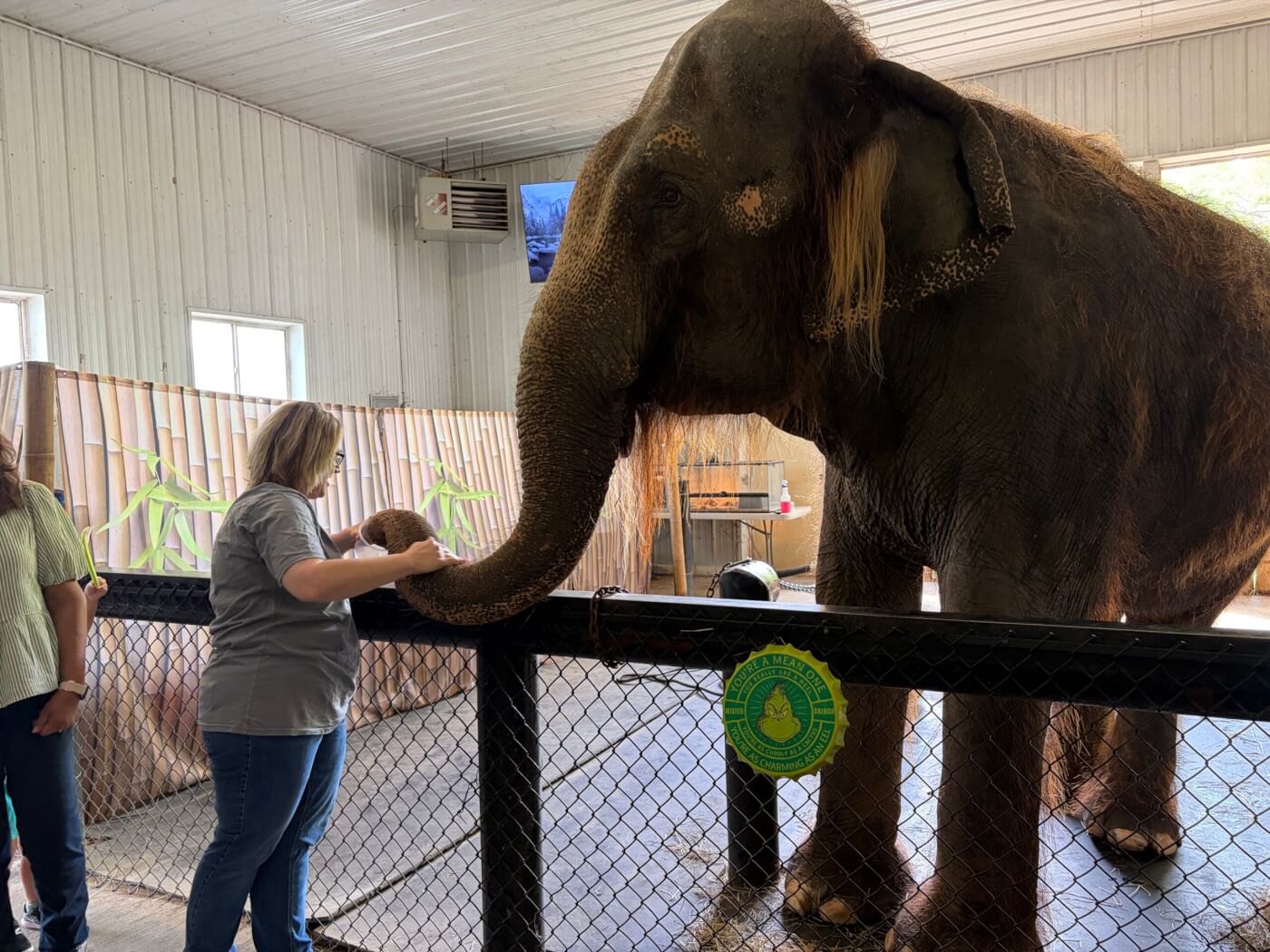
It’s standard industry practice for circus trainers to beat elephants with bullhooks to force them to obey out of fear of punishment. Joey Frisco, Carden’s elephant trainer who exhibits the elephants at Wilstem, was caught on video violently hooking and yanking elephants when he worked for Ringling Bros. circus.
The Carden family has employed other abusive workers, too. In 2000, two workers were hit with five cruelty-to-animals charges in Canada for inflicting “unnecessary pain and suffering” on three elephants.
In another incident, a handler reportedly jabbed a bullhook into an elephant’s mouth to punish her, causing her to urinate in distress.
5. Myakka Elephant Ranch, Florida
Don’t be duped by Myakka Elephant Ranch’s bogus claims that the elephants there are “retired” from the entertainment industry.
The Barreda family, which runs the ranch, used elephants in circuses for many years before pivoting to using them for hands-on encounters. In 2019, they bought Asian elephants Carol and Patty from the Carden International Circus. Carol died in 2024, and Myakka Elephant Ranch has since acquired five more elephants from other facilities, including the Endangered Ark Foundation.
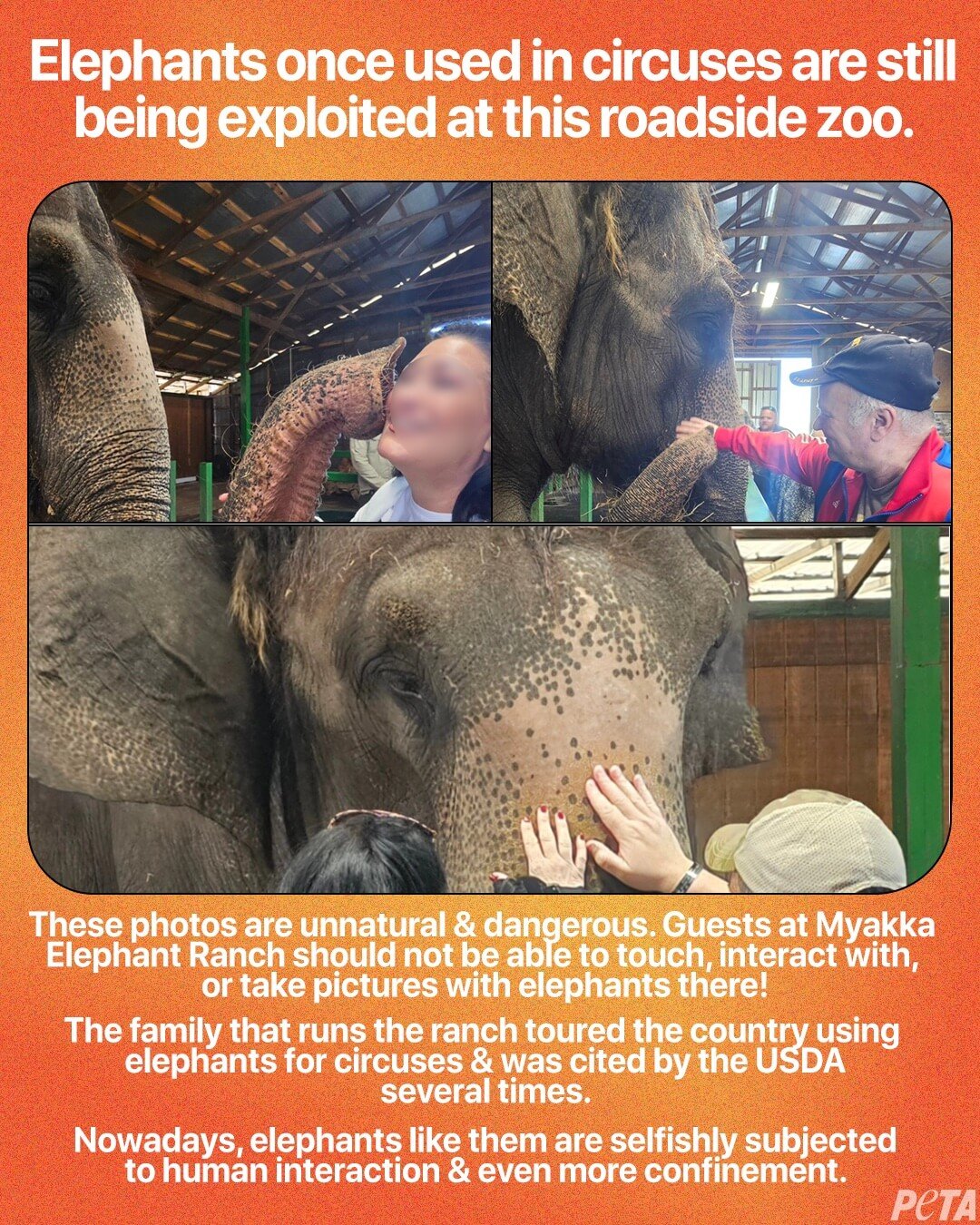
Myakka forces the elephants to interact with guests in bathing, feeding, and photo ops.
A whistleblower from the Barreda family’s circus days reported that they routinely kept elephants on short chains for 24 hours a day.
The exhibitor received an official warning from the USDA in 2011 after failing to maintain an adequate veterinary care program. In 2013, the USDA cited Myakka again for failing to provide an African elephant named Lou with adequate veterinary care after she was observed with a large lump on her face that was secreting bloody discharge.
6. Myrtle Beach Safari, South Carolina
Myrtle Beach Safari (aka “T.I.G.E.R.S”) uses Bubbles the elephant for feeding and photo encounters in pricey “safaris” and publicity stunts. She hasn’t seen another elephant for over 30 years.
Bhagavan “Doc” Antle, one of the abusers highlighted in the Netflix docuseries Tiger King, operated Myrtle Beach Safari before his arrest and conviction on wildlife trafficking and other federal charges. Operation of the facility was transferred to his partners and son, who ran the site while he was in prison.
Antle was a key player in the exploitative big-cat cub-petting network that included the now-incarcerated Joseph Maldonado-Passage (aka “Joe Exotic”). Maldonado-Passage claimed that Antle maintained an on-site crematorium for incinerating tiger cubs who had grown too big to use for photo ops.
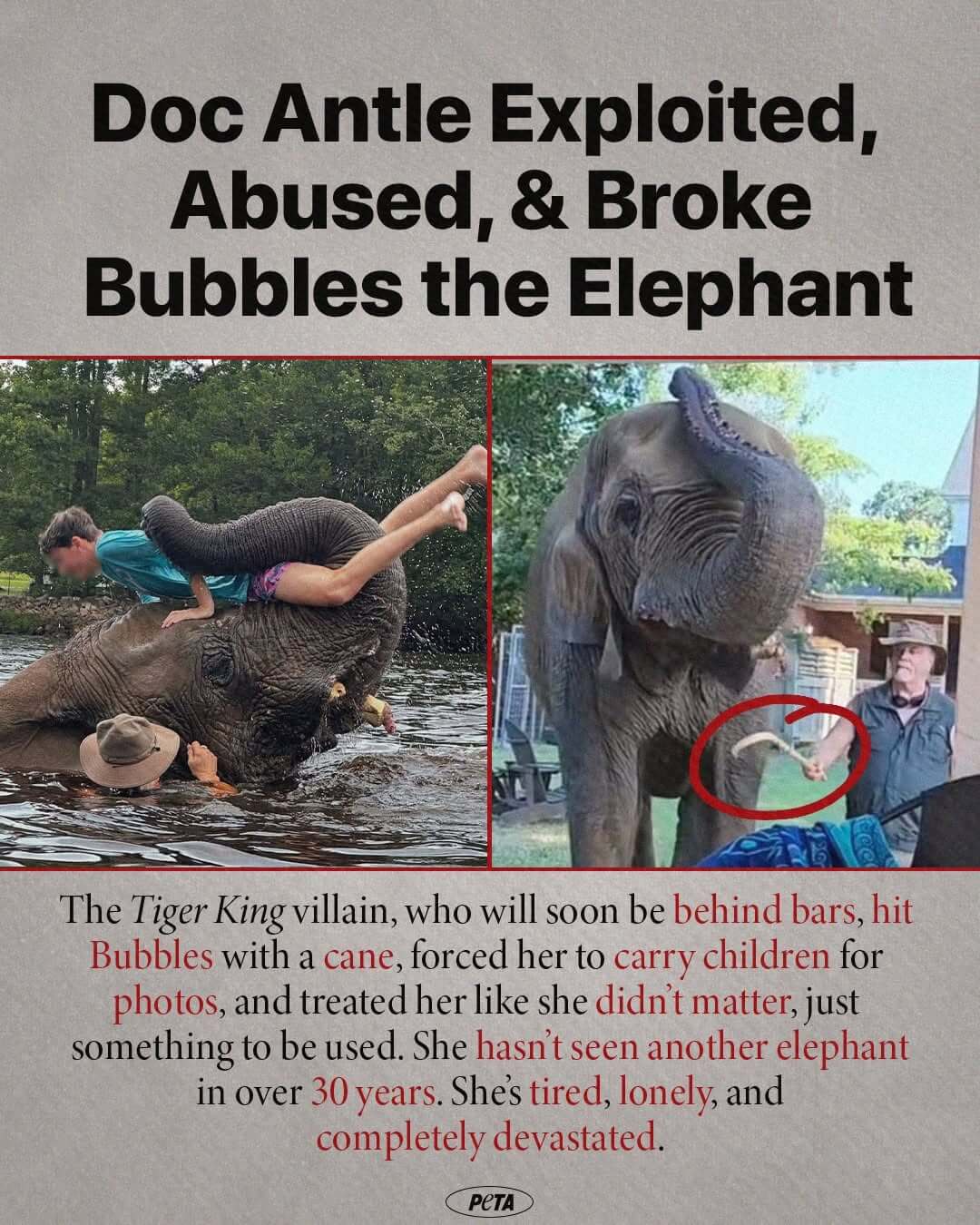
The USDA has repeatedly cited Antle for an extensive list of animal welfare violations, including failing to provide animals with adequate veterinary care, water, uncontaminated food, and clean, safe enclosures.
7. Trunks and Humps/East Texas Elephant Experience, Texas
Trunks and Humps was once the elephant supplier for the many of the biggest Renaissance fairs in the country—until PETA supporters reduced that number to just two Renaissance fairs that still use elephants.
Trunks and Humps carts elephants Krissy, Jean, and Paige to these fairs and forces them to give rides under the threat of punishment from a bullhook.
There’s no rest at their home site, either. Trunks and Humps calls it the “East Texas Elephant Experience,” but elephants there are still made to perform demeaning tricks and make footprint paintings.
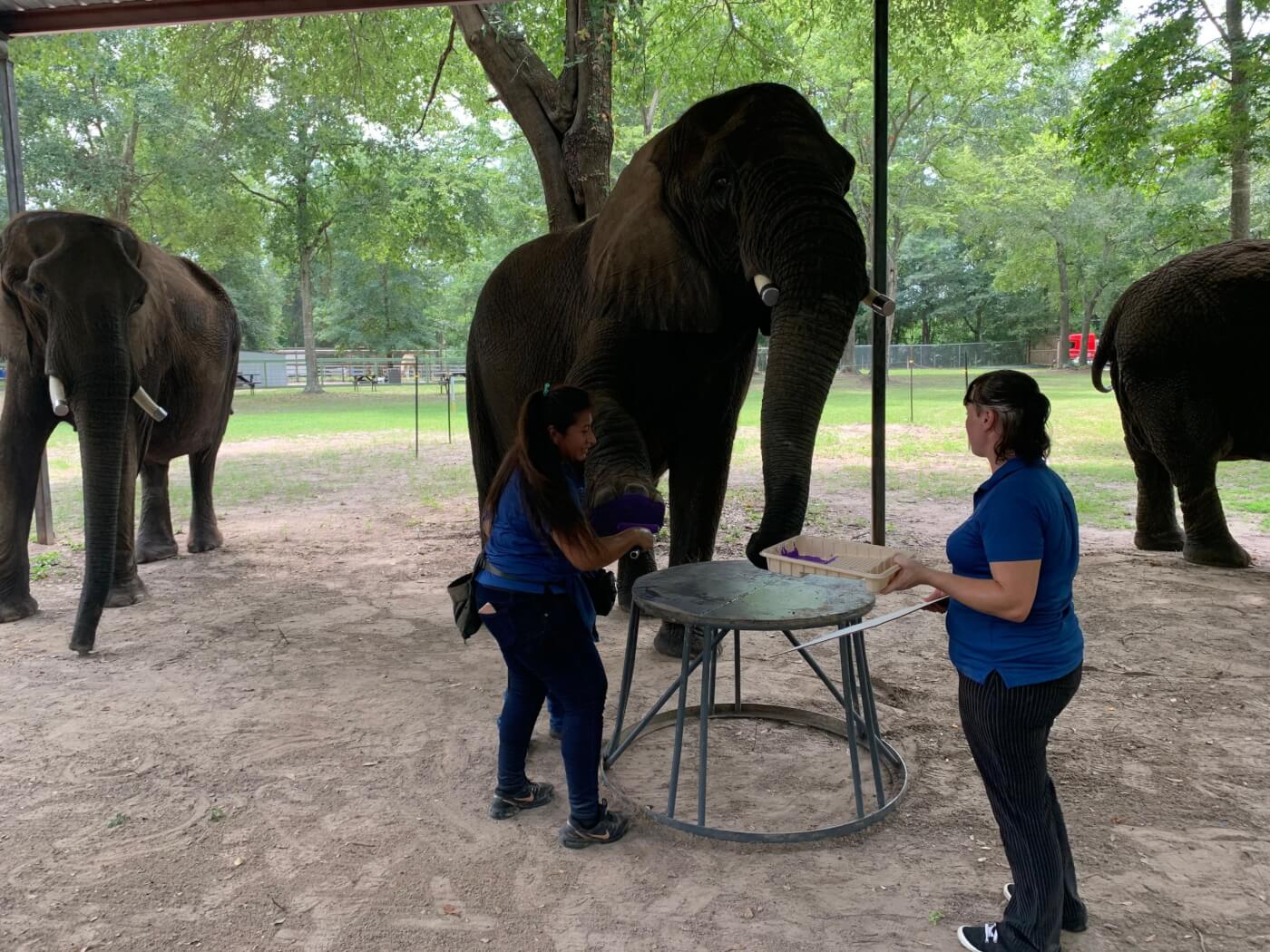
Mike Swain—who runs Trunks and Humps with his father, Bill—used to work in the circus industry. He was caught on video kicking and beating Krissy in the face and dragging her to the ground with a bullhook at a circus.
In 2026, the USDA issued an official warning following a critical citation after a woman was kicked in the head by a camel and knocked unconscious during a Christmas event at a church.
8. Elephant Walk/Elephant Oasis, Florida
Frank Murray and his daughter Lauryn have been exploiting elephant Essex, formerly known as Annette, for years. They forced her to perform in circuses and give rides at the Bay Area Renaissance Festival.
Now, the Murrays have rebranded as “Elephant Oasis” and use Essex for pricey private interactions and photo shoots at their home in Florida.
Essex has lived alone since her only companion died in 2014. Being solitary is completely at odds with an elephant’s social nature. Elephants form deep bonds, rely on family relationships, and need the companionship of other elephants.
PETA has even documented that the Murrays have made Essex give rides while injured.
The Murrays actively oppose legislation that would protect captive elephants from being hit with bullhooks or exploited for rides.
Frank Murray was charged with four counts of cruelty to animals in New Jersey in 1996 and evaded justice for 16 years. He was finally arrested in 2012 when he returned to the state with the Piccadilly Circus (now called Garden Bros. Circus).
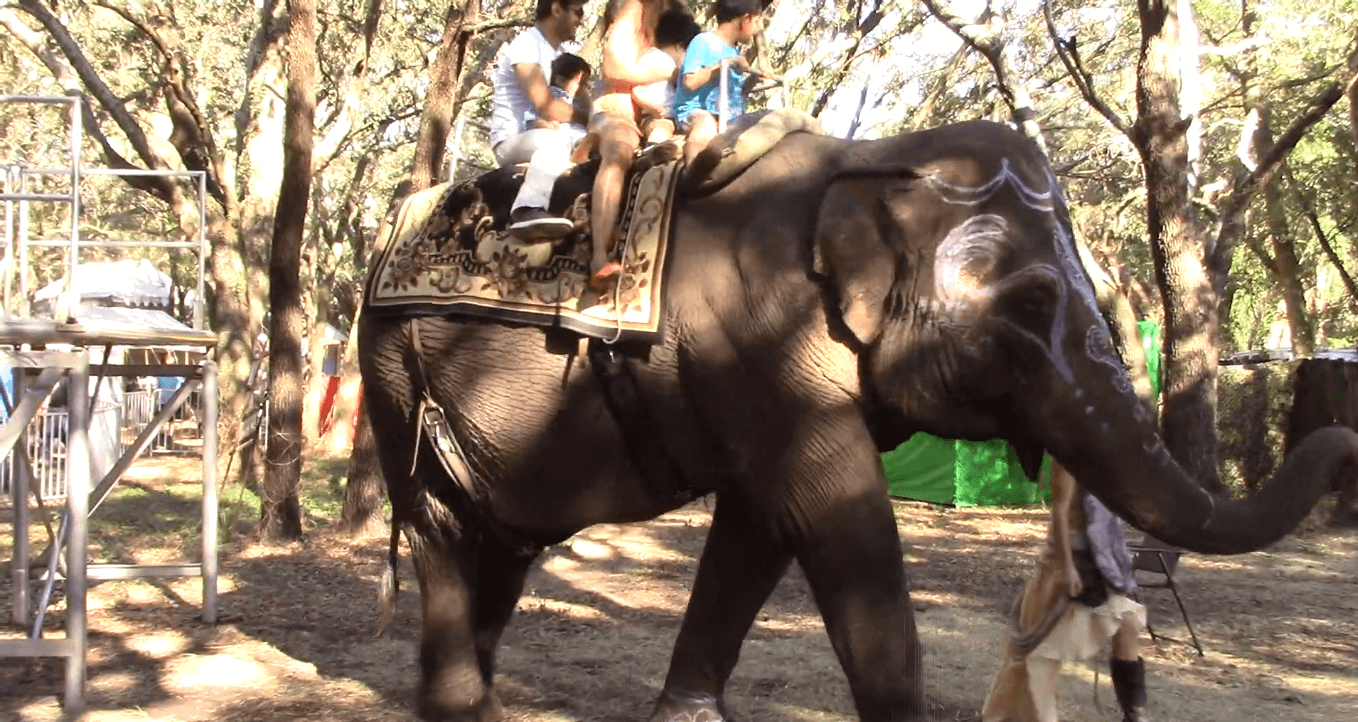
Elephants Don’t Want to Be Close to Humans
Elephants are highly social animals who form strong, lasting bonds with their family members. They work together to solve problems and rely on the wisdom, judgment, and experience of their eldest relatives.
When able, elephants spend their days socializing, swimming, exploring, and playing—not giving rides, bathing with humans, standing on their heads, or posing for paid photos.
No roadside zoo, circus-style attraction, or elephant encounter can give elephants the freedom, social connections, and autonomy they need and deserve.
FAQ: Elephant Rides, Painting, and Bathing
Are elephant rides bad for elephants?
Yes. Elephant rides require an elephant to be “broken down” by control, coercion, threats, and repeated handling. Exhibitors use bullhooks and other painful tools to force elephants to obey. Most elephants in the U.S. were taken from their families as babies and are now elderly, with many suffering from arthritis and other age-related ailments. Carrying riders on their backs and walking the same routes in circles, sometimes for hours at a time, can add to their discomfort and physical strain.
Do elephants naturally paint?
No. Elephants don’t naturally paint pictures. Tourist attractions and exhibitors force elephants to hold brushes and repeat movements through abusive “training.”
Is elephant bathing ethical?
Elephant bathing encounters force elephants into direct-contact interactions with visitors. These dangerous encounters prioritize paying customers—not elephants’ autonomy, safety, or well-being.
How can I tell whether a facility is a real sanctuary?
A true sanctuary doesn’t offer rides, bathing, painting, performances, direct-contact encounters, or photo ops. Reputable sanctuaries prioritize animals’ needs—not what customers will pay for.
Take Action to Help Elephants
Please, never visit roadside zoos, traveling shows, Renaissance fairs, or any other venue where animals are exploited.
You can help elephants right now by refusing to buy tickets to elephant rides, bathing encounters, or photo ops—and by urging others to do the same. Take action here:
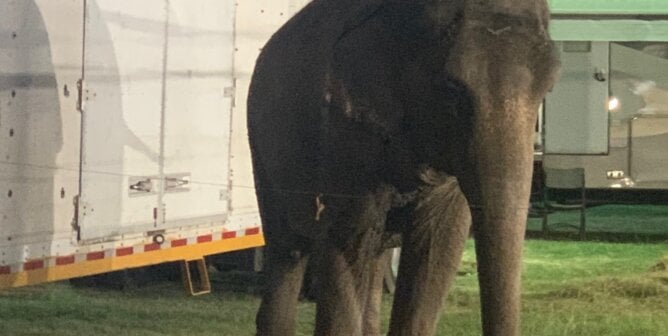
Okha’s handler retired two other elephants, but she was left behind—lonely, chained, and abused for “entertainment.” YOU can help her reach safety.
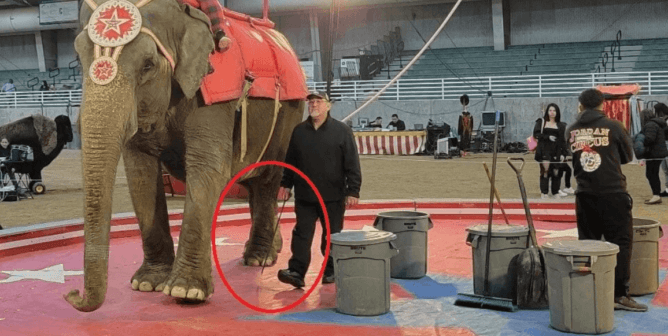
Elephants like Viola don’t perform in circuses because they want to—they perform because they’re afraid of what will happen if they don’t.
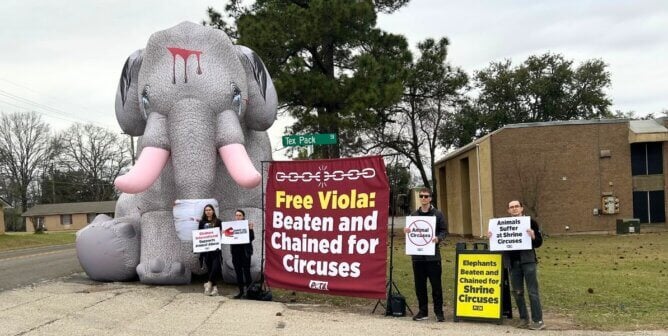
Do you want to help Viola in person? Please join local PETA supporters at local demonstrations near you to help free Viola the elephant.