Caries Tests on Animals for Fluoride Toothpastes
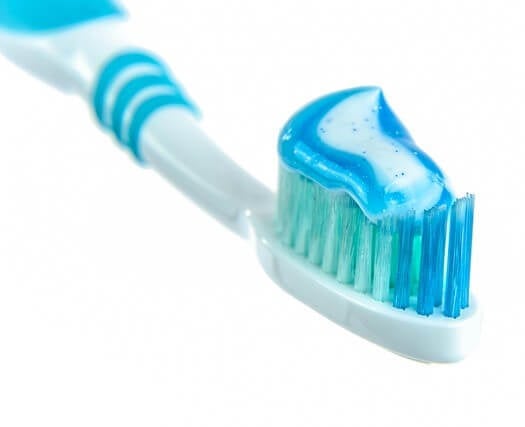
You may be shocked to learn that any new fluoridated toothpaste must be tested on animals before being brought to the US market. The US Food and Drug Administration (FDA) mandates that manufacturers conduct a test on animals that dates back 100 years, called the caries test. The test is intended to show that fluoridated toothpaste effectively prevents cavities, also known as caries.
Animal Caries Test Explained
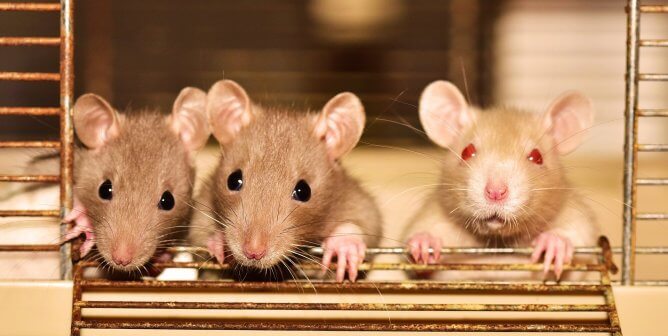
In caries tests, animals are infected with bacteria that cause tooth decay and cavities (caries). Two hundred rats per test may be repeatedly exposed to fluoride treatments, after which they are decapitated or suffocated with gas, their tongues cut out, and their heads stained in silver nitrate and subjected to pressurized steam.
Why Testing Fluoride on Animals is Bad Science
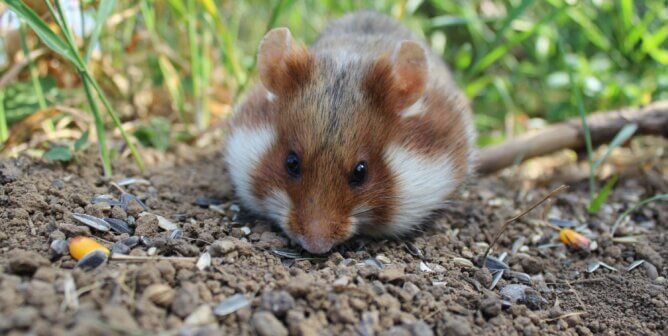
Rats’ mouths differ greatly from ours, making them a poor model for studying human oral health. Rats’ saliva has a higher pH and less ability to fight bacteria, which affects how they respond to cavities and decay. Their teeth also differ, as rats have proportionally larger fissures, where cavities often form, meaning their dental structure may not be comparable to human teeth.
Further, the caries test, in which rats are superinfected with bacteria and swallow the fluoride toothpaste, does not mimic how humans brush their teeth or how cavities form in humans.
Human-relevant, Non-animal Methods for Testing Fluoride’s Effectiveness
Sophisticated, animal-free models for testing fluoride’s effectiveness have been available for more than two decades.
The pH cycling model uses human enamel in laboratory tests to determine the efficacy of fluoride. In this test, the enamel is cycled through demineralization and remineralization solutions and then analyzed for hardness and lesions.
Intra-oral appliance models employ small pieces of tooth enamel mounted in dentures worn by humans. The enamel chips are examined after being worn for days or weeks. This model is preferable to the animal caries test because enamel specimens are exposed to the natural biological effects of human saliva and plaque formation in a real human mouth.
PETA Scientists Urge FDA to Adopt 21st Century Test Methods for Fluoride
As early as 2001, the FDA was aware of the need to replace the rat caries test, and it formally requested information and public comments on animal-free methods to do so. In the 20-plus years since the FDA’s initial request for information on non-animal methods, additional studies have continued to demonstrate the human relevance of the available animal-free methods.
Still, the FDA’s rules have not been updated. This means that companies must ask the FDA to use non-animal methods on a case-by-case basis—a cumbersome process that poses an unnecessary hurdle to pursuing animal-free methods.
For years, PETA scientists and toothpaste manufacturers have urged the FDA to pass a rule amending its requirement to assess the efficacy of fluoridated toothpaste using animals. PETA scientists have submitted letters, shared information, and met with both the FDA and toothpaste manufacturers to advocate for adopting non-animal methods.
Embracing these non-animal methods will bring the FDA up to speed with the test methods used by global toothpaste industries for the past 20 years. The FDA must update its rules to show its preference for companies to use non-animal test methods that can better evaluate fluoride’s effectiveness than tests on animals.
Please send a short, polite comment to the TFDA thanking them for proposing the new draft regulations and urging them to finalize them so no more animals die for blood sugar or blood lipid tests.
Sign the petition urging the FDA to immediately update its requirements to allow manufacturers to readily use an animal-free test method.
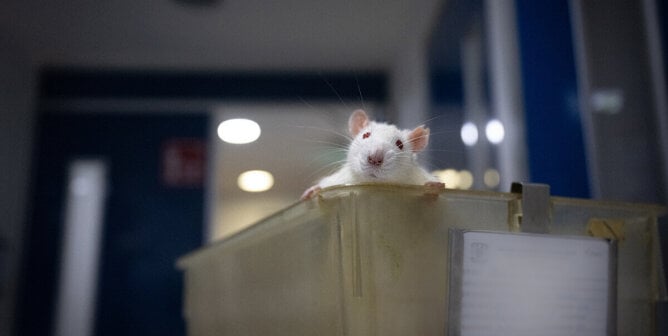
Update (August 12, 2026): VICTORY! After hearing from PETA and over 21,000 supporters, Taiwan adopted some of the world’s strongest enforcement measures for laboratories that experiment on animals, allowing authorities to halt approvals for new experiments at facilities that fail animal welfare inspections until violations are corrected. Under the new rules, laboratories that fail those … Read more »
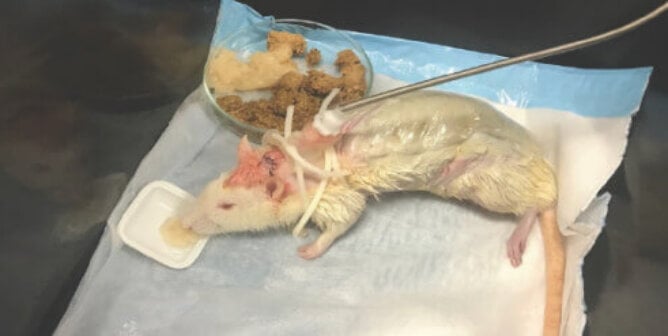
Urge Secretary of War Pete Hegseth to cut waste, fraud, and abuse by banning the Pentagon from funding foreign experiments on animals.
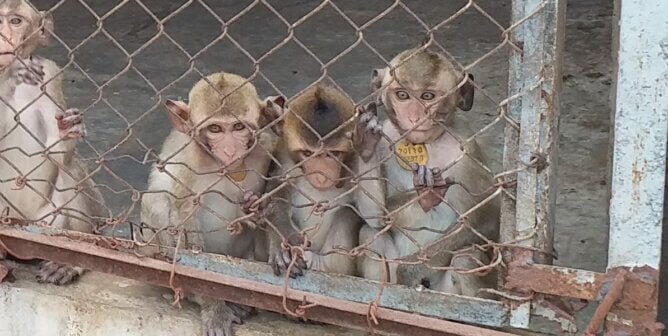
The bill will finally stop the intense suffering monkeys have endured for generations at the hands of U.S. experimenters and importers. Take action to help!
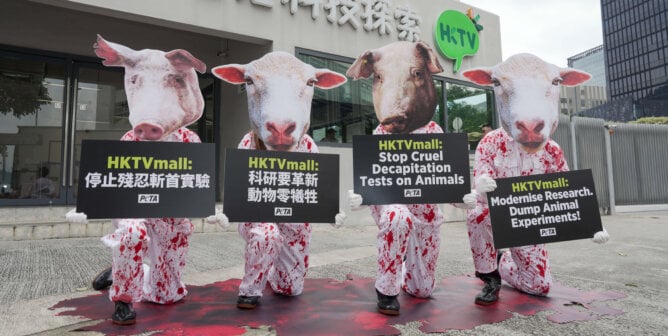
The parent company of one of Hong Kong’s most popular online shopping platforms is severing animals’ heads and limbs in dozens of deadly experiments.