
Urge Universities to Cut Ties With Deadly Navy Animal Tests
Update (July 27, 2026): PETA has confirmed that U.S. Navy funding for useless decompression and oxygen toxicity testing on animals at the University of South Florida, Duke University, the University of California San Diego, and the University of Maryland, Baltimore has ended. We’ll continue to keep an eye out for any new Navy funding for these cruel tests. Please help us end them by urging the U.S. Department of War to ban all decompression sickness and oxygen toxicity experiments on animals.
Original post:
Two universities are partnering with the U.S. Navy to torment animals in gruesome and deadly decompression sickness/illness and oxygen toxicity experiments that are outdated, wasteful, and out of step with international standards.
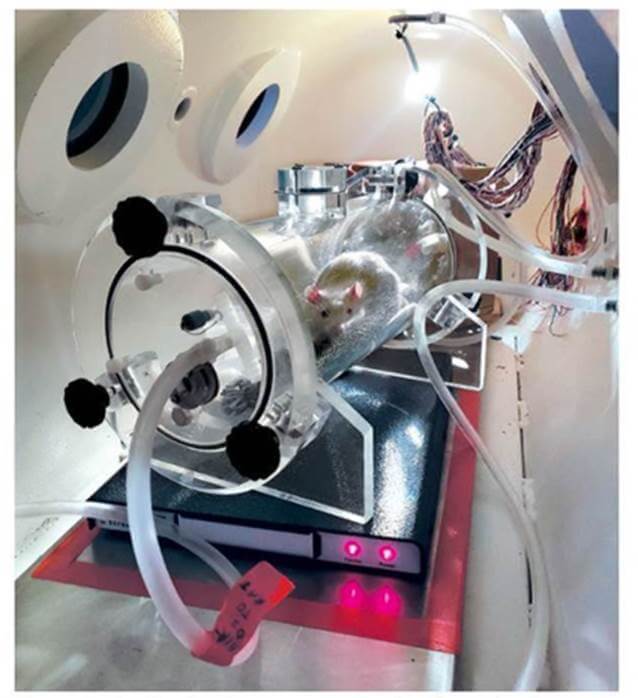
PETA previously contacted the Navy and ended such experiments on sheep at the University of Wisconsin-Madison two years early, saving animals from painful cardiovascular collapse, spinal cord injuries, and paralysis.
With your help, we can do it again. PETA is now urging leaders at the following universities to end the cruelty happening on their campuses:
Duke University
The Navy pays experimenter Heath Gasier nearly $845,000 to induce seizures in young mice, subject them to high-pressure oxygen in hyperbaric chambers, force them to run on a treadmill using electric shocks, and gas them to death. The test is scheduled through January 2026.
University of South Florida
The Navy gave experimenter Jay Dean more than $1 million to induce seizures in rats without pain relief, implant recording devices in their abdomens, thread wires through their bodies, and implant electrodes on their skulls before killing them all. The tests are scheduled through June 2026.
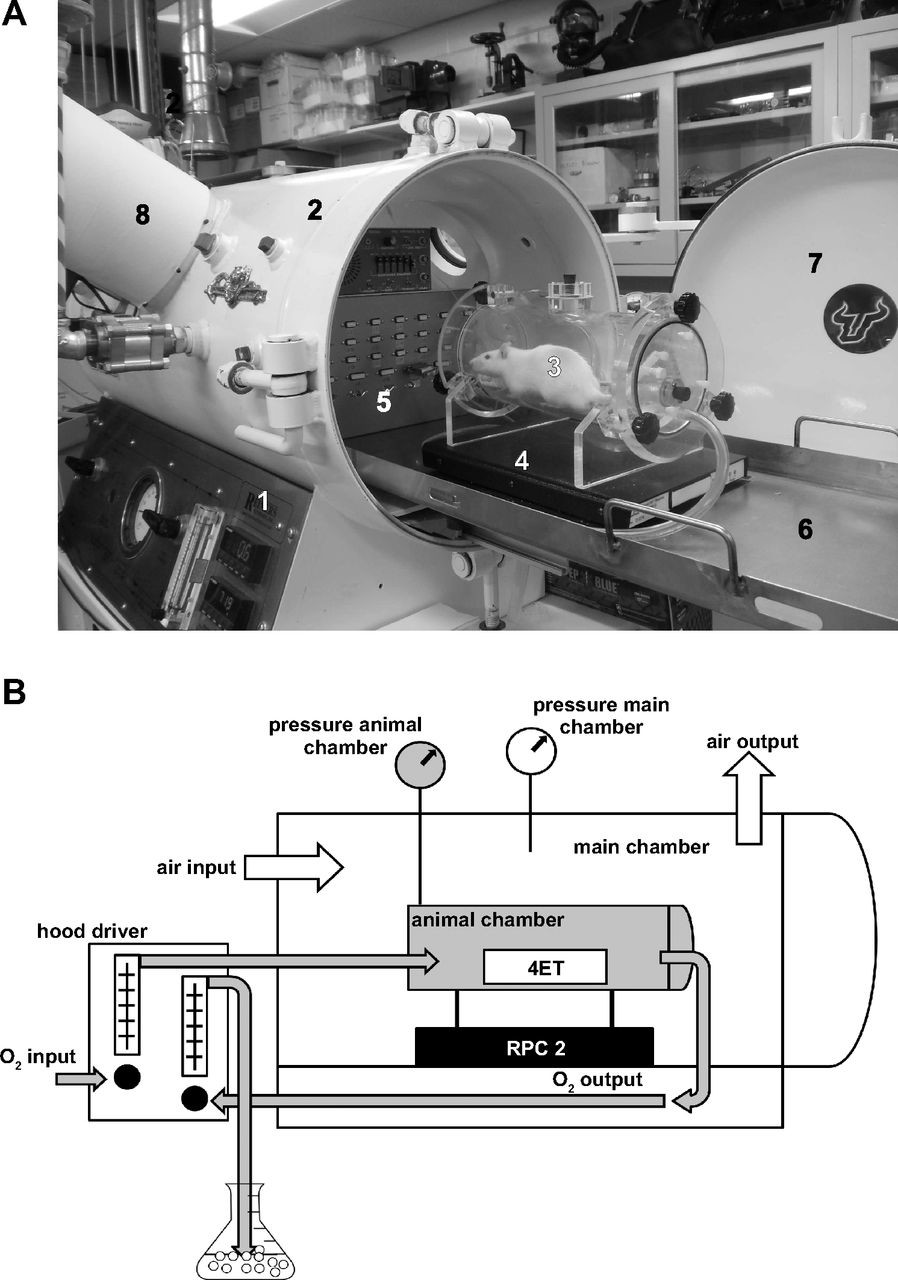
Navies in France and the U.K. have already banned these types of experiments on animals, making these universities complicit in keeping our country an outlier. Even the U.S. Naval Medical Research Center admits that such tests are unhelpful for humans, noting that “animal DCS in many cases is more severe than that in humans and, therefore, appears ‘different’ from the average human case.”
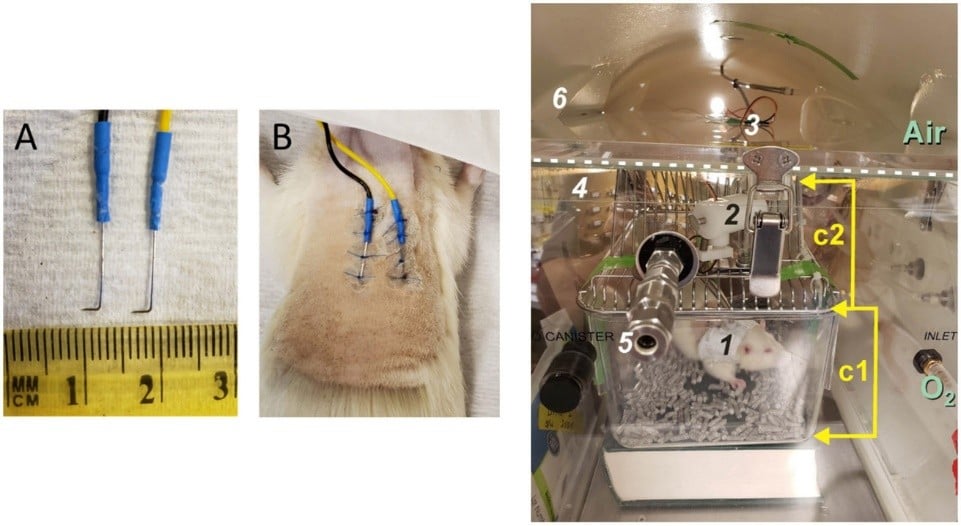
In this distressing test, University of South Florida experimenter Jay Dean inserted electrodes into sensitive rats and subjected them to the harrowing conditions of a hyperbaric chamber, even though rats are not biologically accurate stand-ins for humans.