Chicken Transport and Slaughter
Chickens feel pain, grief, love, joy, anxiety, and a range of other emotions, just like humans. When chickens can engage in their natural behavior, they are social and enjoy spending their days together, scratching for food, taking dust baths, roosting in trees, and basking in the sun. Chickens are arguably the most abused animals on the planet—and the ones who are raised for their flesh don’t get to enjoy anything that’s natural or important to them. After enduring the stress, disease, and filth of today’s farms, many birds don’t survive the trip to the slaughterhouse. Here’s why thousands of birds die on the journey to slaughter.
What Happens to Chickens Raised for Food?
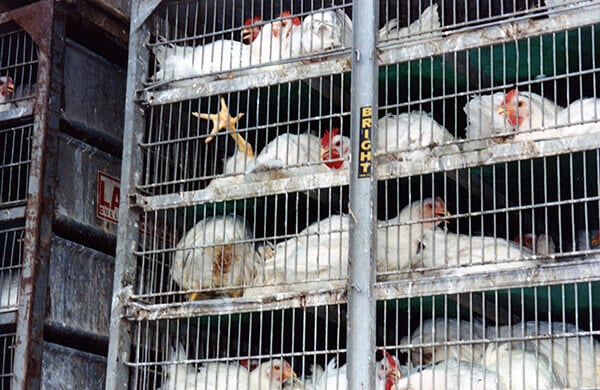
Over 9 billion chickens are killed for their flesh in the U.S. each year. Almost all of these chickens, called “broilers” by the speciesist chicken industry, spend their entire lives confined in filthy sheds with tens of thousands of other birds, even when their flesh is labeled “Animal Welfare Certified,” “humane,” or “organic,” in grocery stores like Whole Foods. The intense crowding and confinement by the meat, egg, and dairy industries often lead to outbreaks of disease, such as bird flu.
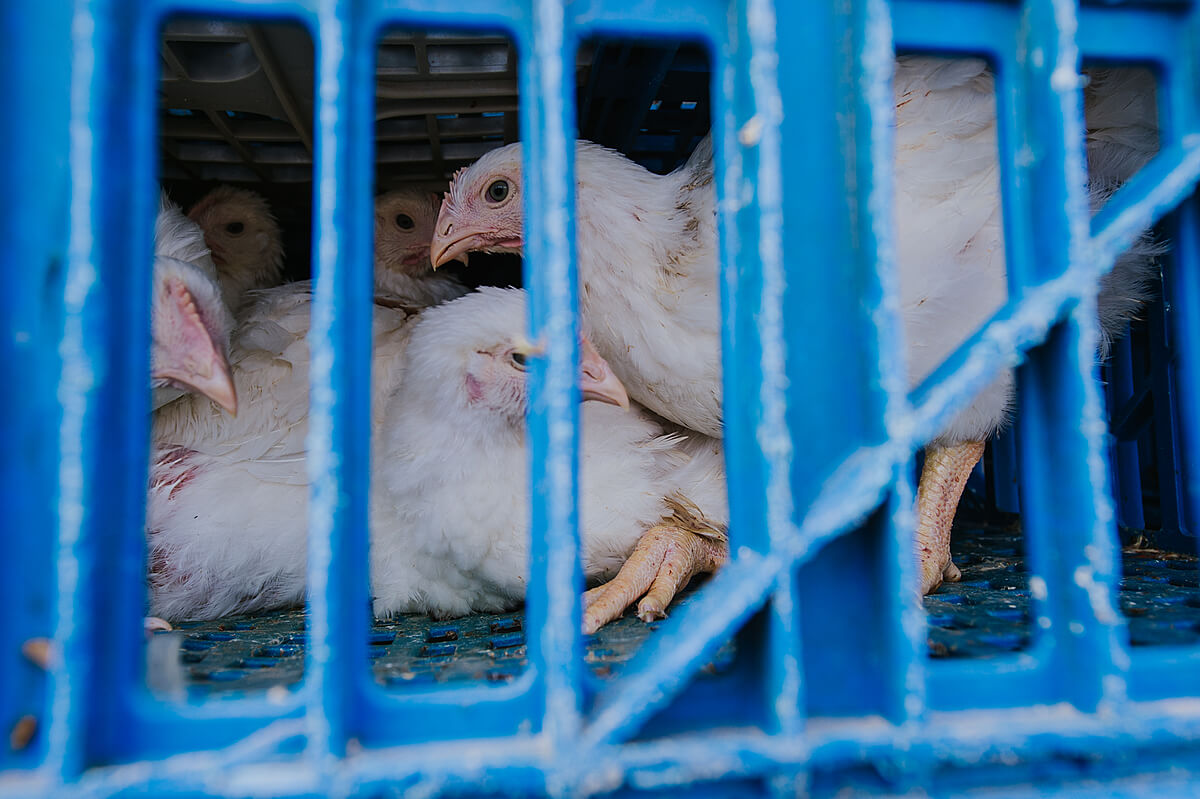
When the birds are only six or seven weeks old, workers rush through the sheds, grabbing multiple birds by their legs and slinging them into crates for transport to slaughter. Every year, tens of millions suffer broken wings and legs from the rough handling, and some hemorrhage to death.
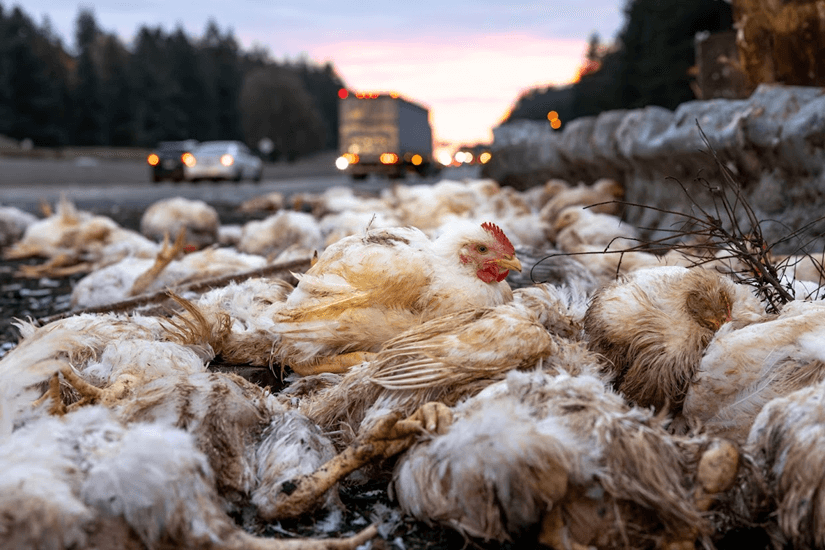
Sometimes, trucks crash en route to the slaughterhouse, and countless birds are are crushed or torn apart in the accidents.
What Happens to Chickens at the Slaughterhouse?
The birds who survive the nightmarish journey are dumped out of the crates, and workers violently grab them and force their legs into shackles so that they are hanging upside-down, breaking many birds’ legs in the process.
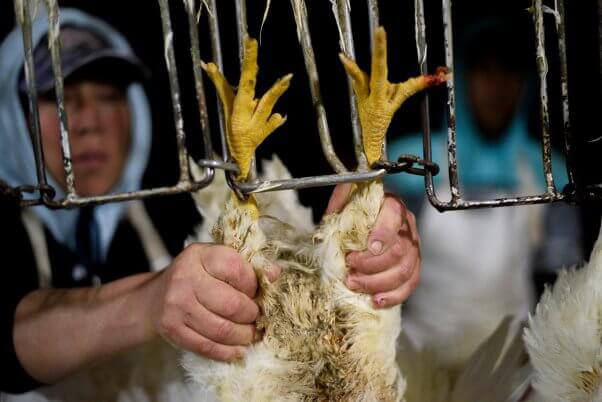
The birds struggle to escape, often defecating and vomiting on the workers. An undercover investigator at a Perdue slaughterhouse reported that “the screaming of the birds and the frenzied flapping of their wings was so loud that you had to yell to the worker next to you.”
Once in the shackles, the upside-down birds are dragged through an electrified water bath meant to paralyze them, not render them unconscious.
In her renowned book Slaughterhouse, Gail Eisnitz explains: “Other industrialized nations require that chickens be rendered unconscious or killed prior to bleeding and scalding, so they won’t have to go through those processes conscious. Here in the United States, however, poultry plants—exempt from the Humane Slaughter Act and still clinging to the industry myth that a dead animal won’t bleed properly—keep the stunning current down to about one-tenth that needed to render a chicken unconscious.” This means that chickens are still completely conscious when their throats are cut.
After the blade cuts their necks, blood slowly drains from the dying birds. But many birds flap about and miss the blade. These birds may have their throats slit by the “backup cutter,” but workers testify that it’s impossible for them to catch all the birds who miss the blade. According to USDA records, millions of chickens every year are still completely conscious when they are dunked into the scalding-hot water of the defeathering tanks.
Give a Cluck: How You Can Help Chickens
The best way to help chickens is to stop eating them and their eggs. Thankfully, going vegan is easy. There are loads of chicken-free chicken and egg products to try. Ready to make the compassionate switch? Go vegan today.
Urge Randy’s Donuts to add vegan donuts to the menu, which will help animals, the planet, and human health.

Join PETA in telling boba tea chains that vegan milk should not come with an unfair upcharge.
Urge Wendy’s to add delicious and healthy vegan chicken to the menu.
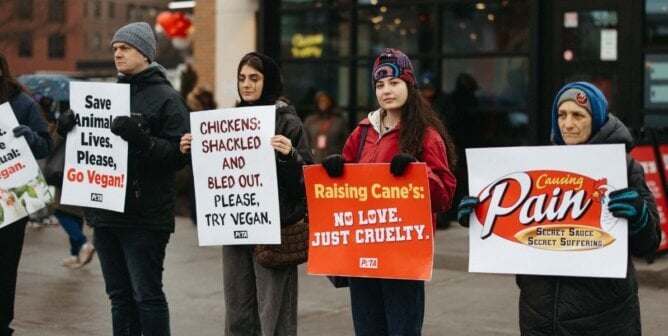
Urge Big Chicken and Raising Cane’s Chicken Fingers to include vegan chicken on their menus.
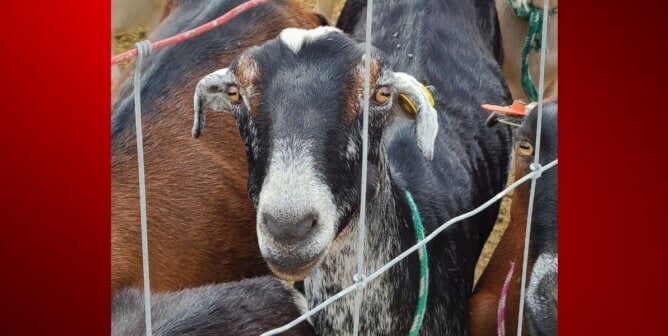
More than six months after being made aware of severe neglect, the local sheriff finally removed long-suffering goats from Grand Barr Dairy—now urge him to send them to sanctuary.
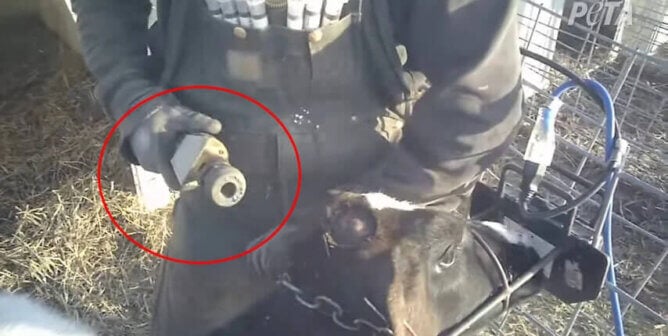
Urge the farm owners to immediately ensure that no more calves endure this abusive mutilation without pain relief!