
Jane Goodall Redefined Animals as Someones, Not Somethings
World-renowned primate expert (and proud vegan) Dr. Jane Goodall devoted her life to raising awareness about the plight of chimpanzees and other animals both in nature and in captivity, dispelling myths and preconceived prejudices about animals along the way. In 1960, Goodall shook the world by documenting tool use in chimpanzees, an ability previously believed to be uniquely human. Her mentor, Dr. Louis Leakey, famously commented, “Now we must redefine tool, redefine Man, or accept chimpanzees as humans.”
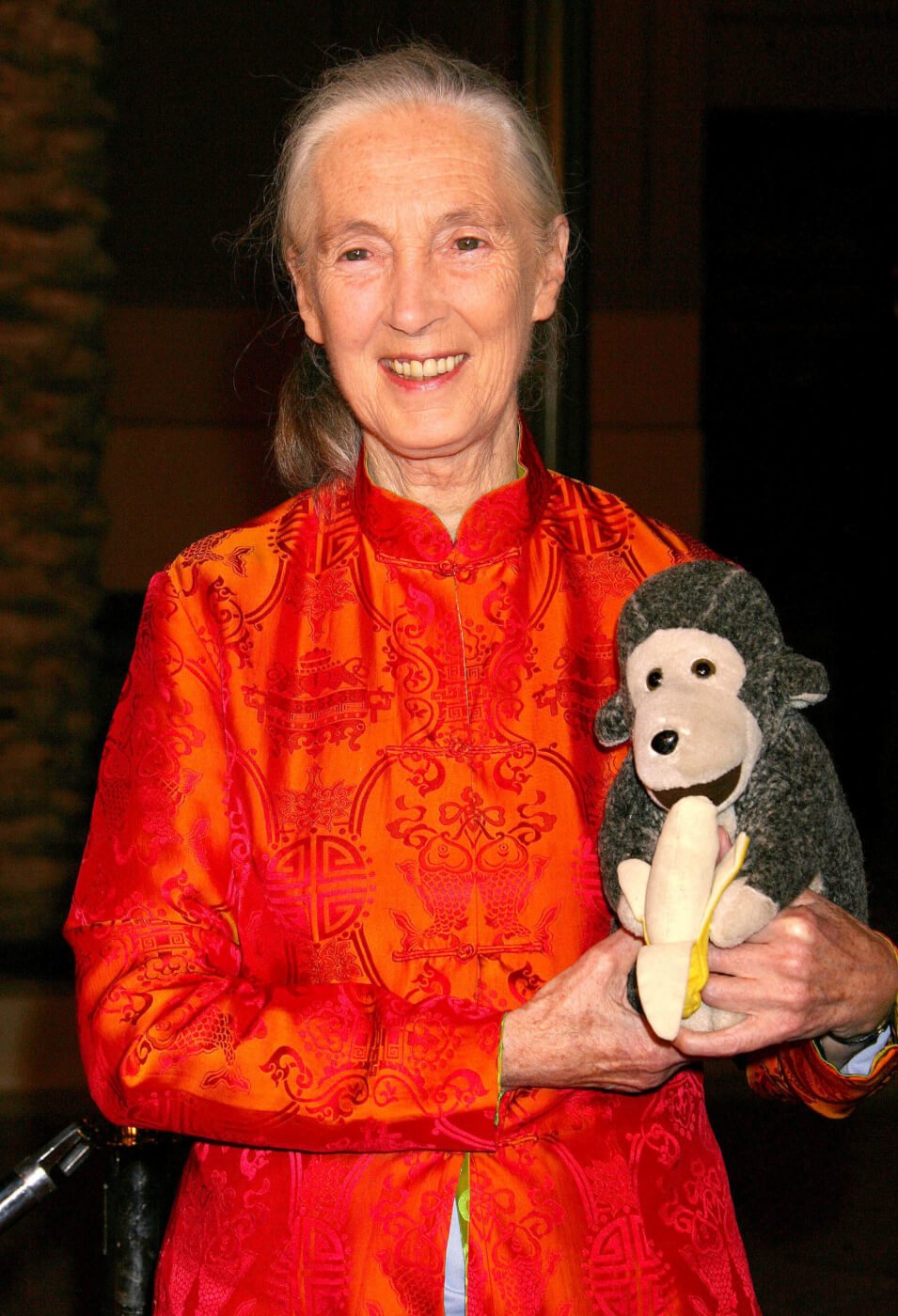
Goodall was among the first scientists to support PETA’s campaigns, dating all the way back to 1986, when we exposed the horrors going on out of the public eye at SEMA, a laboratory in Maryland that confined hundreds of chimpanzees to cramped, barren “isolette” chambers in a windowless basement. Following PETA’s exposé, Goodall toured the facility in person, calling it “the worst experience of my life,” and went on to become an outspoken critic of animal experiments. SEMA, which later changed its name to BIOQUAL, ultimately stopped experimenting on chimpanzees.
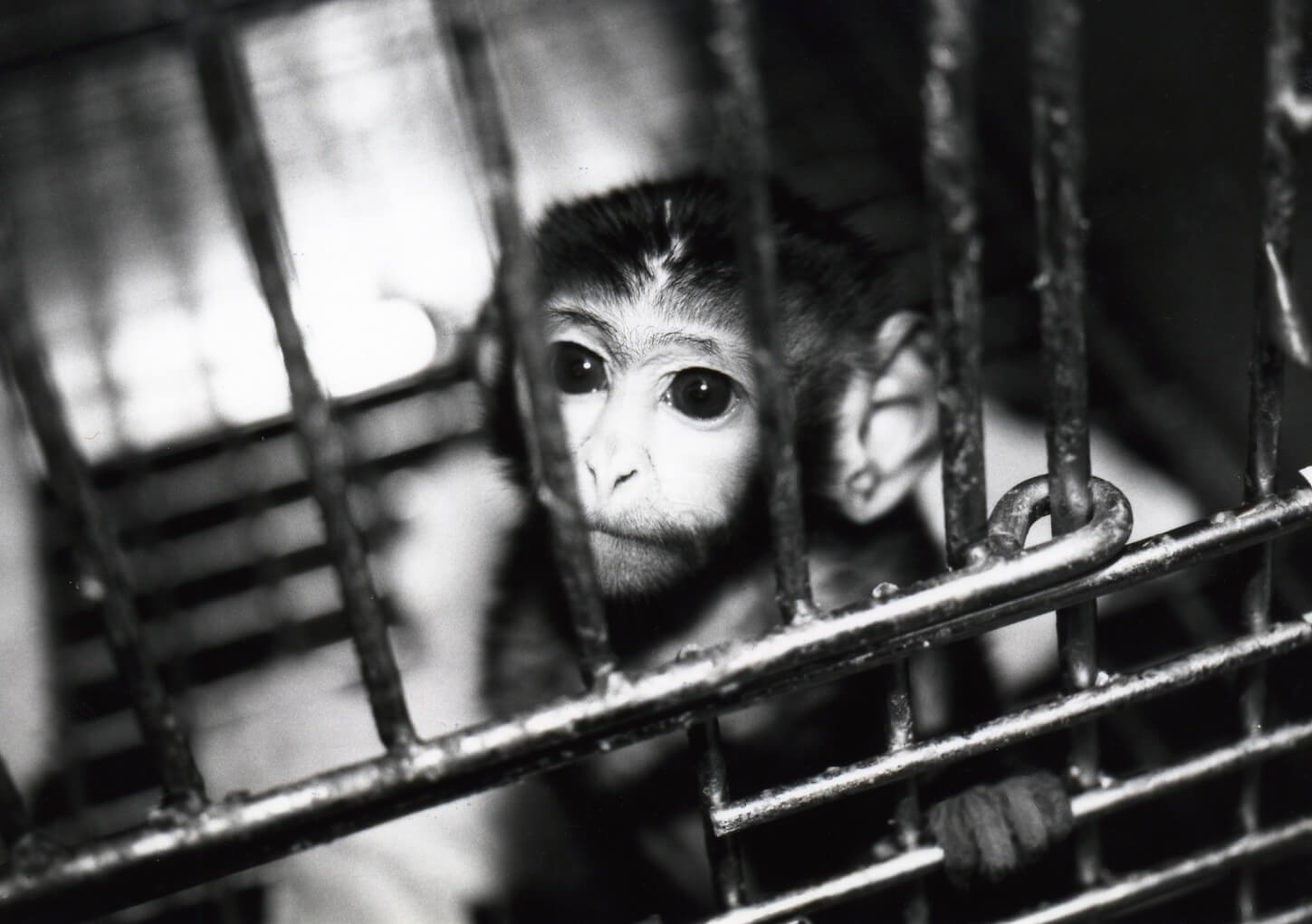
Some of PETA’s most notable victories were made possible with Goodall’s help. Jane Goodall recently and publicly called for the closure of the Oregon National Primate Research Center, supporting PETA’s active campaign.
She signed on our letter calling for closure of Margaret Livingstone’s lab at Harvard that used baby monkeys. That lab is now closed.
In January of this year, she signed on to our legal petition to the Fish & Wildlife Service, urging them to list long-tailed macaques, shipped by the tens of thousands to American labs every year, to the U.S. Endangered Species List.
After she joined other scientists and celebrities, as well as government officials, in writing to the National Institutes of Health (NIH) to blast its barbaric psychological experiments on baby monkeys, the agency stopped the experiments, which had been going on for decades. She had similar success after joining others in urging NIH to stop experimenting on chimpanzees—our closest living primate relatives—and to retire the remaining chimpanzees held in government laboratories to sanctuaries. Soon afterward, the agency announced that it was doing just that.
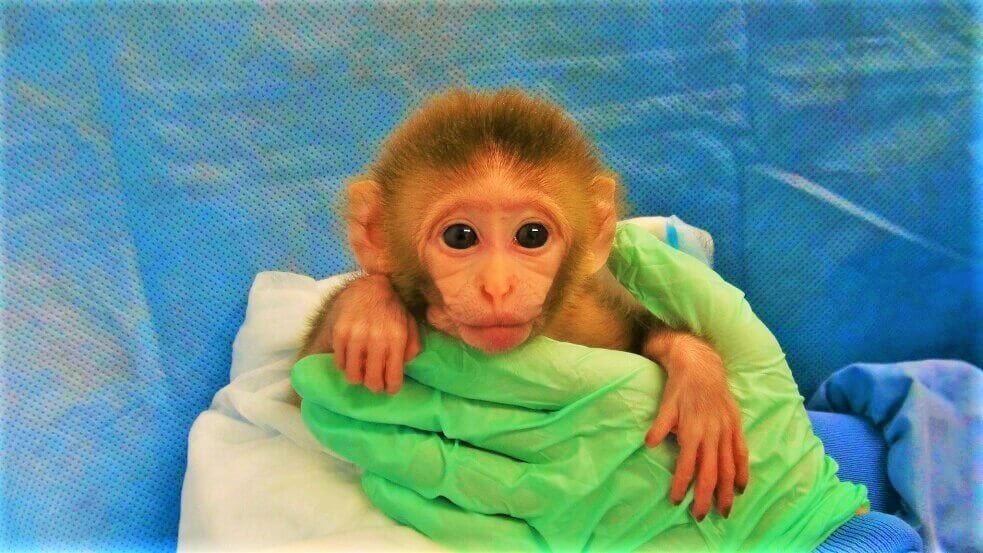
Goodall appealed to the European Union to end the use of all animals in experiments, suggesting that a Nobel Prize be conferred for scientific breakthroughs that use “new ways of testing and experimenting that will not involve the use of live, sentient beings.” She added, “We need to recognize at the outset that what we do to animals from their perspective certainly, and probably from ours, is morally wrong and unacceptable.”
She blasted Air France—the last remaining major passenger airline to ship monkeys to laboratories for use in invasive and deadly experiments—urging the company to end its part in this “cruel trade.”
Goodall also appealed to UPS after an American hunter killed Cecil, a famous lion in South Africa, urging the carrier to follow in the footsteps of other major airlines and stop shipping the carcasses of exotic wildlife who’ve been slaughtered by trophy hunters.
Goodall was a vocal critic of abusing captive wildlife for “entertainment.” In a letter on PETA’s behalf to CareerBuilder, which used chimpanzees in its ads for years, she explained how being forced to perform in a 30-second commercial can permanently damage a young chimpanzee’s life:
“Chimpanzees used in the advertising and entertainment industries are separated from their mothers as infants. This is truly tragic because in the wild, young chimpanzees stay with their mothers for at least eight years. Only infant chimpanzees are used in advertising and other forms of entertainment because as they approach maturity, at about six to eight years of age, they become strong and unmanageable.”
Then-Philippines President Benigno Aquino III received a personal letter from Goodall, praising him for his directive ordering that Mali—the lone elephant suffering without veterinary care at the Manila Zoo—be reviewed and considered for transfer to a sanctuary.
Goodall appealed to the Vancouver Aquarium to stop breeding beluga whales and loaning them out to other aquariums. “Those of us who have had the fortunate opportunity to study wild animals in their natural settings where family, community structure and communication form a foundation for these animals’ existence, know the implications of captivity on such species,” Goodall wrote in her letter to the Vancouver Park Board. “As society at large and the scientific community now reflect on the keeping of highly cognitive species like primates, elephants, and cetaceans in entertainment and research, I ask the Vancouver Park Board and the Vancouver Aquarium to do the same. The phasing out of such cetacean programs is the natural progression of human-kind’s evolving view of our non-human animal kin.”
Goodall joined other experts in calling for the closure of SeaWorld. In an interview with the Huffington Post, she said she was optimistic that humans are becoming less interested in watching orcas perform and more sympathetic to their plight in captivity. “It’s not only that [orcas are] really big, highly intelligent and social animals so that the capture and confinement in itself is cruel,” Goodall said, but also that “they have emotions like ours.”
Not long afterward, SeaWorld announced that it would stop breeding captive orcas and was phasing out its orca shows.
One of Goodall’s most wide-reaching achievements was helping to convince the U.S. Fish and Wildlife Service to expand the protections of the Endangered Species Act to include captive chimpanzees, as well as wild ones. As a result of the new rule, PETA was able to convince the dismal Mobile Zoo to allow a chimpanzee named Joe, who had been held in solitary confinement for nearly 20 years, to be relocated to the lush, tropical Save the Chimps sanctuary in Florida. While he was en route to his new home, Jane Goodall paid him a visit. Joe seemed unimpressed by his famous visitor. “He’s not interested,” Goodall said with a chuckle, after talking to him in “Chimpese.”
Joe may not have been impressed by Goodall, but the rest of the world was.
This gifted scientist and advocate—who blazed trails for women, animals, underserved communities, and the environment—will be sorely missed.
She leaves behind an extraordinary legacy, and we encourage everyone to follow in her animal-respecting footsteps, starting with going vegan.
In Dr. Goodall’s honor, PETA will be planting a monkey puzzle tree in our Bea Arthur Dog Park memorial garden.

