
‘No-Kill’ Policies Slowly Killing Animals
When “no-kill” animal shelters and rescue groups are filled to capacity, which is almost always, they are left with two options: turn away more animals than they take in or warehouse animals, often in substandard, filthy, and severely crowded conditions, for weeks, months, or even years on end. Most, if not all, of the animals who are turned away from such facilities still face untimely deaths—just not at these facilities.
Instead they are cruelly killed by people who don’t want them, are dumped on roadsides and left to die from starvation or being hit by a car, or spend their short lives homeless, unwanted, and producing more litters of animals for whom no homes exist.
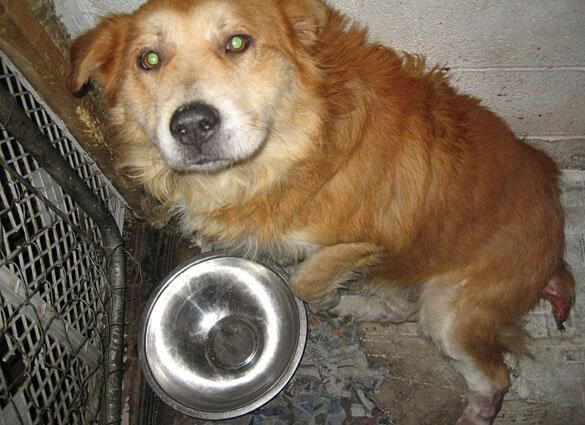
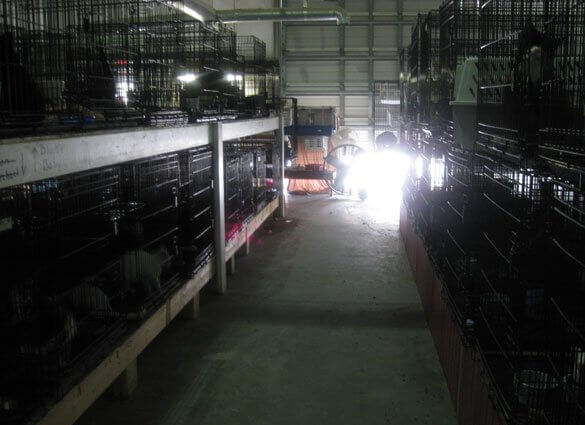
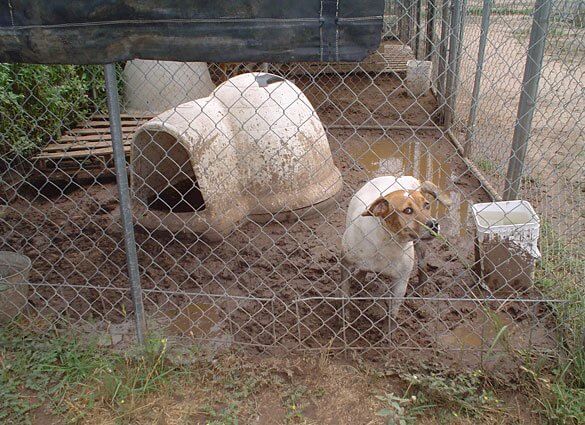
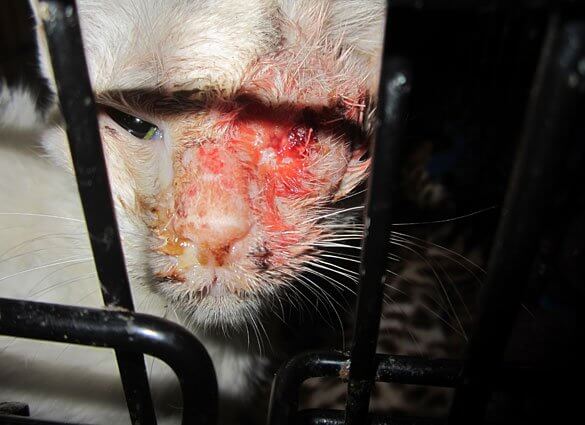
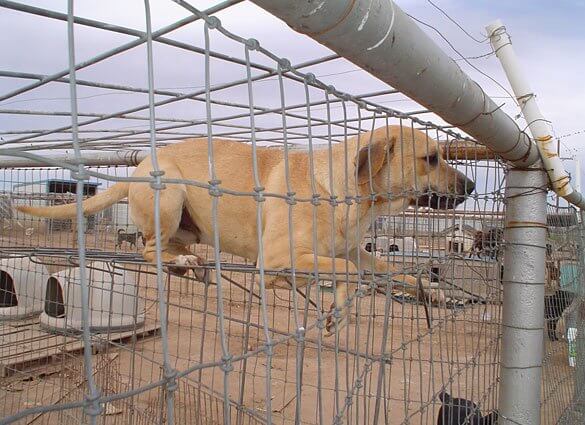
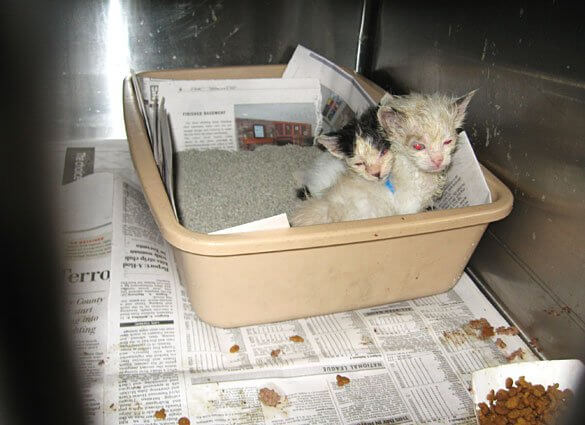
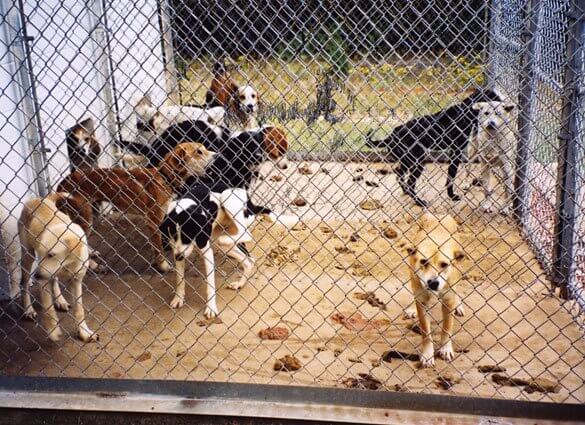
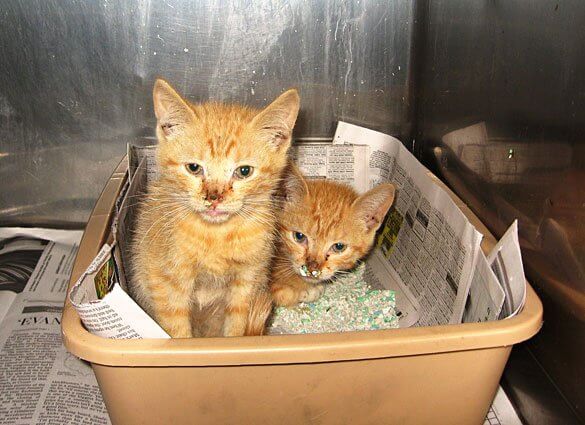
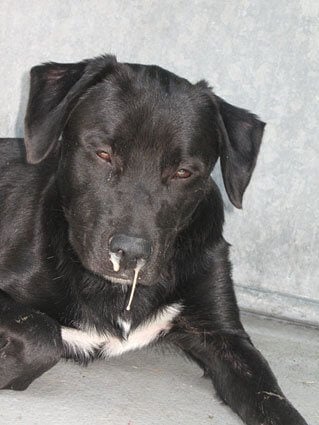
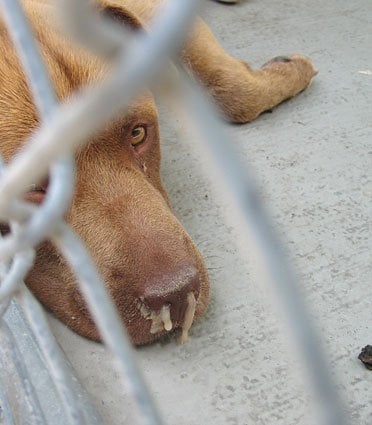
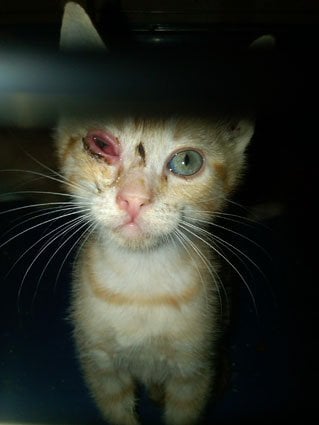
The lucky ones are taken to well-run open-admission animal shelters, where they either find a well-screened, permanent home or are painlessly euthanized in the arms of professionally trained, compassionate people. Here are some of the “no-kill” animal shelter failures that made headlines in recent years for making animals suffer a fate far worse than a kind death.
Inhumane, Dangerous Results of ‘No-Kill’ Policies That Made Headlines in February 2026
Los Angeles, California
LATimes.com reported, “A woman who was mauled by a dog at a Los Angeles city animal shelter has been awarded $5.4 million by a jury.” According to the report, the plaintiff “said that neither the shelter nor any rescue groups told her the dog, a Belgian Malinois named Maximus, had bitten a teenager and a shelter employee, sending both to the hospital. After six surgeries to repair the bones and nerves in her right arm, [the plaintiff] was left with permanent damage …. It was the third multimillion-dollar payout in recent years involving allegations that the city animal shelters failed to notify potential adopters that a dog had bitten and seriously injured someone, as required by state law.” Los Angeles Animal Services has “no-kill” policies and is a partner of Best Friends Animal Society.
Gunnison, Colorado
ColoradoSun.com reported that a pit bull who was being fostered for a self-professed animal “rescue” doing business as the Montrose Bully Breed Club had fatally attacked the foster caregiver’s 7-year-old son. According to the report, when a police officer arrived at the foster home, “[S]he found Boaz, a tan-and-white pit bull mix, with [his] jaws on the boy’s neck, according to a police report obtained by The Colorado Sun. The officer fired a single shot at the dog, causing [him] to release the boy. The officer laid the boy flat, lifted his shirt and began CPR, switching off with another officer, until paramedics arrived, the report said.” The boy did not survive. The dog’s status and location were not reported. A police investigation was reportedly ongoing.
Hamden, Connecticut
WTNH.com reported that authorities had charged one Lisa Levy with five counts of cruelty to animals after five animals she’d adopted from one or more self-professed animal “rescues” had been taken to veterinary hospitals “exhibit[ing] similar medical conditions.” Veterinary records reportedly revealed that these conditions “included burned flesh/lesions, neurological symptoms, cough, vomiting, seizures, fractures and inability to walk, according to the affidavit.” According to the report, “Veterinary records and Facebook posts showed that Levy had 13 cats and dogs in her care between 2022 and 2026: four died, five were euthanized, one was returned to a rescue, one went missing and two have no records of what happened to them.” A court date was set in the case.
Habersham County, Georgia
FOX5Atlanta.com reported that a publicly funded facility with “no-kill” policies doing business as the Habersham County Department of Animal Care & Control was refusing to accept animals because of an outbreak of canine parvovirus. The facility is a partner of Best Friends Animal Society.
Citrus County, Florida
WCJB.com reported that authorities had seized 43 animals from a self-professed animal “rescue” doing business as Hess Haven Inc. and charged its owner, Jordyn Hess, with 11 felony counts of aggravated cruelty to animals and 22 misdemeanor counts of cruelty to animals. The report stated, “Several dead cats were found inside trash bags, a deceased dog was locked in a transport carrier and three dead birds were found in a chicken coop, according to a release from the sheriff’s office. Inside the home, a dog and nine cats were living in litter boxes overflowing with feces while an outside shed had 12 additional cats [who] had no access to food or water, according to deputies.” WTSP.com reported that a statement by a sheriff’s deputy said that animals at the property “were living in conditions no creatures should ever endure.” The sheriff’s office was urging “residents to thoroughly research and verify the legitimacy of any rescue organization before donating money, supplies or animals.”
Cumberland County, North Carolina
FayObserver.com reported that a publicly funded facility with “no-kill” policies doing business as the Cumberland County Animal Services Department had been refusing to accept animals for at least a month because of an outbreak of an upper respiratory illness. The facility is a partner of Best Friends Animal Society.
Lynn Haven, Florida
MyPanhandle.com reported that a publicly funded facility with “no-kill” policies doing business as the Lynn Haven Animal Shelter was refusing to accept dogs because a “dog at the facility showed symptoms consistent with kennel cough.” Residents were being told to house any lost or homeless animals they might find in their own homes or in the homes of “friends or family members” instead of taking them to the publicly funded facility intended for this purpose.
Elk Grove, California
ABC10.com reported that a publicly funded facility with “no-kill” policies doing business as the City of Elk Grove Animal Shelter was refusing to accept dogs because of an outbreak of the canine pneumovirus. 2News.com reported that because of this, animal control officers would not be picking up lost and homeless dogs.
Hobe Sound, Florida
CBS12.com reported that just days after a pit bull mix was taken in by an individual fostering him for a self-professed “no-kill” facility doing business as the Humane Society of the Treasure Coast Inc. (HSTC), the dog had fatally mauled a small dog being walked by his or her guardian. According to the report, authorities said that before leaving his house on an errand, the foster caregiver had “locked the dog in a crate, placed [the crate] in a bedroom, and shut the door. But when he returned: ‘The dog had opened up the crate, had opened up the interior bedroom door and as soon as [the foster caregiver] opened up the garage door, the dog bolted, ran’” outdoors, where he or she “charged at a woman who was pushing her two small dogs in a wagon. The pit bull mix grabbed one of the small dogs and mauled [the animal] to death.” The attack was captured on surveillance footage. The attacking dog was quarantined, and the adopter was facing possible fines, according to authorities. HSTC is a partner of Best Friends Animal Society.
Waverly, Tennessee
WSMV.com reported that a facility with “no-kill” policies partially funded with public monies and doing business as the Waverly Animal Shelter was refusing to accept dogs because of an outbreak of canine parvovirus.
Portland, Oregon
KATU.com reported that a publicly funded animal shelter with “no-kill” policies doing business as Multnomah County Animal Services was refusing to accept dogs after two dogs at the facility died of Streptococcus zooepidemicus. Residents were being told to house lost and homeless animals they rescue in their own homes or in the homes of their neighbors instead of taking them to the publicly funded facility intended for this purpose.
Sussex County, New Jersey
LehighValleyLive.com reported that four dogs had died in a fire at a self-professed animal “rescue” doing business as One Step Closer Animal Rescue. A surviving dog was taken to a veterinary hospital and treated for burns, and several dogs were reportedly roaming loose in the area. According to the report, an electrical fire had broken out at the same facility in 2023. Authorities were investigating the cause of the most recent fire. The facility is a partner of Best Friends Animal Society.
Clearlake, California
PressDemocrat.com reported that the city of Clearlake had terminated its contract with a self-professed “no-kill” group, which is a partner of Best Friends Animal Society, doing business as North Bay Animal Services. According to the report, “Clearlake officials told the Lake County Record-Bee that the group left as many as 114 dogs living in urine, feces, and inhumane conditions for months.” The facility was reportedly designed to humanely house 25 dogs. Apparently after vacating the facility, the group also allegedly left “aggressive dogs, one of [whom] ha[d] been there for over a year.” In 2023, an investigation by the Lake County Civil Grand Jury reportedly found that the facility’s “no kill” policy was the cause of numerous problems, including severe crowding and a failure to provide timely veterinary care. The Grand Jury also found that “workers [routinely] left the animals outside in cages, where they were exposed to the elements, and improperly cared for” and that “there was a shortage of resources, fewer animals were spayed or neutered, and an overwhelming amount of dogs were waiting to be admitted.”
Ashdown, Arkansas
WSMV.com reported that a nonprofit organization “said a court order permitted” it to remove 51 dogs from the property of a self-professed animal “rescue” that had apparently been shut down. According to the report, the group said “the animals had been living in increasingly restrictive conditions. Many of the dogs had been locked in small cages with minimal time outside the four walls.” Many of the animals had been confined at the property “for years,” according to a spokesperson for the group. No additional information was available.
Windsor, Massachusetts
MassLive.com reported that authorities had charged Stacy Sumner Wilds, who was operating a foster home for a self-professed animal “rescue” doing business as Westfield Homeless Cat Project (WHCP), with multiple counts, including “eight felony charges related to animal cruelty.” According to the report, authorities executed a search warrant at Sumner Wilds’ home in August. Court documents reportedly revealed that investigators said, “The odor of feces and dog/cat urine was overpowering.” In addition, “The kitchen area had a dead rabbit and guinea pig in it, insects and feces and urine on the floor and kitchen table seats. The living room had similar conditions and filled litter boxes. The children’s bedrooms also had feces, urine and insects. In one child’s room, there was a dead and decomposed hamster in the cage. Overall, there were 41 alive animals found in the house, including six dogs, 25 cats, four rabbits, three turtles, two geckos and a chinchilla.” A member of WHCP who had gone to the property found that the mother cat WHCP had given to Sumner Wilds to foster “was emaciated and five of the kittens were dead, according to court documents. Two of the kittens were sick.” Additionally, court documents stated that “the mother cat was almost ‘skin and bones’ and showed no signs of milk production.” A court date was set in the case. WHCP is a partner of Best Friends Animal Society.
Prineville, Oregon
CentralOregonDaily.com reported that a self-professed “no-kill” facility partially funded with public monies and doing business as the Humane Society of the Ochocos claimed to be “full” and was refusing to accept animals. The facility is a partner of Best Friends Animal Society.
January 2026 Reports Showing That ‘No-Kill’ Policies Endanger Animals
Fresno, California
YourCentralValley.com reported that a publicly funded facility with “no-kill” policies doing business as Fresno Animal Center had been refusing to accept animals for two years. At a city council meeting, concerned residents reportedly said that the policy had overwhelmed private organizations in the area and “left community members struggling to care for abandoned and stray dogs.” One resident said that because of the policy, she and others were being ticketed for having more dogs at their homes than is legally allowed. They asked city leaders to take action to address the issue. The facility is a partner of Best Friends Animal Society.
Los Angeles, California
LATimes.com reported that a dog who was adopted from a publicly funded facility with “no-kill” policies doing business as LA Animal Services (LAAS) had mauled his adopter two days after being taken home. According to the report, the dog broke the adopter’s right arm and peeled the skin from her left one. The dog was euthanized after the attack. The adopter reportedly still suffers from nerve damage and pain in her fingers after undergoing “multiple surgeries.” The city reportedly settled a lawsuit as a result of the attack for $3.25 million in November 2025. One of the lawyers who represented the plaintiff had reportedly “sued the city three times for similar dog attacks.” LAAS is a partner of Best Friends Animal Society.
DeKalb County, Indiana
21AliveNews.com reported that authorities had charged Cara Seiler, the founder and director of a self-professed animal “rescue” doing business as Canine Haven Rescue Inc., with 12 counts of cruelty to animals. Court documents reportedly revealed that an investigator found 18 dogs in inhumane conditions in a filthy garage at the “rescue” property. According to the report, “Only one dog had food, court documents say, and the majority of the water bowls were empty.” An investigator reportedly told the accused “that the conditions indicated the neglect had been ongoing for months or years” and that “the garage would require reconstruction to be habitable for the animals …. Court documents say the officer noted that four of the dogs have been living in cages for 4-6 years, telling Seiler they had a ‘horrible quality of life.’” Seiler reportedly “eventually agreed to surrender about half of the dogs in her care.” A nonprofit group removed “a total of 21 dogs, 11 from Seiler’s garage and 10 from a foster home in Yorktown. Some of the dogs were found to be suffering from various health conditions following examination, including heartworm and dental disease.” The case was evidently ongoing.
Miami, Florida
WSVN.com reported that a pit bull who had evidently been up for adoption at a publicly funded self-professed “no-kill” animal shelter doing business as Miami-Dade Animal Services had attacked and killed a small dog in the parking lot of the facility. The small dog’s guardian said that she had filed a police report and was considering taking legal action against the facility, which is a partner of Best Friends Animal Society. The pit bull was euthanized after the attack.
Boyle County, Kentucky
WKYT.com reported that Boyle County Animal Control claimed that the county’s publicly funded animal shelter was “full” and was refusing to accept animals. The county apparently contracts for sheltering services with a group with “no-kill” policies doing business as the Danville-Boyle County Humane Society, which is a partner of Best Friends Animal Society.
Pittsboro, North Carolina
WRAL.com reported that state authorities had suspended the license of a self-professed “no-kill animal sanctuary” doing business as the Goathouse Refuge and ordered it “to immediately cease and desist operations, other than finding new homes for” cats at the property. According to the report, “The license suspension came after inspections over the last four months of 2025. The shelter was also fined $9,300, the second-largest fine issued against a shelter last year.” The outlet reportedly “found inspections dating back 15 years that highlighted many of the same problems,” which included poor sanitation practices, enclosures in disrepair, and missing or incomplete records, “including one instance where staff members admitted to falsifying records.”
Sacramento, California
ABC10.com reported that a publicly funded facility with “no-kill” policies doing business as the Front Street Animal Shelter was refusing to accept dogs because of an outbreak of Streptococcus zooepidemicus. Residents were being asked to try to locate the owners of lost animals themselves and to keep stray dogs at their homes instead of taking them to the publicly funded facility intended to house them. The facility is a partner of Best Friends Animal Society.
Tacoma, Washington
TheNewsTribune.com reported that a facility with “no-kill” policies partially funded with public monies and doing business as the Humane Society for Tacoma & Pierce County (HSTPC) had raised its fee for animal surrenders to $400 per animal. Area residents reportedly said “that more dogs and cats are being let loose on the streets as people struggle to navigate the shelter’s higher costs and lengthy wait times for appointments necessary to surrender their pets.” The wait at the time was reportedly six to eight weeks. According to the report, a spokesperson for the City of Tacoma Animal Control said that the agency was “seeing a huge increase” in abandoned dogs and that abandonment was expected to increase because of the high surrender fees at HSTPC, which is a partner of Best Friends Animal Society.
Clay County, Florida
FirstCoastNews.com reported that a self-professed “no-kill” facility doing business as Safe Animal Shelter was refusing to accept cats because of an outbreak of feline panleukopenia at the facility, which is a partner of Best Friends Animal Society.
San Jose, California
NBCBayArea.com reported that a publicly funded facility with “no-kill” policies doing business as San Jose Animal Care & Services claimed to be “full” and was telling residents who found lost and homeless animals to house them themselves, instead of taking animals to the publicly funded facility intended for this purpose. The facility is a partner of Best Friends Animal Society.
Sebec, Maine
TheMaineWire.com reported that six dogs had died in a fire at a self-professed animal “rescue” doing business as Give a Dog a Home Rescue. According to the report, “Fourteen dogs were inside, but only eight made it out.” The cause of the blaze was under investigation.
Ohio County, West Virginia
WTRF.com reported that a publicly funded facility with “no-kill” policies doing business as the Ohio County Animal Shelter was closed to the public and refusing to accept animals because of a case of canine parvovirus. The facility is a partner of Best Friends Animal Society.
Bedford Township, Michigan
WWMT.com reported that authorities had removed dozens of animals from a self-professed animal “rescue” during “an ongoing investigation into possible neglect.” According to the report, officials said that “approximately 28 dogs and 14 cats [had been] voluntarily surrendered from the property. Two horses and one cat belonging to the property owner” had also been seized. WTVBAM.com reported that during a search of the property, “police located several deceased dogs and one deceased cat.” The investigation was ongoing.
Hadley, Massachusetts
Yahoo.com reported that authorities had seized 315 animals from a self-professed animal “sanctuary” doing business as Cloa’s Ark Animal Sanctuary after they were allegedly found deprived of needed care, including food, water, and protection from the elements. Animals seized included birds, cows, goats, sheep, pigs, a pony, rabbits, and wildlife who were “illegal to keep as pets.” The investigation was ongoing.
Pittsburgh, Pennsylvania
WPXI.com reported that a facility with “no-kill” policies partially funded with public monies and doing business as Humane Animal Rescue of Pittsburgh was refusing to accept cats because of a case of feline panleukopenia. The facility is a partner of Best Friends Animal Society.
Henrietta, Texas
TexomasHomepage.com reported that a self-professed “no-kill” facility doing business as the Clay County Animal Shelter claimed to be “full” and was refusing to accept animals. A spokesperson for the facility reportedly admitted that “many people” contacted it needing to surrender animals for whom they were unable or unwilling to care. The facility had a waitlist that included the names of more than 20 individuals.
St. Louis, Missouri
Newsweek.com reported that a dog who had been adopted from a facility with “no-kill” policies doing business as the Animal Protective Association of Missouri (APA) had been found tied up and abandoned outside a veterinary clinic months later. According to the report, a microchip led clinic staff to the adopter, who said that they’d given the dog to someone else, who couldn’t be located. The dog was returned to APA, which is a partner of Best Friends Animal Society.
Margate, Florida
Local10.com reported that a self-professed “no-kill” facility doing business as UFAR Animals Rescue had been warehousing animals and refusing to accept them. A spokesperson for the group said that people often left animals outside its storefront: “People have been dumping dogs out in our backyard …. They are tying them up to trees, they’re leaving them abandoned in our play yard. Cats are [abandoned] almost weekly …. They’re left in cages out front, they’re dumped in cages in the lobby, they are pretty much everywhere, wherever you can abandon a cat around this whole building, they do.” She went on to say that when people are turned away, “[T]hey just walk outside, dump the animal there in a cage and then drive off.” The group was reportedly “receiving backlash” for inhumane, crowded conditions. According to the report, “Some of the cats have been there as long as eight years, which is exactly how long UFAR has been open.”
Cumberland County, North Carolina
FayObserver.com reported that a publicly funded facility with “no-kill” policies doing business as the Cumberland County Animal Services Department was refusing to accept animals because of an outbreak of an unspecified upper respiratory illness. The facility is a partner of Best Friends Animal Society.
Windsor, California
PressDemocrat.com reported that authorities had seized 28 dogs from a self-professed animal “rescue” doing business as G&Cs Advocacy and Rescue Corporation after they were found hoarded in filthy conditions inside a garage. According to the report, “rescue” owner Christina Urrutia Urena was arrested and “booked on suspicion of animal cruelty, possession of unlicensed dogs, operating a commercial kennel without a license and violation of probation.” Authorities reportedly found that “[p]iles of feces covered the floor of the garage, where some of the dogs were found in kennels ….The build-up of urine and excrement was so heavy on a mattress-like cushion that it was stained black.” They also found little food at the property, a lack of water for dogs, and dogs with untreated injuries. Authorities said that they’d received calls and complaints about the property for years, including requests for welfare checks for the animals and complaints “about dogs escaping her property, about barking at the premises and about issues with dogs at her rescue [who] had injured other animals.”
2025 |2024 | 2023 |2022 | 2021 | 2020 | 2019 | 2018 | 2017 | 2016 | 2015 | 2014 | 2013 | 2012 | 2011 | 2010 | 2009 | 2008

The parent company of one of Hong Kong’s most popular online shopping platforms is severing animals’ heads and limbs in dozens of deadly experiments.
Sign PETA’s petition today to urge the Washington State Board of Health to act on the petition for rulemaking immediately and keep Washingtonians healthy and safe.

Demand that Temu ban the sale of fur, wild animal skins, and angora on its website.
E-mail members of the Senate Education, Energy, and the Environment Committee today and urge them to vote against this bad bill.
This recent news story features a video apparently captured at the Neo Vertika condo building in Miami’s Brickell community, depicting a man grabbing pigeons from a trap, roughly stuffing them into a trash bag, very likely snapping their necks, then shoving their bodies into a bucket. And eyewitnesses state that these pigeons had languished for … Read more »

Urge management to create an “exit strategy” for Marilyn, perhaps by installing a one-way escape door so that she cannot reenter once she leaves.