
Dr. Lisa Jones-Engel: “I Spent Decades Inside Primate Research. Here’s Why It Can’t Be Fixed”
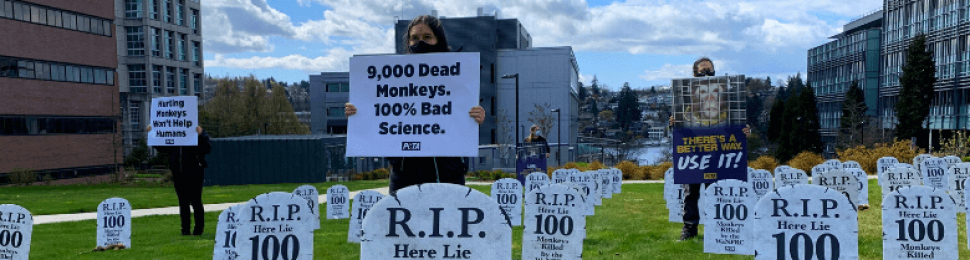
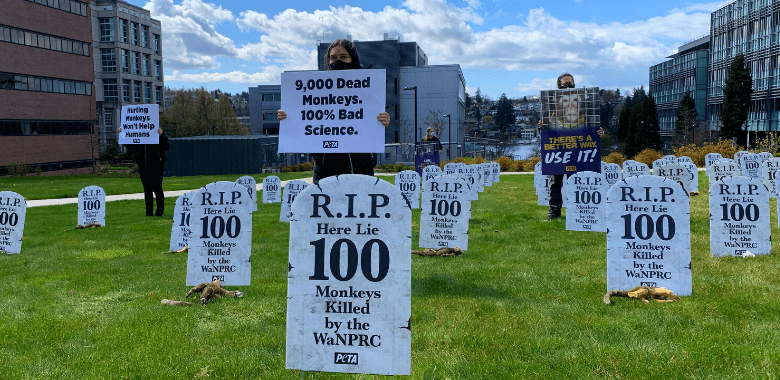
My name is Dr. Lisa Jones-Engel and for 60 years, the Washington National Primate Research Center (WaNPRC) has exploited monkeys in traumatic, painful, and irrelevant experiments supported by the University of Washington (UW). The laboratory, which is one of the remaining seven National Primate Research Centers (NPRCs), has been a longtime PETA target for its horrific experiments.
I spent more than three decades inside the primate research system—as a field primatologist, a primate scientist, a Fulbright scholar, and a member of a university animal research oversight committee. Strengthening the primate model was not incidental to my career; it was my scientific mandate. Like many scientists, I accepted the premise that studying primates in laboratories might be justified to protect human health—but only if the science was impeccable and the animals’ welfare met the highest possible standard. Holding the work to that standard is what ultimately put me on a collision course with the system itself.
What forced that reckoning was not a single act of cruelty or one failed experiment. It was the slow accumulation of evidence—biological, institutional, and ethical—that primate experimentation no longer produces reliable, human-relevant science and cannot be made safe for animals, workers, or the public.
What I Saw From the Inside
In 2002, my work on infectious disease transmission at the human–primate interface brought me to the WaNPRC. I worked there for 14 years as a primate scientist and later served on the UW’s Institutional Animal Care and Use Committee (IACUC), the body charged with overseeing animal research and ensuring compliance with minimum federal welfare standards. Those roles gave me a front-row seat to how the system actually functions. Years later, after I had left UW, that same inside understanding of how WaNPRC operated helped power our successful public-records lawsuit—and then-director Sally Thompson-Iritani’s response only made matters worse, as the court ultimately found that the primate center had systematically destroyed photographs and video of experiments and ordered UW to pay nearly half a million dollars in penalties and fees for evading transparency.
Inside the primate center, infectious disease was not an anomaly—it was a constant. Tuberculosis, drug-resistant staph infections, chronic diarrhea, Valley fever, Chagas disease, simian retroviruses, and other pathogens circulated through the colonies, undermining both animal health and experimental validity. Stress, confinement, and unstable social housing suppressed immune function, introducing uncontrolled biological variables into studies that were already struggling with reproducibility.

These were not minor complications. They distorted results and contributed to findings—especially in infectious-disease research—that failed to translate into effective treatments for humans. WaNPRC’s SIV program offers a concrete example. Because monkeys cannot be infected with HIV—the “H” is for human—researchers rely on surrogate viruses such as SIV or SHIV, a biological compromise from the outset. These studies rest on a further assumption: that the animals used are clean, healthy, and well characterized. In practice, that assumption often went untested. Under the leadership of Deborah Fuller, monkeys unknowingly infected with Valley fever were used for years in SIV and related studies—not by design, but because adequate screening was not performed. Only later was it formally recognized—and published—that fungal co-infection altered immune responses and complicated interpretation of the results.
Oversight in Name Only
The IACUC is presented to the public as an ethical safeguard that ensures animal research is justified, humane, and scientifically sound. What I observed was the opposite: an oversight system dominated by institutional insiders whose professional interests depend on the continuation of animal experimentation. Fundamental questions about study design, cumulative harm, invasive procedures, and hidden infections were routinely brushed aside, reducing regulatory review to a box-checking exercise rather than a genuine assessment of whether a study should proceed. Equally troubling was the university’s resistance to transparency. When questions were raised about the composition of the IACUC, UW took extraordinary steps to limit public visibility into committee membership and affiliations. That resistance mattered. When oversight bodies are embedded within the institutions they regulate, conflicts of interest are baked in, eroding both animal welfare and scientific integrity.
When Animal Suffering Undermined Scientific Claims
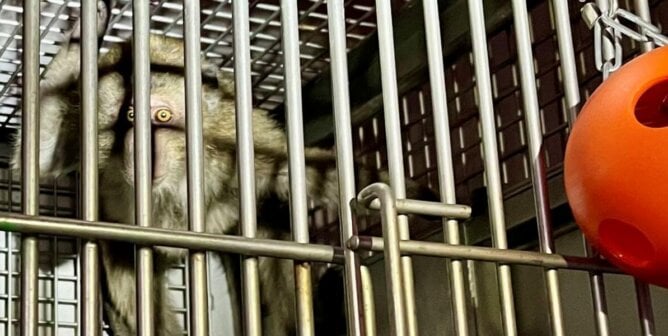
I have lived and worked in the countries that supply macaques to U.S. laboratories. I have also been inside overseas breeding facilities, where I heard animals’ cries of distress, smelled the fear and disease that hung in the air, and watched once-complex social beings become withdrawn and broken in cages.
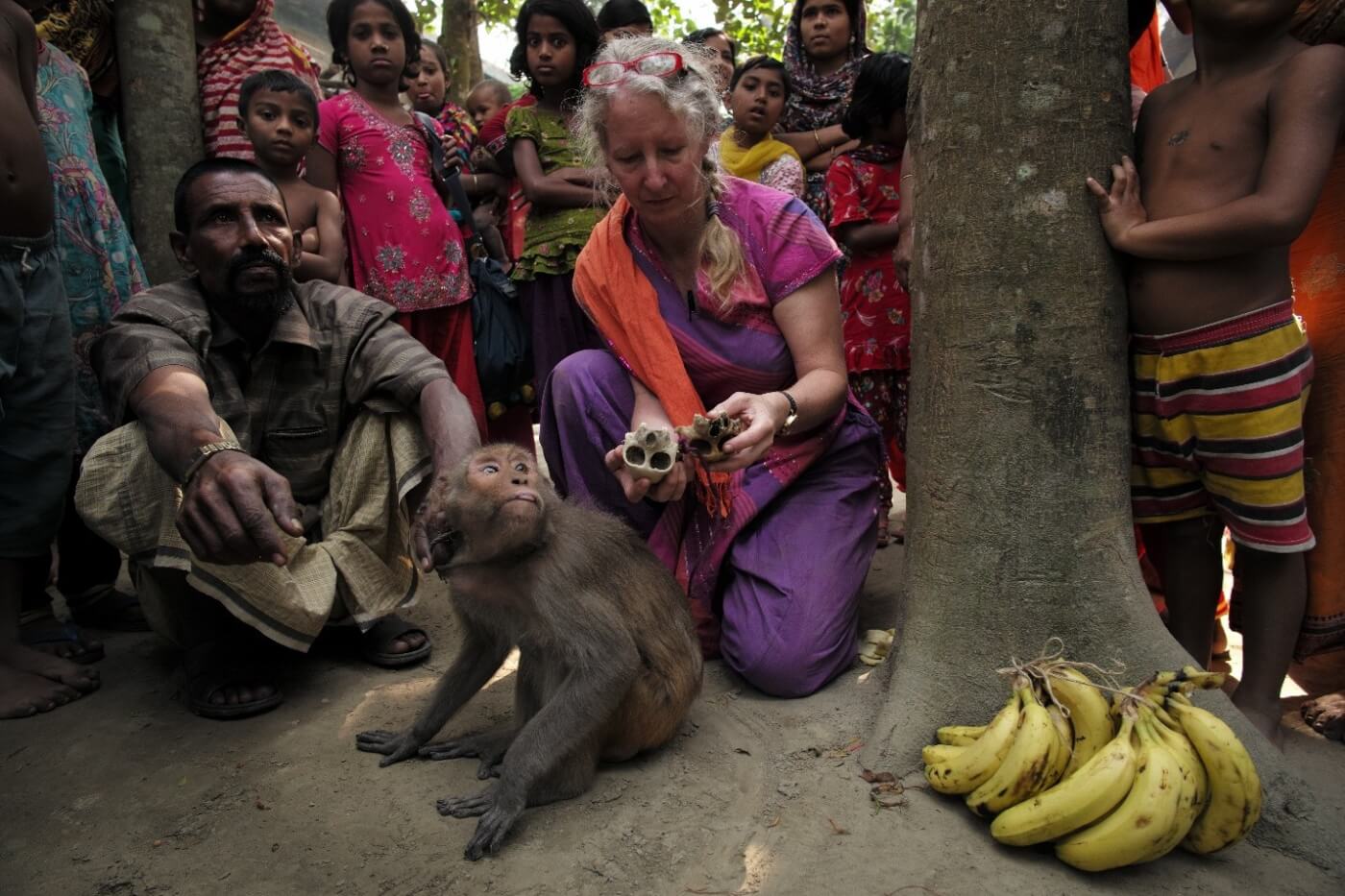
For years, my scientific mandate was to identify pathogens circulating in monkey populations and to insist that the monkeys themselves be understood as biological and social beings—not disposable tools. That work kept me inside the system long after it became clear that the suffering inflicted by captivity and infection was incompatible with credible science. Animals shaped by chronic stress, disease, and isolation cannot reliably model human health.
Following the Problem Beyond the Lab
Following the primate pipeline beyond the lab—from capture or breeding through transport, quarantine, and long-term confinement—made the stakes even clearer. Moving tens of thousands of monkeys across continents each year is not a neutral logistical exercise; it is a recurring biosecurity gamble that creates opportunities for pathogens to move, amplify, and evade detection. Federal oversight treats this as manageable paperwork rather than what it is: a systemic risk produced by industrial-scale primate importation and warehousing.
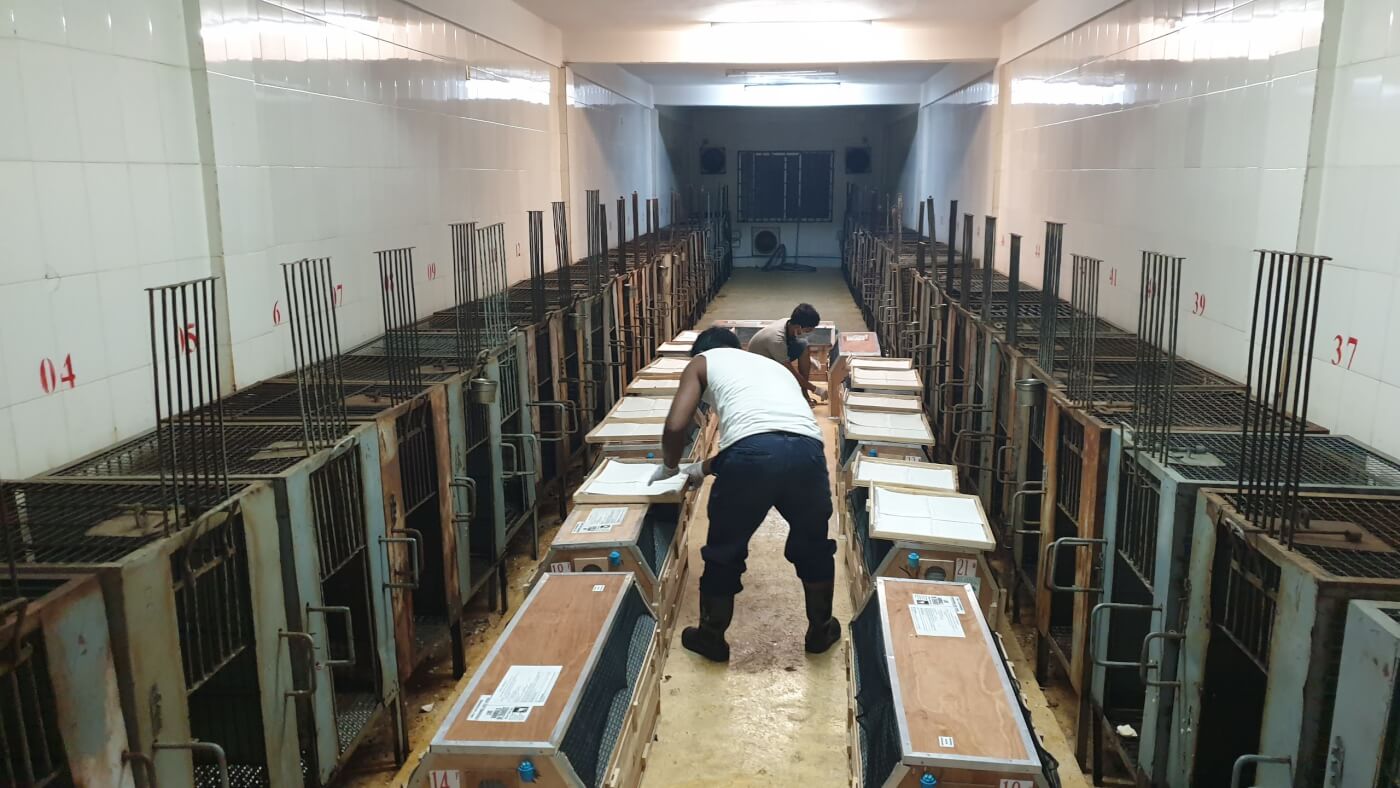
Since I joined PETA, our teams have documented these risks through public records, inspections, internal documents, whistleblowers, and investigations—and paired that evidence with on-the-ground organizing and legal action. Together, these efforts have helped stop two large-scale primate importation and breeding facilities in Texas and Georgia, targeting operations built around long-tailed macaques now listed as endangered. Those outcomes show that this supply chain is neither safe nor inevitable—and that disrupting it is both possible and necessary.
When the Science Moved On
By the time I left the University of Washington, I had reached the limits of what could be changed from inside the system whose flaws were deeper than leadership failures or weak oversight. Those failures matter, but they are not the whole story. The scientific justification for using primates has steadily eroded as evidence of poor translation to humans has accumulated.
Science has not stalled—it has moved on. Human-relevant approaches—often called new approach methodologies (NAMs)—now model human biology directly through advanced cell-based systems, organoids, computational modeling, and integrated data platforms that are already outperforming animal models in key areas of infectious disease and immunology. The real question is no longer whether alternatives exist, but why outdated primate-dependent infrastructure continues to be funded when better tools are available.
I did not come to PETA because I abandoned science. I came because I followed the evidence to its logical conclusion. Ending primate experimentation is not about rejecting science. It is about acknowledging that a model built on confinement, chronic stress, infection, and biological mismatch cannot meet the standards of rigor, safety, and relevance that modern science demands.
I spent my career trying to make the primate research system work. I left when it became clear that the responsible course was to help bring it to an end—and to accelerate the transition toward ethical, human-relevant science that does not depend on animal suffering or the illusion of control over complex biological risk.
No system that requires this much denial, distance, and damage deserves to continue.
No Monkey Should Have to Endure Cruel Experiments—It’s Time to Shut Down the WaNPRC
In 2013, Harvard University’s New England National Primate Research Center faced a similar crisis. Harvard’s leadership looked at the multiple animal welfare violations, the problems with keeping monkeys in laboratories, and the future of research priorities and decided to close the primate center. This was the right course of action, and UW should follow suit by closing the WaNPRC.
Join tens of thousands of PETA supporters calling for the immediate closure of the WaNPRC and the release of the monkeys to appropriate sanctuaries so that they can live out their lives with the safety and dignity that they deserve.
Primatologist Lisa Jones-Engel, Ph.D., is a Fulbright scholar who has studied the human-primate interface for 36 years. Her scientific career has spanned the field, the research laboratory, and the undergraduate classroom. She serves as senior science adviser on primate experimentation with PETA’s Laboratory Investigations Department. Dr. Lisa Jones-Engel is a subject in the 2026 documentary Sentient which premiered at Sundance Film Festival.
The Florida Fish and Wildlife Commission has charged the president of BC US with a misdemeanor after a recently imported monkey was tossed into a dumpster and went unnoticed for five days.

The world is mourning Dr. Biruté Galdikas, a tireless champion for our fellow primates and their forests.

PETA continues to save animals and end cruel experiments. Learn which mushroom company just ended tests on animals after hearing from us.