
Alarming New PETA Report Shows How ‘Cage-Free’ Hens Suffer as Much (and More, in Some Ways)
You’re at the grocery store, standing in the egg aisle. Two cartons sit side by side: one plain, one stamped with a “cage-free” label. It’s pricier, but you pick it up anyway because you want to do the right thing for chickens. You want to spare them from the agony of tiny wire cages. But what are you really paying for, and will you relieve suffering or just perpetuate it? That’s the awful question and the surprising answer you will read about in a shocking and impeccably researched new white paper out from PETA headquarters.
You are trying to do the right thing and the egg industry knows it. That’s how they dupe you. A new white paper sets out the case, and a strong case, that industrial “cage-free” systems cause many of the same cruelties—and can in some ways add to them—for birds, who despite the fancy labels and pictures of bucolic paradise, still endure crowding, mutilations, injury, chronic stress, transport, and terrifying deaths. And while sensitive birds pay the ultimate price with their lives at the end of their laying usefulness, shoppers are being deceived into paying more for the same cruelty to them along the way.
Pinpoint Research Findings Debunk the Egg Industry’s Cunning “Cage-Free” Scheme
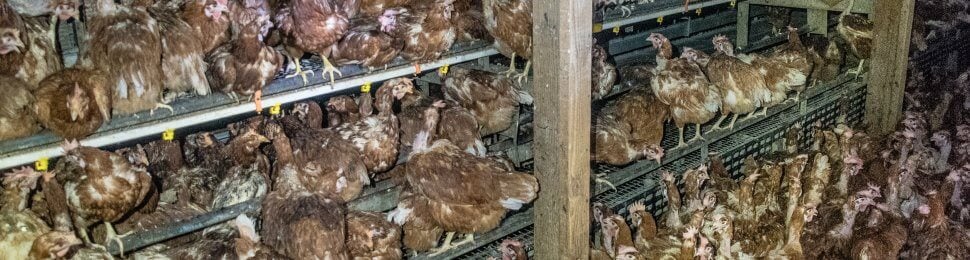
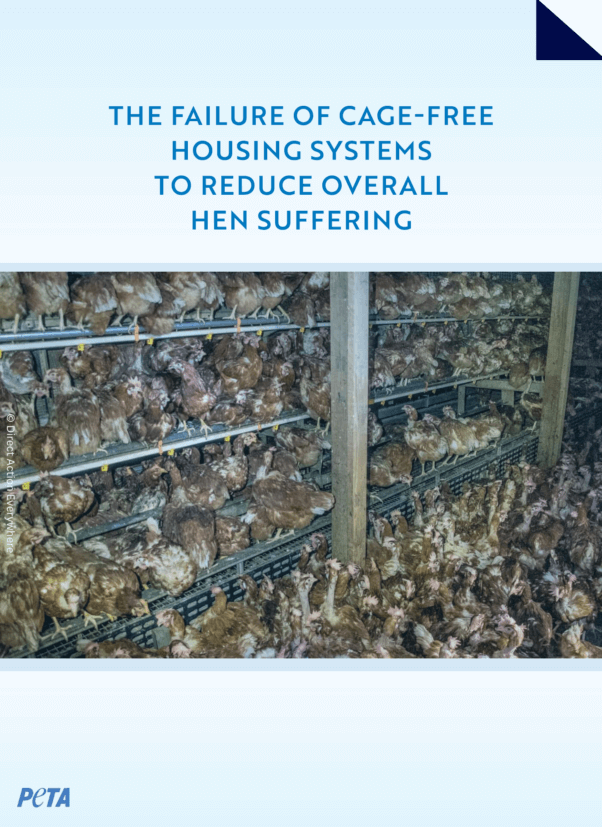
The “cage-free” myth that companies have carefully crafted does little to prevent birds from suffering. Instead, it shifts welfare burdens and can worsen certain welfare outcomes. Hens are more likely to be crushed by the weight of other hens as they pile on top of each other due to overcrowding in sheds. Instead of chickens trapped in metal cages, each with space about the size of an iPad, “cage-free” eggs come from the hens on the same factory farms, stuffed by the many thousands into a stifling shed with as little as one square foot per bird.
Distressing discoveries:
- “Cage-free” hens are confined to cramped, artificially lit barns, with tens of thousands of other birds, with no access to outdoor space.
- Up to 97% of “cage-free” hens suffer painful broken bones.
- Litter soaked with the hens’ accumulating waste burns their feet and legs, often causing infections.
- Ammonia-saturated dust burns their lungs and eyes, even leading to blindness in “cage-free” systems.
- Just as in caged facilities, chicks come from hatcheries that slice or burn off the tips of their tender beaks.
- Hens on both caged and “cage-free” factories come from hatcheries that kill male chicks by grinding them up alive.
These cruelties are systemic and widespread, as PETA has repeatedly exposed. In 2018, for example, our bombshell investigation into Hilliker’s Ranch Fresh Eggs—a “cage-free” operation referred to as “Chicken Disneyland” by its owner—revealed that the shed was crowded so tightly that the hens couldn’t even spread their wings, and that it reeked of feces.
PETA’s deep dive into the facts emphasizes the need for stronger consumer education campaigns to counter the egg industry’s misinformation scheme. Consumers deserve to know the facts: All eggs sold at stores are a product of cruelty to and exploitation of female chickens. Avoiding eggs can also improve your health, as they are extremely high in cholesterol and saturated fat, which can clog your arteries and lead to heart disease. Plus, today’s abundance of delicious vegan egg options makes it easier than ever to cut them out, not that the desire for a particular taste can ever justify supporting needless cruelty to animals.
The Bottom Line: “Cage-Free” Doesn’t Mean Free at All
“Cage-free” simply means severe confinement, rebranded. The only 100% humane food is vegan. YOU can take action, and we urge you to do so, by no longer buying hen eggs and speaking out against “humane-washing” companies and by sharing this page with others.

Marriott has already made progress for animals. Now, James Cromwell is asking the company to take the next step by offering vegan eggs at every property.
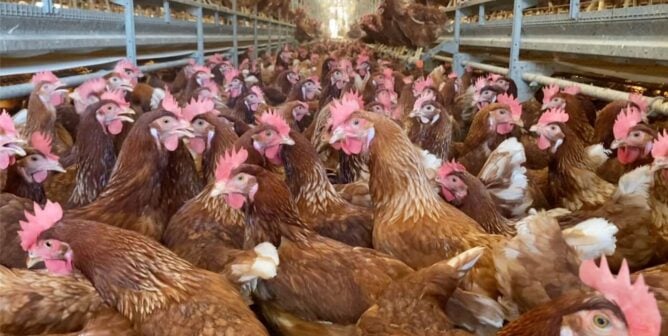
PETA’s undercover footage reveals (yet again) what egg companies hope shoppers never see.
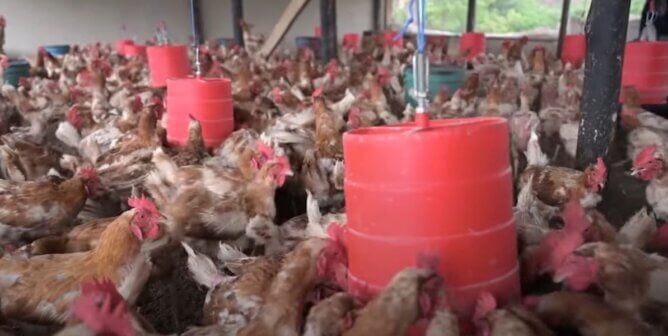
What happens when people learn how hens actually live on “cage-free” farms?

