
Monkeys Suffer Cocaine Infusions, Drug Withdrawal in Cruel UMN Experiment
A University of Minnesota (UMN) experimenter who PETA exposed for drilling screws into a monkey’s brain recently tried his hand at a new form of cruelty: addicting monkeys to drugs.
Experimenter Jan Zimmermann pumped cocaine into monkeys’ veins for months before forcing them to suffer through withdrawal.
He also subjected the monkeys to solitary caging, restraint, surgeries, and invasive scans, all while failing to find any new information on human substance use disorders.
Cocaine and Confinement
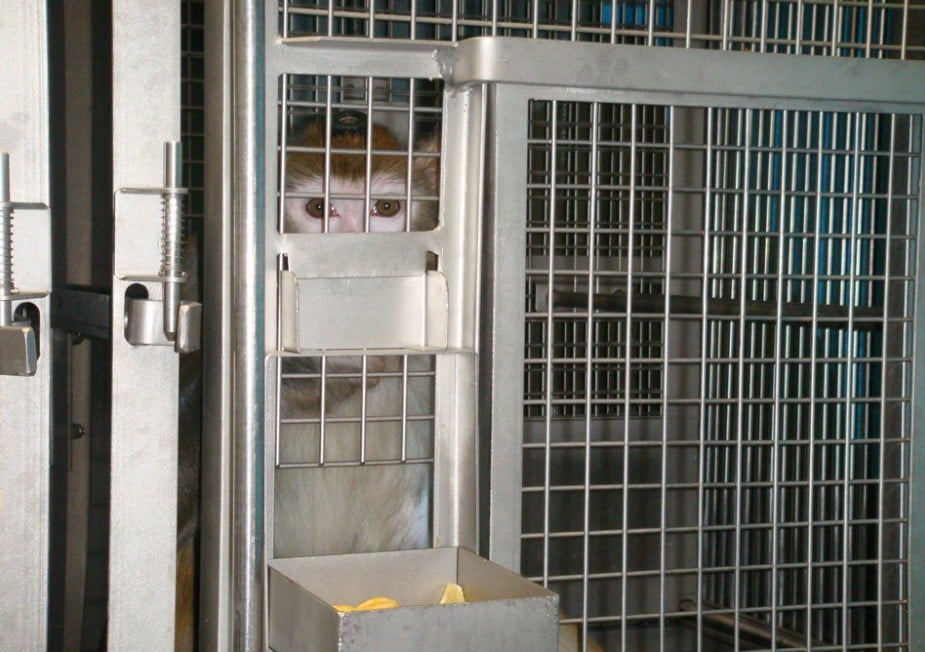
In a 2025 paper, Zimmermann describes confining four monkeys alone in cages and forcing them to wear aluminum collars. Staff used the collars to yank the animals by the neck from their enclosures and lock them into restraint chairs.
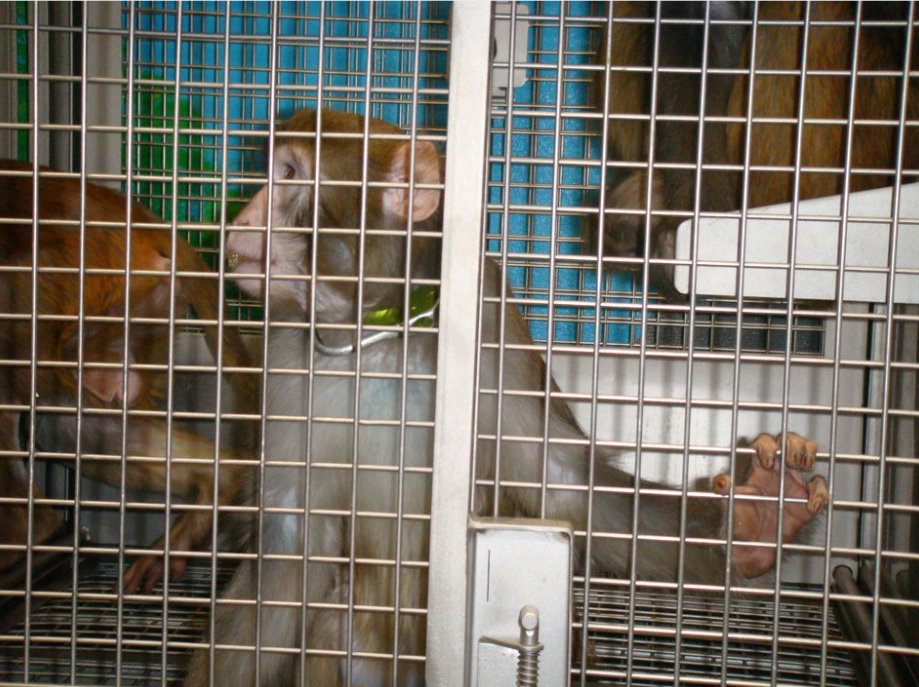
The monkeys then endured nine months of invasive surgeries, cocaine infusions, drug withdrawal, and repeated brain scans.
The monkeys were first trained to press a lever to receive juice, likely while being kept thirsty and deprived of water to force their cooperation. Eventually, experimenters replaced the juice with cocaine.
Every lever press delivered a dose of drugs directly into the monkeys’ bloodstream through ports surgically implanted under their skin that fed a large vein. For three months, the monkeys endured hours-long sessions five days a week, during which they could receive up to six cocaine infusions.
Experimenters then abruptly cut off access to the drug. The monkeys suffered 60 days of withdrawal symptoms, including cravings, depression, agitation, and anxiety, before experimenters provided cocaine again.
High Hopes Fall Flat
Zimmermann’s experiment touted lofty goals of investigating how cocaine use and addiction recovery affect brain activity and communication. Instead, months of suffering confirmed what most scientists already know: different monkeys respond differently to drugs.
Zimmermann didn’t test treatments for addiction. And he didn’t discover any new cures.
This isn’t surprising. Animals are poor models for human substance use disorders, and experiments on animals have long failed to produce treatments for humans. State-of-the-art, human-relevant research methods, such as human brain imaging, offer real promise and spare animals from being sickened, isolated, and killed.
A Record of Failures
Zimmermann has a lengthy history of tormenting animals in pointless curiosity-driven experiments that cause immense suffering, pain, and death.
University records reveal Zimmermann, who is not a surgeon, subjects monkeys to painful brain surgeries. He slices open their scalps, bolts headposts to their skulls, threads electrodes through the brain, and forces them to complete a battery of cruel tests.
In one incident, he drilled 20 screws so deeply into a monkey’s skull that they pierced his brain tissue. After the surgery, the monkey was lethargic, vomited, and showed arm weakness, abnormal eye movements, and signs of a severe headache. The monkey suffered for months before he was killed.
What You Can Do
UMN’s animal oversight committee should never have rubber-stamped Zimmermann’s junk science. After PETA exposed the rampant neglect, misery, and animal welfare violations in UMN laboratories, Zimmermann’s fellow monkey experimenter, Geoff Ghose, was shut down.
With your help, we can shut down the rest.
Please TAKE ACTION and urge University of Minnesota leadership to end all cruel experiments on animals: