
Federal Animal Welfare Violations Stack Up at the University of Minnesota
PETA has obtained federal inspection reports showing numerous serious violations of animal welfare laws in the University of Minnesota’s laboratories. Animals are repeatedly given inadequate pain relief or expired drugs, have improper access to food and water, suffer injuries and deaths during routine procedures, go without proper veterinary care after surgeries or illness, and more, according to the reports.
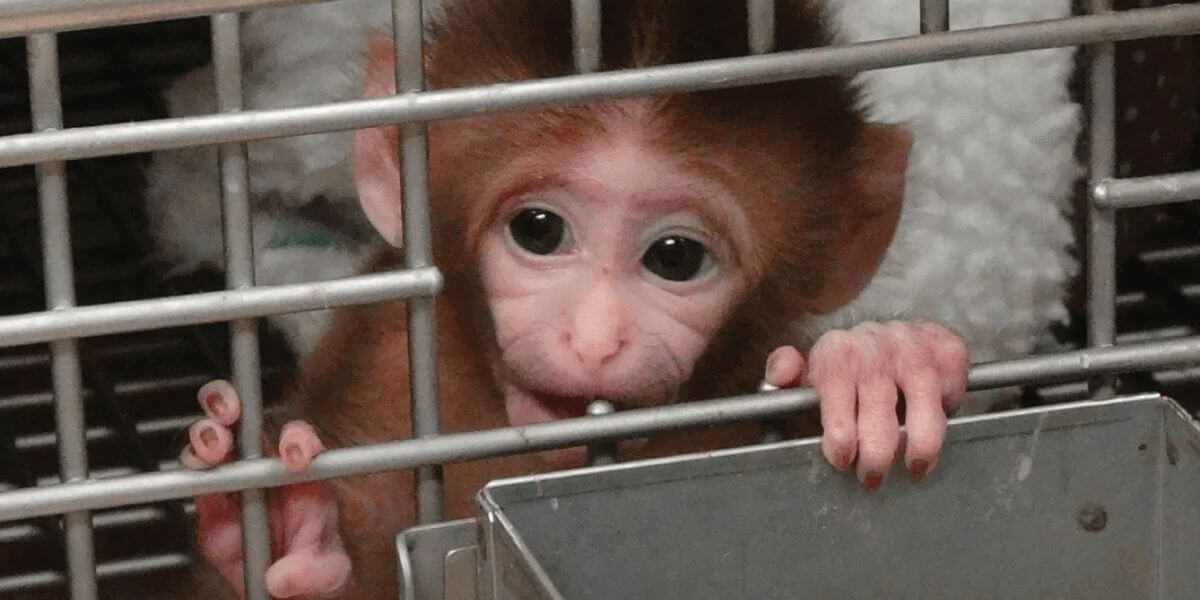
Experimenters also repeatedly fail to follow protocols approved by the animal oversight committee, subjecting animals to unapproved procedures, deviating from required pain relief regimens, and exceeding surgical limits—causing animals pain and death.
Experimenters cannot, or will not, meet the bare minimum requirements set by the Animal Welfare Act (AWA) and the Public Health Service Policy on Humane Care and Use of Laboratory Animals (PHS Policy). These problems prompted the U.S. Department of Agriculture to issue an official warning against the university, a rare enforcement action reserved for the most egregious incidents.
Please join PETA in demanding an end to the University of Minnesota’s cruel experiments:
Federal reports document the following violations:
March 3, 2026 (PHS violation 11U): Ten mice subjected to cranial surgery did not receive pain relief, as required.
January 26, 2026 (PHS violation 11T): Between February and November 2025, a large number of pigs died during a kidney transplant experiment. Of nine pigs undergoing surgery, five were killed shortly afterward because of complications such as poor kidney function or possible infection, and one died of cardiac arrest during surgery. Two others were killed before transplant when the preserved kidneys could not be safely used. Experimenters failed to monitor blood pressure in three pigs, collected excessive blood from one, administered too much anesthetic to another, and failed to maintain normal body temperature in a fourth. It’s suspected that one pig was burned by a heating pad, and another suffered suspected electro-surgery burns.
December 4, 2025 (PHS violation 11S): Between July 2025 and September 2025, 309 mice did not receive post-operative painkillers as required.
December 4, 2025 (PHS violation 11R): Of six sheep used in a surgery, one was found dead after, possibly from bleeding or a stroke. Others were killed because of surgical complications or when the implanted test device did not work as intended. The animal oversight committee then required increased monitoring, strengthened recordkeeping, and a new surgeon, suggesting that an unqualified surgeon operated on the sheep.
August 14, 2025 (PHS violation 11Q): A mouse received pain medication 1.5 hours after surgery instead of before, as required, leaving a period without adequate pain control.
May 29, 2025 (PHS violation 11O): Experimenters subjected eight rats to unapproved procedures, including injecting compounds into their abdomens. The rats were killed and dissected after it was discovered that the experiment was not approved.
April 29, 2025 (one AWA violation): Two rhesus macaques endured surgeries of 7.5 hours, more than double the maximum approved duration. One macaque also received inadequate pain control and delayed post-operative medication. During recovery, when problems can occur, the macaque was left without documented continuous observation and no recorded surgical summaries.
February 12, 2025 (PHS violation 11M): Two rats did not receive required pain relief after cranial electrode implantation surgery. One rat received pain medication after surgery, rather than before, and the other received incomplete doses.
January 10, 2025 (PHS violation 11J): Mice used in tumor experiments were not monitored weekly and daily once weight loss reached 10–15 percent, as required. Fourteen mice lost more than 10 percent of their body weight, but were not weighed daily. Some mice lost more than 20 percent but were likely left suffering greater pain and distress due to inadequate monitoring.
December 27, 2024 (PHS violation 11L): Forty mice did not receive required pain relief after surgery.
December 23, 2024 (PHS violation 11K): Sixteen mice were killed using a drug that expired months earlier.
December 9, 2024 (PHS violation 11I): Sixteen mice were held for more than 24 hours in an unapproved facility.
December 9, 2024 (PHS violation 11H): An experimenter ignored protocol, allowing 10 mice to regain consciousness after a craniotomy, then failing to provide the animals with pain relief.
October 25, 2024 (PHS violation 11G): Nine mice were given an expired painkiller during a procedure that can cause extreme pain and distress.
October 25, 2024 (PHS violation 11F): Sixteen mice became ill after they were injected with an experimental substance. Eight died. The remaining eight were killed due to signs of distress. An investigation did not identify the cause of the unexpected deaths.
September 9, 2024 (PHS violation 11E): Three mice were given expired pain relief after surgery.
September 4, 2024 (three critical AWA violations):
Sheep: A sheep was underdosed on pain medication due to a veterinary staff miscommunication. In a separate incident, another sheep underwent a painful procedure but did not receive the required pain medication or antibiotics after care was transferred from veterinary to laboratory staff.
Monkeys: Three monkeys were deprived of fluids to increase motivation for behavioral tasks, and the minimum required water allotment was not provided. Staff also reduced the monkeys’ water allotments without consulting the veterinary staff as required. One monkey began eating less, and their appetite improved only after being given free access to water.
In another incident, three monkeys were left without water after a supply valve to their cages was shut off. Although staff signed records indicating water checks had been completed, the monkeys had no water for three days and showed reduced or no appetite before the problem was discovered.
In three separate incidents, monkeys escaped during routine handling procedures. One escaped monkey suffered a bruised eye during recapture. Another suffered a toe injury, requiring amputation. And a third put glass from a broken beaker in their mouth, causing cuts.
Hamsters: Six hamsters were given expired painkillers during a procedure after staff failed to check expiration dates.
June 21, 2024 (PHS violation 11D): Six mice were caged without access to water after laboratory staff put their cages in racks without water nozzles. Staff did not notice until two mice died.
June 21, 2024 (PHS violation 11C): After a surgery, 10 mice suffered wound reopening, exposing underlying tissue. Some also suffered burns from prolonged exposure to a fur-removal product. One mouse was found dead, and the remaining nine were killed.
May 30, 2024 (PHS violation 11B): Experimenters incorrectly administered injectable pain relief to six mice after castrating them and failed to monitor their recovery.
May 30, 2024 (PHS violation 11A): Mice lacked access to water after laboratory staff moved their cages, failing to return their water bottles into position. Four mice died.
April 10, 2024 (PHS violation 10Y): Six mice were given expired pain relief during a procedure.
April 10, 2024 (PHS violation 10X): Mice lacked access to water after laboratory staff failed to properly secure their cages. One mouse died. Another was treated for dehydration.
February 1, 2024 (PHS violation 10W): Three rhesus macaques were left without access to water for three days after the valve supplying their cages was shut off, and the problem went unnoticed. The USDA cited UMN for this failure.
January 8, 2024 (PHS violation 10U): Three mice without access to water died after laboratory staff failed to replace the water valves on the cage rack when changing the water supply.
December 11, 2023 (PHS violation 10R): A monkey escaped during transfer after jumping into a box and causing the staff holding the box to lose balance. The monkey then climbed atop other cages, injuring another monkey’s toe. The USDA cited UMN for this incident.
May 16, 2023 (PHS violation 10M): A rat in a food restriction experiment died after losing 90 percent of their weight. The animal was supposed to be killed if the target weight was not restored within five days of providing additional food, but the rat remained underweight for eight days. The laboratory staff failed to contact the veterinary staff for assistance.
April 14, 2023 (PHS violation 10L): A monkey escaped a laboratory chair during an attempt to implant a headpost in the animal’s skull. Laboratory staff broke a glass beaker, and the monkey put it in their mouth, causing cuts. The USDA cited UMN for this incident.
April 5, 2023 (PHS violation 10K): Six mice did not receive pain medication within the required timeframe.
January 19, 2023 (PHS violation 10I): A rhesus macaque developed a high body temperature after surgery. Staff adjusted the heating equipment, and a later CT scan showed that the monkey had suffered a burn likely caused by the heat.
September 12, 2022 (PHS violation 10H): Three mice died after being weaned. Their declining health was noted, but not reported to the veterinary staff as required.
August 25, 2022 (PHS violation 10G): Sixty-six mice did not receive required pain medication during an implantation surgery.
June 30, 2022 (PHS violation 10F): A recently weaned mouse was trapped between the wire frame and cage lip and was crushed to death when the cage was returned to the rack.
June 30, 2022 (PHS violation 10E): A rat underwent an unapproved second major surgery the day after a kidney transplant to examine the status of the transplanted kidney. Veterinary staff later found the rat in poor health and killed them.
May 19, 2022 (PHS violation 10D): Twelve mice were not given required pain medication after a skin graft.
March 7, 2022 (PHS violation 10B): A mouse endured a tail amputation without pain relief. Experimenters failed to cauterize the wound, and staff later discovered blood in the animal’s cage.
October 22, 2021 (USDA Enforcement Action – Official Warning): The USDA issued an official warning to the University of Minnesota for multiple violations of the Animal Welfare Act, resulting in the suffering and deaths of hamsters and a cat.
September 7, 2021 (one critical AWA violation): A cat used in a procedure received a paralytic drug at 4.5 times the intended infusion rate and developed respiratory failure and could not maintain normal breathing. Although veterinary staff intervened, the cat showed signs of dangerously low blood volume and oxygen levels, raising concern about organ damage. The cat was killed.
August 12, 2021 (one critical AWA violation): Numerous hamsters suffered deaths over several weeks. Four babies and three adults died between July 1 and July 4, but staff did not notify the veterinarian or animal oversight committee until July 8. When notified, the veterinarian was out of the office, and staff failed to contact any backup veterinarians. Four more baby hamsters died between July 9 and July 20, but the veterinarian did not learn of the deaths until July 21.