Are Capybara Cafés Ethical? Here’s What You Need to Know
You may have seen capybara cafés in advertisements or on social media. These places typically charge a fee for visitors to sip coffee and interact with the world’s largest rodent—the capybara. But do these experiences hurt animals? We’re here to answer this important question: Are capybara cafés ethical?
Who Are Capybaras?
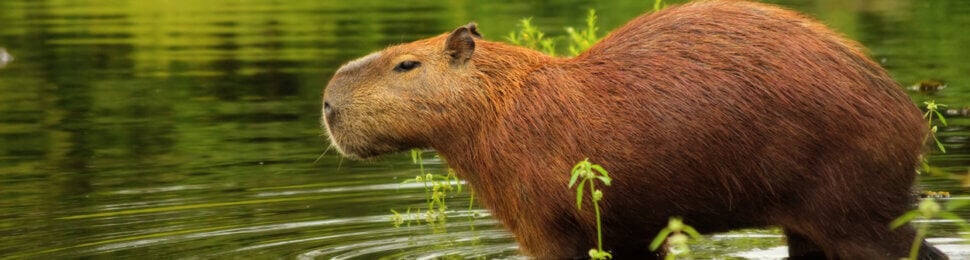
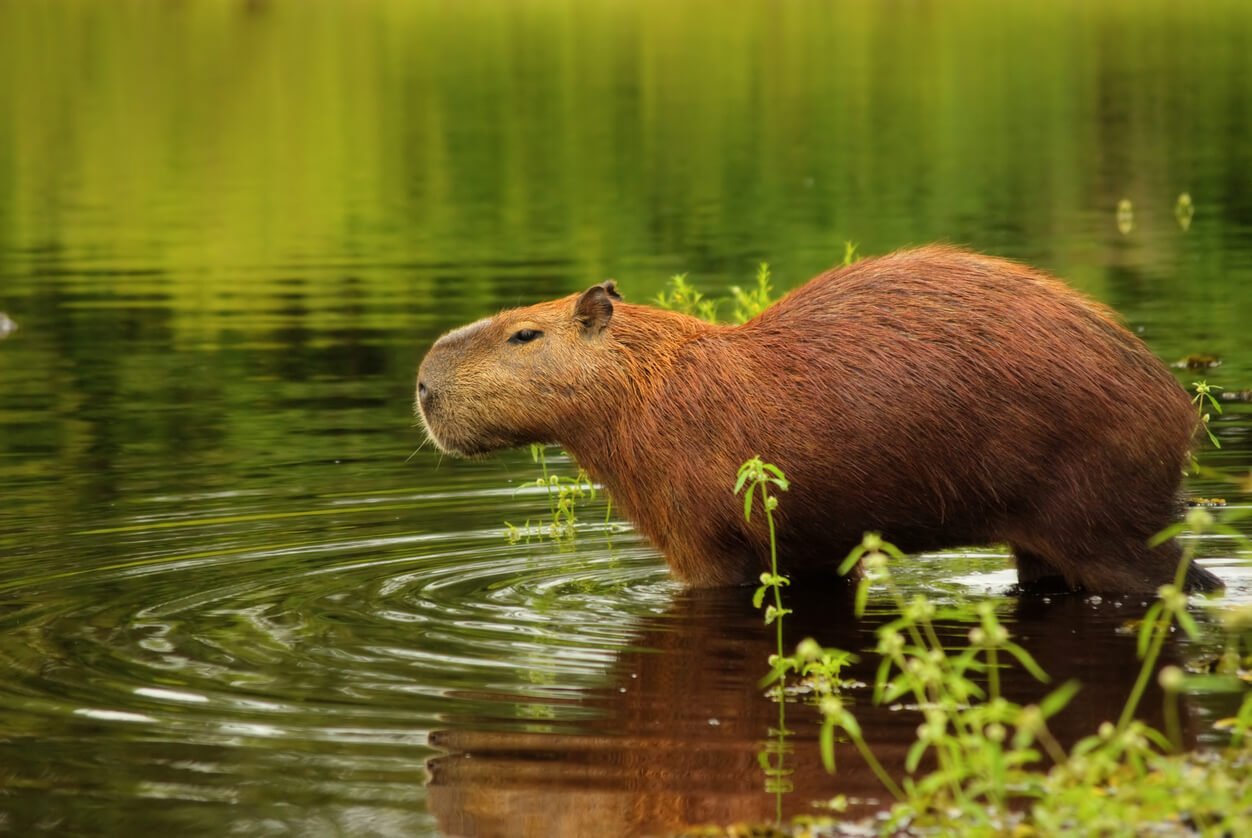
Capybaras are highly social, semi-aquatic animals native to South America. In nature, they live in large groups and thrive in open spaces near bodies of water like rivers, lakes, ponds, marshes, and swamps. Their daily lives involve foraging for grasses, resting in the shade, and bathing or swimming to stay cool and clean.
Capybaras rely on the companionship of their own species for their emotional and physical well-being. They don’t sleep in long stretches. Instead, they take short naps throughout the day, while others in the group stand guard. If they sense danger, capybaras will hide underwater; they can hold their breath for nearly five minutes!
What Are Capybara Cafés?
Originating in Japan and found in a couple of U.S. states, capybara cafés keep animals in unnatural settings and charge guests to get close to capybaras—usually just before or after enjoying food or drinks.
Why Do Capybara Cafés Exist?
When you are fascinated with an animal, you may get an urge to see them up close without thinking about the bigger picture. Café owners prey on that desire and dupe well-meaning people into paying money to look at, touch, and feed them in confined, noisy, stressful environments that can never meet their needs.
What Makes Capybara Cafés Unethical?
Capybara cafés raise many red flags. Here’s why:
- Stress and sensory overload: Constant poking and prodding by strangers, exposure to unfamiliar smells, loud noises, and crowded spaces can trigger chronic stress. Any place that allows direct contact between wild animals and humans is not somewhere you want to go.
- Lack of natural habitat: Cafés could never replicate a capybara’s natural environment. They don’t have enough space, water access, or enrichment, which can lead to physical and psychological issues such as pacing, excessive grooming, depression, and obesity.
- Loss of autonomy: Capybara cafés exploit animals for profit and human entertainment. These sensitive, intelligent animals have no say in being used as selfie and social media props.
- Breeding concerns: A major ethical concern is where the animals came from. Cafés get capybaras from roadside zoos or backyard breeders, both of which usually require taking young animals from their mothers.
Can You Appreciate Capybaras Ethically?
Yes! If you care about capybaras—and who doesn’t?—here’s how to learn about them and value them ethically:
- Support accredited wildlife sanctuaries that prioritize animals’ well-being. Check out the Global Federation of Animal Sanctuaries (GFAS) for a list of facilities.
- Learn from a distance by watching documentaries and reading books about capybaras.
- Never visit places that exploit animals, such as any place that lets you touch or feed animals, circuses with animal acts, roadside zoos, and marine parks.
Capybaras aren’t the only animals exploited by humans for entertainment. But YOU can help stop it!
Text VEG to 73822 to get the latest vegan lifestyle tips, recipes, and urgent action alerts texted right to your phone.
Terms for automated texts/calls from PETA: https://peta.vg/txt. Text STOP to end, HELP for more info. Msg/data rates may apply. U.S. only.



What do PETA, iPhones, and chickens have in common? A first-of-its-kind app that’s sparking curiosity worldwide. Try it now!
Ready to resolve to go vegan in the new year? Help animals, the planet, and your own health by following PETA’s pointers for a kinder 2026.

Forget “hot girl summer.” Make it a “hot activist summer” with this compassionate bucket list. Pick your favorites and make a difference.

Theme parks should be about thrilling rides and family fun, but these “abusement” parks are anything but fun for the animals used in “attractions.”