A Bear Shot and Eaten and Other Abuses at Cherokee Pits
Update: Relief—for Some—at Last!
Great news: Relief has come for six American black bears, three grizzlies and two Asian black bears who have spent years in misery at the Chief Saunooke Bear Park, a roadside zoo near Cherokee, North Carolina—until now. The bears have been moved to a comfortable, safe environment where they can now walk through tall grass, dig in the dirt, climb trees, take a dip in a pond, and just live as bears were meant to.
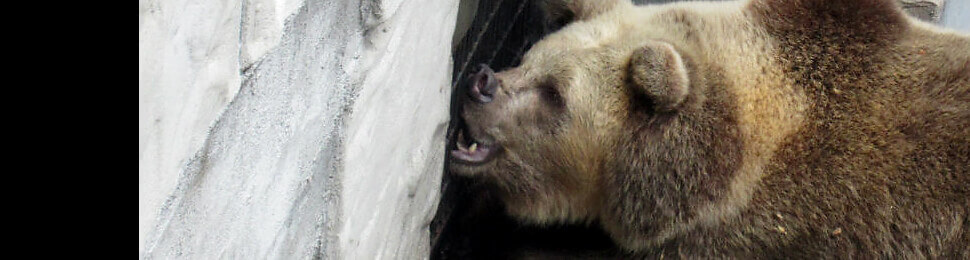
In 2012, a PETA investigator documented appallingly inhumane conditions at the zoo. The bears lived in concrete pits and were so stressed by their constant confinement that they continually turned in tight circles, paced endlessly, and broke their own teeth gnawing on the metal cage bars. Shortly after PETA’s investigation broke, the U.S. Department of Agriculture (USDA) suspended the zoo’s exhibitor’s license and slapped it with a $20,000 fine. Chief Saunooke Bear Park is now closed for good.
This is a very happy ending for the bears at Chief Saunooke, but the fight is not over. Bears are still suffering in Cherokee. Please join us in asking the owner of the Cherokee Bear Zoo to retire the bears to a sanctuary.
***
In 2012, PETA conducted an undercover investigation at Chief Saunooke Bear Park (CSBP), a roadside collection of bear pits in Cherokee, North Carolina. CSBP confines bears to desolate concrete cells, where they are forced to beg for food and are deprived of all that is natural and important to them. Renowned game show host and animal rights activist Bob Barker has joined PETA in calling for the bears to be rescued.
PETA’s investigator found that the bored and frustrated bears turn endlessly in circles. One of them routinely rocks back and forth—a sign of profound deprivation and stress. They bite the metal cage bars, which breaks their teeth. This is painful and can cause bone infections, so it requires veterinary care, but PETA’s investigator never saw a veterinarian at CSBP or the bears given any pain relief.
Workers sometimes leave the bears, who have a remarkably well-developed sense of smell, trapped amid their own waste all day long. Instead of removing feces, they spray a citrus-scented product into the pits. One worker told PETA’s investigator, “You just got to be careful because [federal officials] think you’re trying to hide something. Which we are.”
A worker blamed the bears’ persistent loose stool on bread, but CSBP kept feeding it to them and selling it to visitors to throw to them. CSBP’s manager and bear handler admitted that workers deny bears food because, “If you feed them … they ain’t gonna eat for people.” The manager boasted that he sprays water at one bear “all the time … to get his ass up” and force him onto display.
The park’s bear handler said it took “20 shots … in the head” to kill one of CSBP’s bears. He said that there is “[n]othing better than a bear that’s been eating bread and apples all its life. Meat’s good.”
The manager admitted that he gets high at CSBP “just to change things up” and that CSBP refuses to hire Native Americans, who own the park land and whom one worker called “long-distance corn ni**ers.” The bear handler threatened to “knock out” a U.S. Department of Agriculture (USDA) veterinarian and said that he would “probably trap her” in a pit with a bear if “it ever [came] down to life and death.”
In June 2012, the USDA charged CSBP with violating the Animal Welfare Act (AWA) and requested that its license be revoked or suspended. PETA submitted its evidence, which shows that many apparent AWA violations continue to occur, to the USDA and asked that it confiscate CSBP’s bears. In January 2013, the U.S. Department of Agriculture (USDA) released an order that suspended Chief Saunooke Bear Park’s exhibitor license and fined the facility $20,000. According to the order, CSBP’s license will remain suspended until it is able to demonstrate full compliance with the Animal Welfare Act—if it ever can.
At SeaWorld and other ‘abusement’ parks, dolphins endure a lifetime of confinement, control, and exploitation.
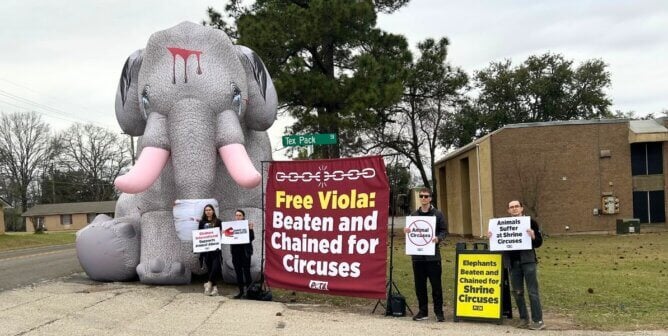
Do you want to help Viola in person? Please join local PETA supporters at local demonstrations near you to help free Viola the elephant.
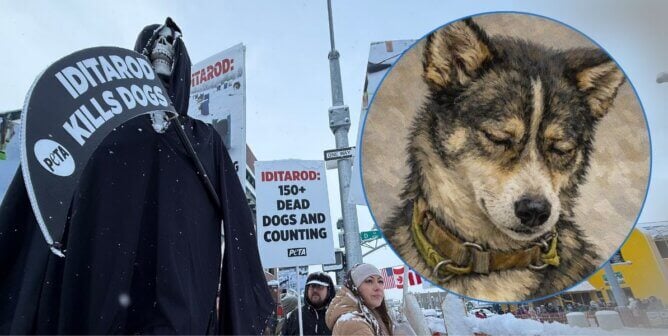
This year’s race left the same cruel mark as the ones that came before it. Get the full story here.

