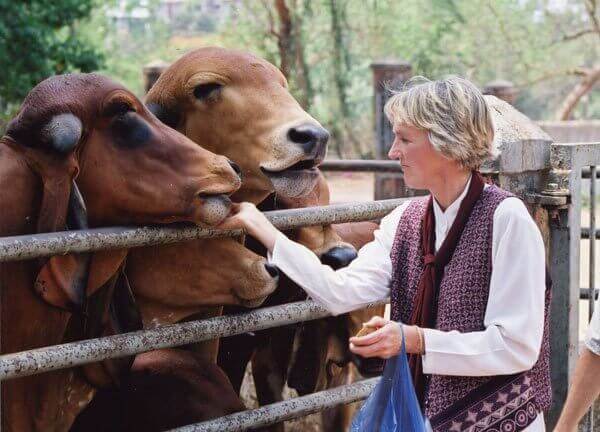
Don’t miss this moving video! PETA President Ingrid Newkirk shares daring rescue stories from the 30th anniversary edition of “Free the Animals.”

Here’s how PETA scientists use webinars to promote the use of modern, non-animal test methods and reduce the reliance on experiments on animals.

Longtime PETA target Covance has been slapped with a court order. Here are 11 times PETA squared up to the supplier and laboratory-for-hire.

PETA scientists regularly award promising researchers with the tools they need to replace animal tests with modern, kinder methods.

Eli Lilly’s CEO was caught on camera spouting lies about why his company refuses to ban the cruel forced swim test. PETA is setting the record straight.


PETA scientists will attend the 2022 Society of Toxicology (SOT) meeting in San Diego. At the conference, PETA scientists will both give and receive prestigious awards.
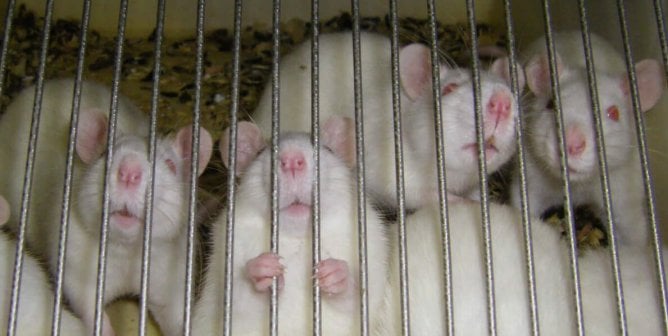
Mice and rats in laboratories suffer from “cold stress”, altering the results of experiments in an epidemic of bad science. Tell Congress to act now to protect mice and rats.

Following talks with PETA, Grape King Bio, a major Taiwanese health food company, has banned animal tests. Find out how to encourage other companies to do the same.

A recent study confirms what PETA’s been saying all along: experiments on mice and rats are cruel and unreliable.

PETA Science Consortium International has named London Harper the winner of its Student Award for Travel and Mentorship in Non-Animal Toxicology—here’s why.
Dr. Amy Clippinger guides a team of scientists from PETA entities around the world who are advancing non-animal toxicology testing approaches.

PETA worked hard this year to help animals who are used in cruel experiments. Here’s what we accomplished in 2021!
PETA scientists will continue working with the EPA and other agencies, academics, industries, and nonprofits to advance the best non-animal science.
A newly approved method can replace skin allergy tests using animals—experiments in which their fur is shaved and a chemical is applied to their exposed skin.

PETA science group honors Peter Pôbiš for his presentation of a 3-D model of the human cornea—one that determines how chemicals might irritate the eye without using animals.