Captured or Captive Bred Birds
There is no such animal as a “cage bird.” All caged birds were either captured or captive-bred. No bird was born to be in a cage. In the wild, these beautiful beings are never alone, and if they are separated for even a moment, they call wildly to their flockmates. They preen each other, fly together, play, and share egg-incubation duties. Many bird species partner for life and share parenting tasks.
Unfortunately, the brilliant colors, speech capabilities, and intelligence of these animals has made them the third-most popular animal companion in the United States, with an estimated 20 million birds confined to cages in homes across the country.1 As a result, many birds do not get the mental stimulation or companionship that they need, and normal bird behaviors—such as flock-calling, biting, chewing, and throwing food—are often unwelcome to unprepared human guardians. The result may be abandoned or isolated birds who, as The Washington Post reported, “lose their minds.”2
Breeding for Profit
In the late 20th century, the popularity of keeping birds as companions resulted in a smuggling business based in Central America. It proved devastating to wild bird populations, and many birds who were caught died during transport or soon after.3 The Wild Bird Conservation Act stemmed the flow of birds into the U.S., although it is still a problem in other countries.4 A zoologist at Texas A&M told National Geographic, “In the United States, if you go buy a parrot, the odds of it being captive bred are 99 percent, (but) if you’re in Peru, Costa Rica, or Mexico, the chances of it being wild caught are 99 percent.”5 Australian ornithologist Joseph Forshaw estimates that for every wild-caught bird that survives transport to a cage, “at least 10 die”, but breeding operations have perpetuated the myth that baby birds will grow up to become great companions and have also helped perpetuate consumer demand.6 Just as there are puppy mills for dogs, there are bird factories, where breeders warehouse hundreds or thousands of nondomesticated birds for their offspring.
To a “breeder,” a bird is a commodity to be placed with a “mate” to reproduce and is seldomly—if ever—allowed out of the nest box. Birds who are returned to breeders because of behavioral problems are often kept as “breeding stock,” thus perpetuating the problem behaviors in future generations, as birds are bred for color, not for temperament. Birds do not have to be kept in healthy, hygienic conditions or fed high-quality food to produce eggs. Typically, eggs are removed and incubator-hatched, and babies are hand-fed special formulas. Egg removal signals the female to produce another egg, and another, and another … eventually ruining her health by depleting her body of much-needed calcium and increasing her risk of becoming egg-bound, a condition that is nearly always fatal.
Even in low-profit enterprises, most birds live in small cages, surrounded by the frightening sounds of many unfamiliar birds. A bird who cannot choose his or her own partner may become depressed, especially if separated from a previous partner. Birds forced to cohabitate in small quarters with a “mate” who is not of their choosing may also become aggressive. The frustration and confusion that they experience after being thrust into a cramped environment with a “stranger” is often displayed as “mate aggression,” in which the male mutilates or even kills his female companion.
Enslaved and Stressed
Unlike domesticated dogs and cats, captive-bred birds are only a few generations removed from their wild ancestors, so many of their natural behaviors do not mesh well with human companionship. Birds are meant to fly and be with others of their own kind. Considering that some parrots fly 30 miles per day in the wild, it’s no wonder that confinement can cause birds to have temper tantrums and mood swings.7 Birds can also be mischievous and highly destructive. In the wild, they typically play in the treetops and chew on branches or leaves. In captivity, birds display this behavior by chewing on walls, door moldings, electrical or telephone wires, furniture, or any other material that they can get to. “Screaming” is really a bird’s way of calling out to flockmates who, in the wild, might be half a mile away. Punishing birds only increases their frustration and makes them more unruly, as they do not understand that their natural behaviors are not welcome in a human home environment. One researcher who spent time in Australia and Indonesia observing wild lorikeets stated, “Parrots are the primates of the bird world …. They are not content to sit on a perch and sing. They actively want to go and manipulate objects all the time.”8
Birds imported from the wild are often frightened and high-strung, and both hand-raised and wild-caught birds often become neurotic, pulling out feathers and mutilating themselves, sometimes to the point of death. When they are ready to breed, many species naturally pluck some feathers to prepare for nest-building and egg-sitting, but when humans interfere with their natural behaviors and disrupt biological and instinctual cycles by imprisoning birds, plucking becomes a destructive compulsion. Plucking can also be caused by physical problems, such as malnutrition or allergies.
Hand-raised birds crave affection and companionship, human or nonhuman, and sometimes do not like to let their human companions out of their sight. They don’t understand the separation that occurs when their humans go to work or, worse, on vacation. Birds interpret the disappearance of a partner or companion as trouble and may think that they are vulnerable to predators. These fears can compromise birds’ immune systems, and they may succumb to sickness or death.
What You Can Do
For more information on the trafficking of wild birds and other animals, please read our factsheet on the exotic animal trade. Refuse to stay at resort hotels that keep caged birds as “decorations.” Let your travel agent and the hotel managers know that you will not support this cruelty.
Never buy a bird from a pet store or buy companion-animal supplies or food from stores that sell birds. If you or people you know already have birds and are unable to provide them with companionship and space to fly, please consider taking one of the following actions:
- Find out if there is a bird sanctuary or large indoor/outdoor aviary (or an outdoor one in a very warm climate) where you can place the bird. Ideally, you should place birds with members of their own species. Check the climate, opportunities for mating and privacy, and other key factors.
- If you cannot find a reputable sanctuary, consider placing the bird with someone who has other birds of the same species, allows them to live in a free-flight situation, and will never separate them once they have bonded. Also, make sure that they frequently visit a board-certified avian veterinarian and do not breed birds.
For more information on keeping birds as companions, please visit the Avian Welfare Coalition’s Web site at avianwelfare.org.
References
1American Pet Products Association, “Pet Industry Market Size & Ownership Statistics,” 2017-2018 APPA National Pet Owners Survey, accessed 17 Feb. 2019.
2Laura LaFay, “Bye-Bye Birdie, Parrots’ Demands Often Prompt Owners to Take Flight,” The Washington Post 27 Aug. 2001.
3Frantz Dantzler, “Smaller Birds Most Adaptable to Cages,” South Bend Tribune 27 Aug. 2002.
4Ibid.
5Christine Dell’Amore, “Have Parrots Become Too Popular for Their Own Good?” National Geographic, Jun. 2018.
6Claudia Dreifus, “A Passion for Parrots and the Fight to Save Them in the Wild, The New York Times 5 Sep. 2006.
7Dantzler.
8Mira Tweti, “Plenty to Squawk About; Exotic Birds Emerged as the Fastest-Gowing Pet Choice in the ’90s. Now Abandoned Parrots Fly Wild Throughout Southern California. Why Polly Needs Better Protection,” Los Angeles Times 20 Jul. 2003.
9Dell’Amore.
10Andrew U. Luescher, D.V.M., Ph.D., ed., Manual of Parrot Behavior (Ames: Blackwell Publishing Professional, 2006) 60.
11E.R. Bennett, DVM, “What to Feed Your Pet Bird,” Chicago Exotics Animal Hospital, accessed 17 Feb. 2019.

Demand that the individual be charged under Trinidad and Tobago’s Summary Offenses Act.
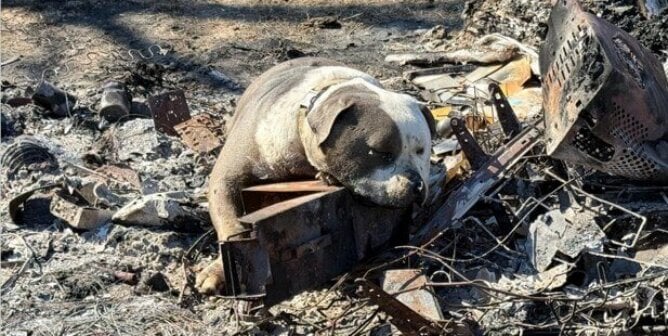
Urge Sheriff Clore to take action to secure the removal of and appropriate care for every animal at the Dogtown property and to pursue a criminal investigation and appropriate charges against Sera to prevent her from obtaining more animals.
Urge management to create an “exit strategy” for Marilyn, perhaps by installing a one-way escape door so that she cannot reenter once she leaves.
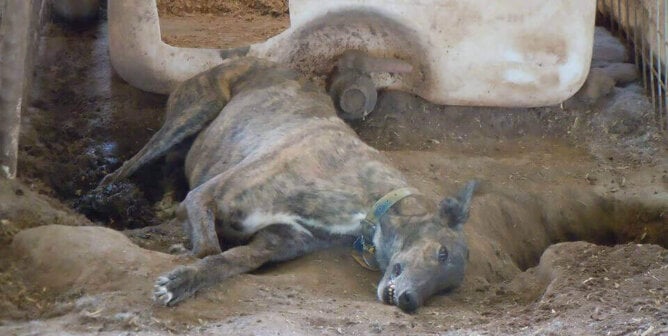
Urge the Harper County Board of Commissioners to protect dogs from being caged and bled their entire lives by voting “no” on Wilson’s request.
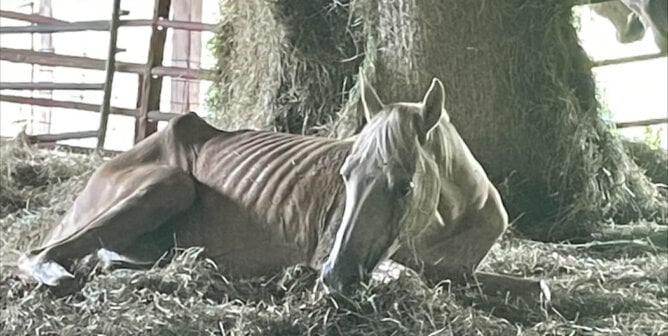
Please politely urge Van Buren County officials to mandate immediate veterinary care for these horses.
In addition to appeals to government authorities, PETA has written to FIFA, asking it not to stand by silently while this devastating extermination occurs on its behalf. Join us and send FIFA a message now!