POLL: Most Americans Don’t Know What ‘Cage-Free’ Really Means—But There’s Hope for Hens!
You’re standing in the grocery store looking at egg cartons. The words “cage-free” stand out on the label. If you think that the birds who laid those eggs don’t suffer, you’re not alone.
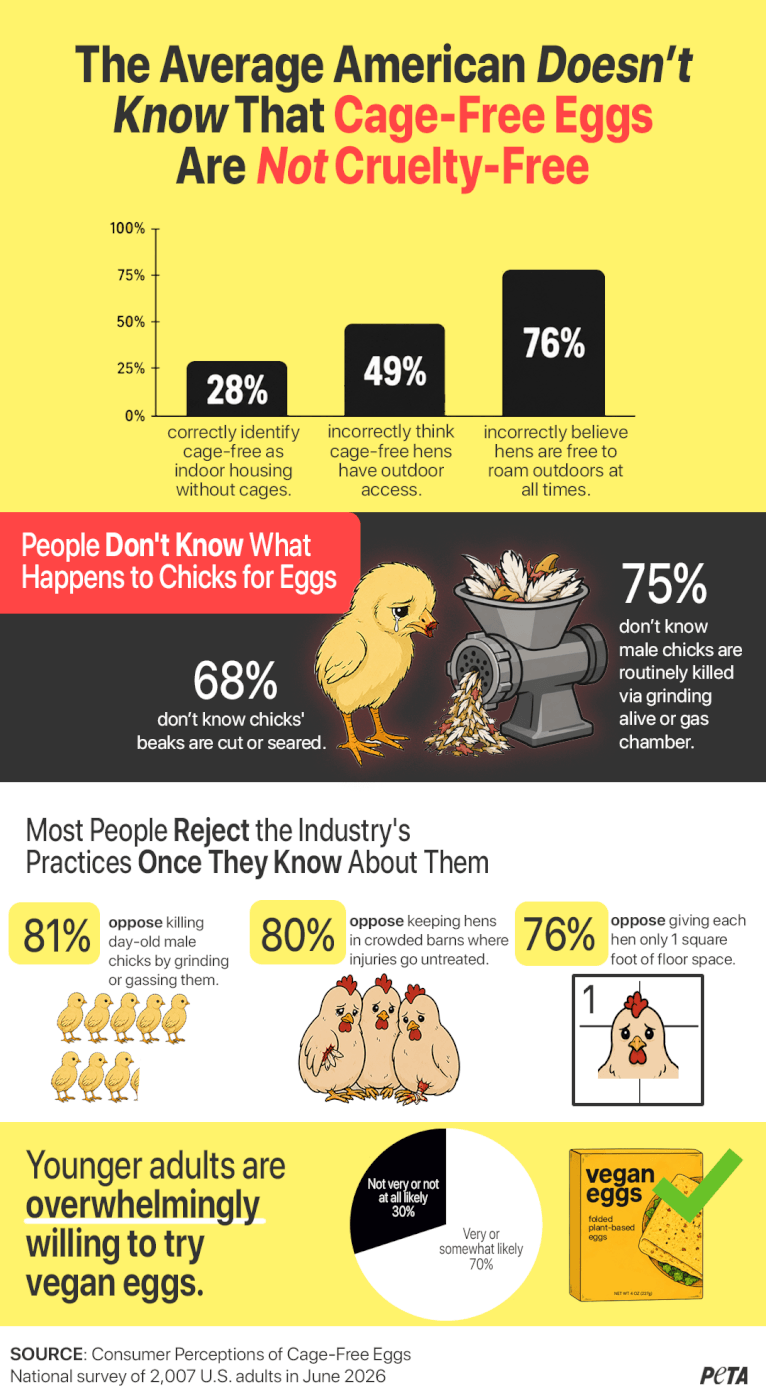
According to a new Harris Poll1 conducted on behalf of PETA, nearly half of Americans incorrectly believe that “cage-free” hens have access to the outdoors. The survey results reveal the depth of the deception in the egg industry.
The answers of 2,007 American adults expose a troubling reality: Many consumers don’t know what “cage-free” means—or what hens endure on farms that use the label.
But there’s hope! The findings also show that when people learn the truth about life inside these facilities, many reject the industry’s attempt to portray cage-free systems as humane.
Here’s what the poll uncovered about consumer perceptions of cage-free eggs, and how those perceptions shift when people learn more about the realities behind the label.
Americans Care About Animal Well-Being
The poll made one thing clear: Consumers care about animals and want to make more compassionate choices when they learn about industry-standard cruelty and suffering.
The poll found that:
- 73% of Americans said animal welfare claims such as “cage-free,” “free-range,” and “pasture-raised” are at least somewhat important when purchasing eggs.
- 43% said these claims are extremely or very important to their purchasing decisions.
What Americans Think ‘Cage-Free’ Means
The “cage-free” label exists to convince consumers that hens’ lives are significantly improved—and according to the PETA/Harris Poll survey, that misleading message is working.
The survey found that:
- 49% of Americans incorrectly believe that “cage-free” means hens either have outdoor access or are free to roam outdoors at all times.
- Only 28% correctly identified cage-free hens as being housed indoors with thousands of other birds but without cages.
What ‘Cage-Free’ Actually Means
Hens on cage-free egg farms are still raised in crowded factory farm conditions. Instead of confining birds to cages, these facilities typically cram them into sheds with tens of thousands of other birds with no access to the outdoors.
- Each hen may have as little as one square foot of floor space—about the size of an iPad.
- Hens can be crushed, trampled, and injured because of crowding.
- Up to 97% of “cage-free” hens suffer broken bones.
- Waste-soaked litter can burn hens’ feet and legs, causing painful infections.
- Ammonia from accumulated waste can irritate birds’ eyes and lungs and may even lead to blindness.
The Cruelties Most Consumers Never Hear About
The poll uncovered enormous gaps in public awareness about some of the egg industry’s most common cruelties—including those that happen on “cage-free” farms.
The survey found that:
- 68% of Americans were not aware that hatcheries routinely slice or burn off the sensitive tips of chicks’ beaks. This painful mutilation is done to prevent extremely stressed birds from pecking one another.
- Only 25% of Americans were aware that hens used for “cage-free” eggs can come from hatcheries that routinely kill day-old male chicks because they can’t lay eggs.
- After learning that these facilities commonly kill male chicks by grinding them up or gassing them, 81% of Americans said this cruelty is unacceptable.
Shoppers Reject Cruelty Once They Learn the Truth
When Americans learned more about common cruelties on cage-free farms, many said they would rethink their purchasing habits.
The survey found that:
- 51% of Americans said they would be somewhat or very likely to consider vegan or plant-based egg options such as Just Egg, YoEgg, or scrambled tofu. That number jumped to 70% among adults ages 18-34.
The poll suggests that the egg industry is banking on consumers not knowing what happens behind the “cage-free” label.
The Real Opportunity
As more people learn what the “cage-free” label really means—and how hens suffer in these systems—many are willing to rethink their choices.
Check out this video showing the power of public education in action:
And that’s good news for hens. Chickens are intelligent, social individuals who form friendships, communicate with one another, and care deeply for their families. Given the chance, they spend their days basking in the sun, dustbathing, foraging for food, exploring their surroundings, and building nests to care for their babies. None of that is possible inside a crowded, filthy shed.
As a consumer, you have the power to spare animals suffering with every meal. Don’t underestimate that impact. By choosing vegan foods and encouraging others to do the same, you can help hens and other animals avoid lives of confinement, deprivation, and violence. And if you’ve ever been misled by humane-washing labels like “cage-free,” let us know.
1This survey was conducted online within the United States by The Harris Poll on behalf of PETA from June 15 – 16, 2026, among 2,007 adults ages 18 and older. The sampling precision of Harris online polls is measured by using a Bayesian credible interval. For this study, the sample data is accurate to within ±2.6 percentage points at the 95% confidence level. For complete survey methodology, including weighting variables and subgroup sample sizes, please contact Sara Groves at 207-812-8258 or [email protected].
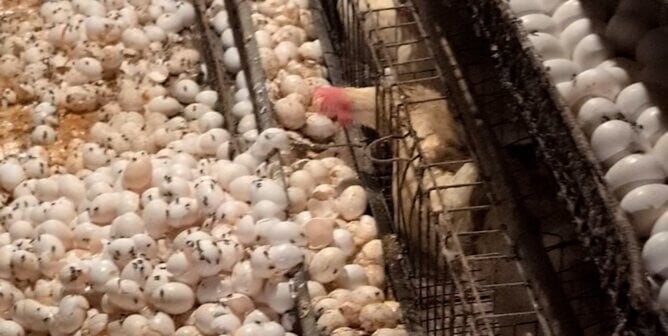
A whistleblower says they saw feces-covered hens, dead cats, and rotting bird corpses at a conventional egg farm. These allegations aren’t anomalies. THIS is the egg industry.
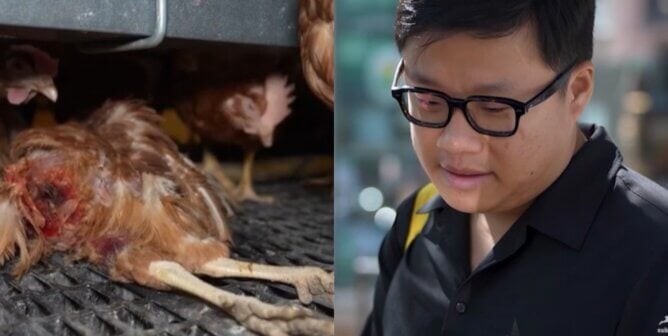
PETA took footage from “cage-free” egg farms to Whole Foods shoppers. What they saw shattered the myth that the egg industry has been selling to consumers for years.
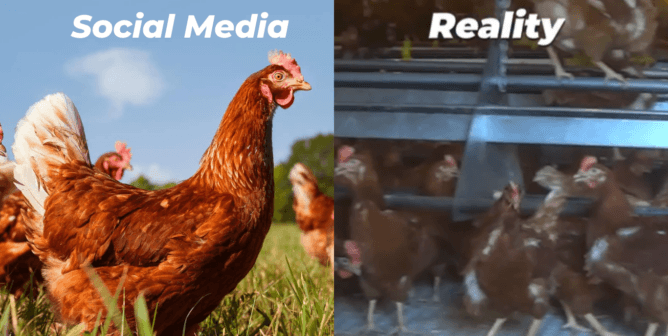
Vital Farms calls it “retirement.” It’s mass slaughter. And when a shed collapsed on thousands of birds, that’s what was allegedly suggested.