
Several Dead, Possibly Poisoned Cats Allegedly Littered This Egg Farm. That’s Just the Beginning.
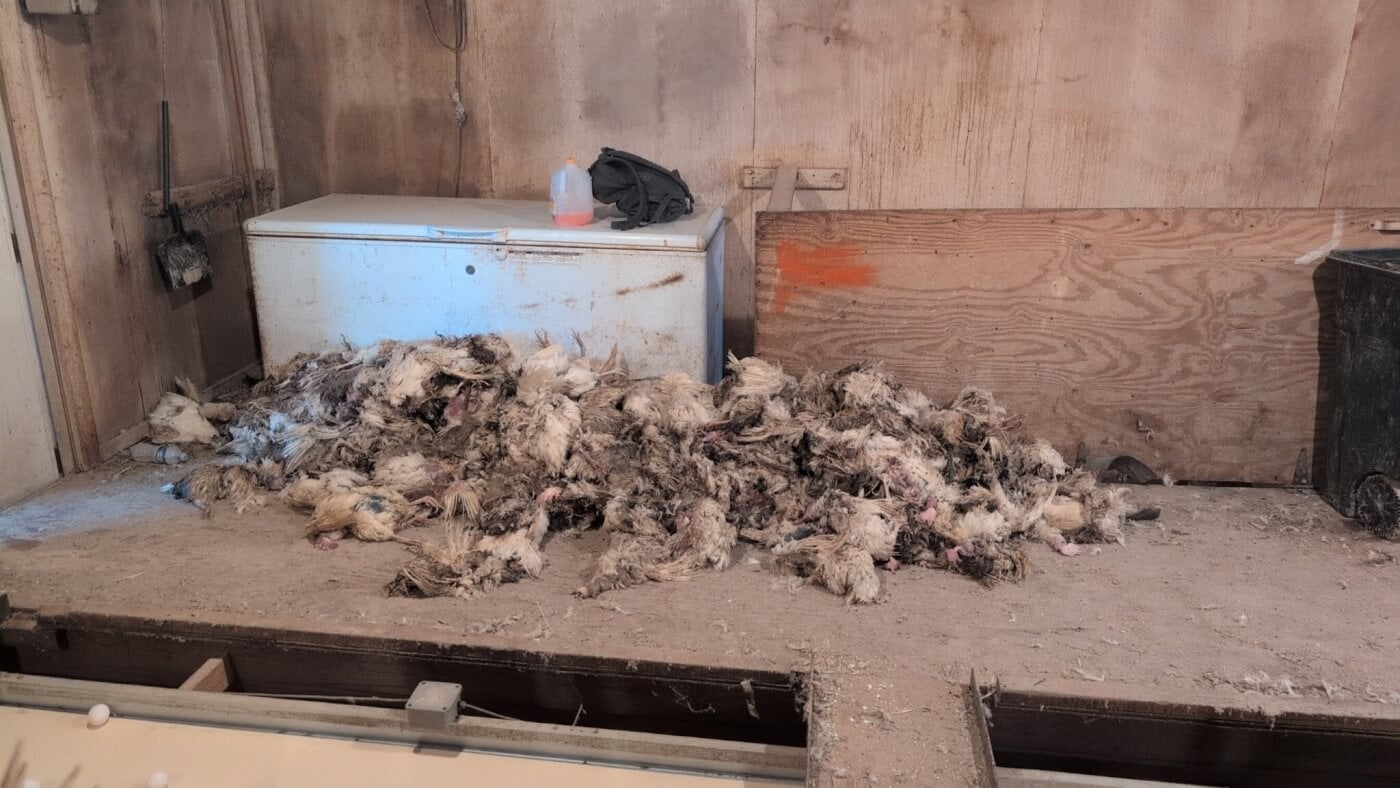
“Happy Hens, Quality Eggs.” That’s how Sauder’s Eggs markets the eggs it sells. But a whistleblower at Shady Brae Farms, owned by a Sauder’s Eggs supplier, contacted PETA with allegations that paint a very different picture. They allegedly saw dead cats, hens languishing in feces-filled pits for months, workers leaving rotting bird corpses among living animals, and more than 3,000 birds dying during a heatwave.
And those claims are only the beginning. Worse still, they’re the kind of allegations that emerge from egg farms again and again.
What the Whistleblower Reported From Inside Shady Brae Farms
The eyewitness described a pattern of neglect, suffering, and filth at Shady Brae. Here’s what they told PETA:
- Workers left rotting, swollen, decomposed, or skeletal hen remains in cages.
- The whistleblower found several dead cats on the property and believed they had been poisoned, either intentionally or after consuming poisoned mice. Another dead cat was found in a trash can inside one of the sheds.
- Shed temperatures reached approximately 103 degrees during a heatwave. Management waited about five hours after being alerted before adjusting ventilation systems. Thousands of birds allegedly overheated to death as a result.
- Workers left injured hens to suffer if they were still laying eggs. One bird’s comb (the fleshy red crest on top of a chicken’s head) was partially ripped off, exposing part of her skull.
- Hens who fell out of cages were covered in feces when workers pulled them from waste-caked pits and returned them to cages. Others remained trapped in the pits, surviving on spilled feed.
- The farm reportedly left birds without food for up to 36 hours when broken feed lines were not quickly repaired.
- Cages were severely crowded with far more birds than they were designed to hold.
- Dangerous equipment was overheated and smoking, and earlier this year, a fire killed dozens of chickens.
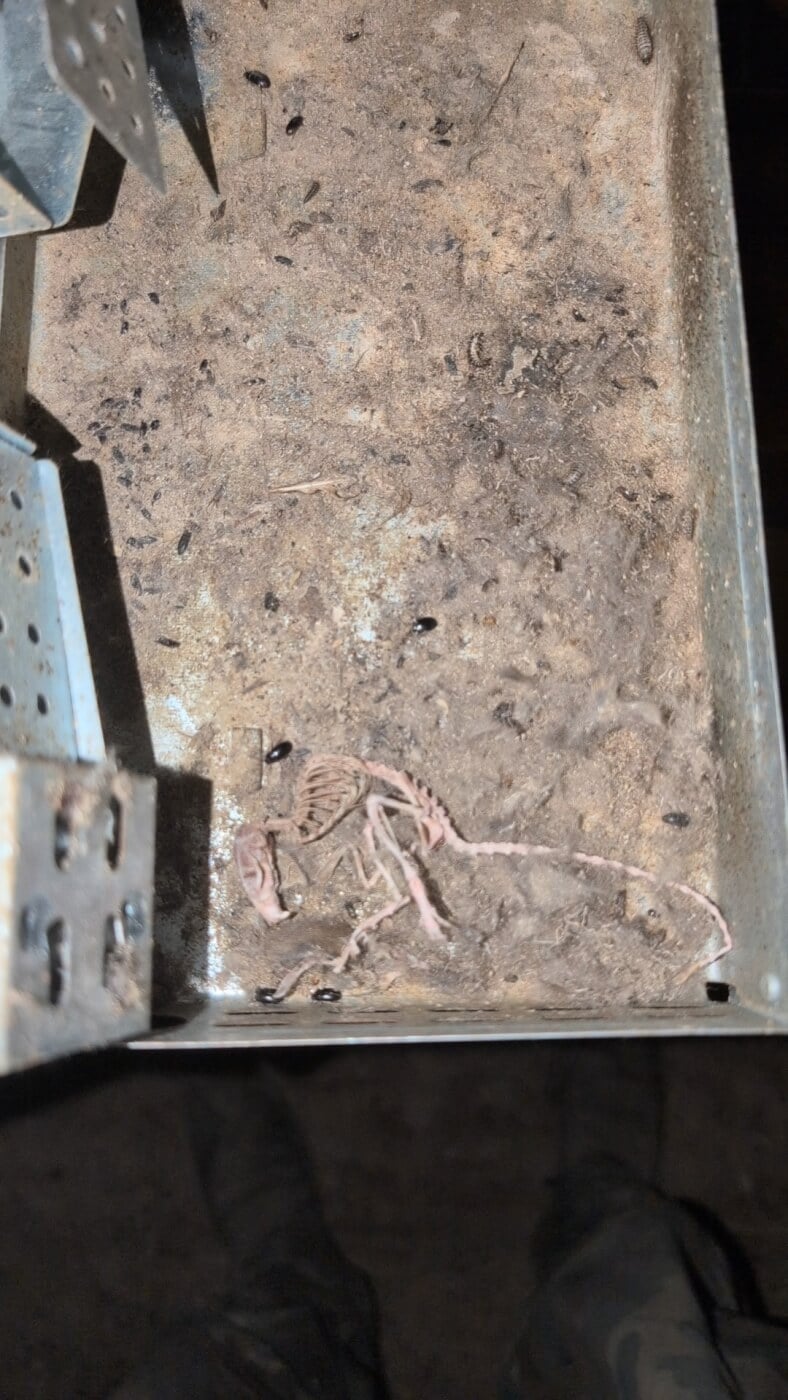
- Sheds were crawling with mice. The farm poisoned the mice, raising the question of whether hens were at risk of consuming poisoned mice or contaminated feed.
- Sheds were infested with black mold.
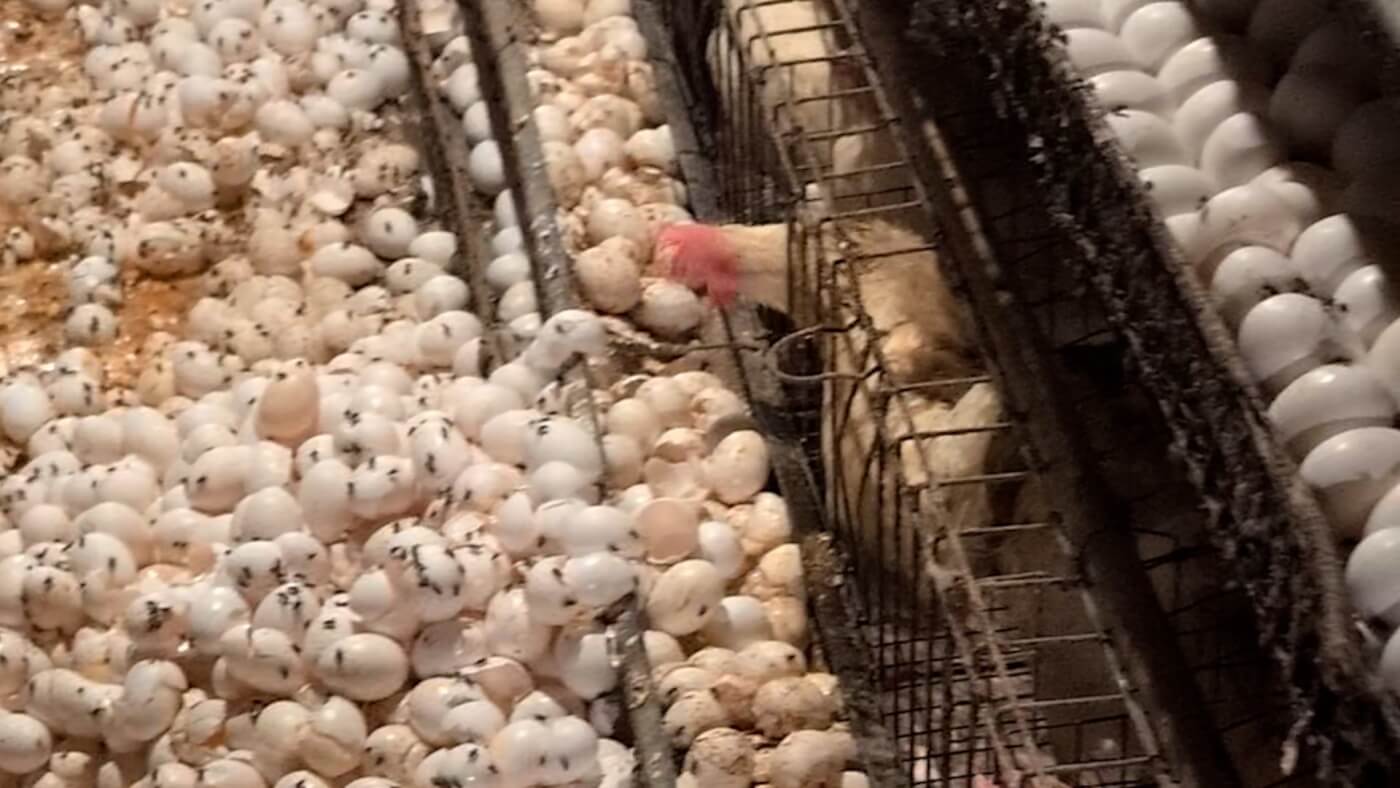
- Egg belts broke or tangled so often that eggs sat on floors or piled up for days; eggs covered in flies or feces remained in production; rotten eggs were sent to the wash cycle; and some eggs were not refrigerated, washed, or shipped for days or weeks.
- Disinfectant powder was rarely present despite posted biosecurity signs.
A Familiar Story in the Egg Industry
The egg industry wants consumers to picture chickens pecking in grassy fields under open skies. But all across the industry, whether or not a label says “cage-free,” “organic,” or “humane,” these animals are gassed to death or sent to slaughter when their egg production declines.
From battery-cage operations like Shady Brae to “cage-free” and “pasture-raised” farms that warehouse thousands of birds in packed sheds, the egg industry treats living, feeling animals like garbage.
The Only Way to Help Hens Is to Leave Them—and Their Eggs—Off Your Plate
Following the whistleblower report, PETA sent complaints to the Pennsylvania Department of Agriculture and the Pennsylvania State Police, urging them to investigate the alleged cruelty to animals, sanitation violations, and food-safety risks at the farm.
In the meantime, spread the word: Hens aren’t egg-laying machines. They’re intelligent, social individuals who form complex relationships, communicate with one another, dream when they sleep, and worry about future events. They feel joy, pain, and fear, just as humans do.
There’s no magical certification, welfare standard, or marketing slogan that can make exploiting our fellow animals for their eggs “humane.” The ONLY way to ensure hens aren’t suffering for your breakfast is to stop eating their eggs and go vegan.