
5 Things You Never Learned About Pavlov’s Experiments
Who was “Pavlov’s dog?” What is a “Pavlovian” response? Pavlov’s experiments with dogs supposedly taught us about classical conditioning. Bring food, the dogs salivate. Pair that food with the sound of a bell, and soon enough, the dogs start drooling at the sound alone.
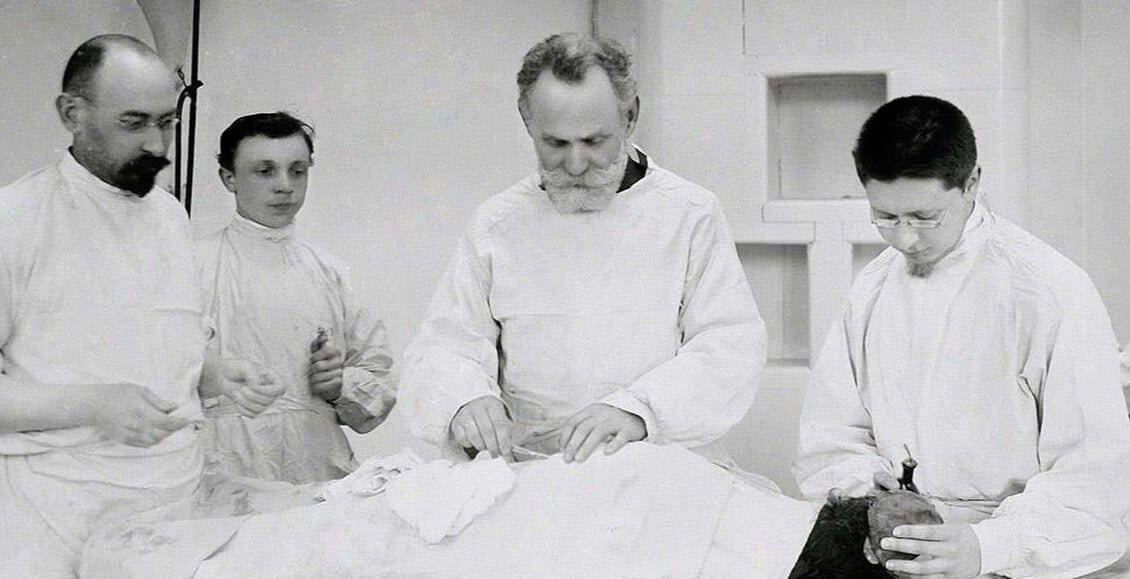
But none of that actually happened. Ivan Pavlov’s experiments in the Soviet Union have been humane-washed to justify cruel tests on animals. For more than six decades, Pavlov starved, mutilated, confined, and killed thousands of dogs in his gruesome experiments—all in an attempt to prove something we could have learned from non-harmful tests with human volunteers.
Here are five things about Pavlov’s experiments that will outrage you.
1. He didn’t use a bell.
There was never a bell in Pavlov’s torturous experiments. He did, however, electroshock dogs to record their reactions. And in what should come as a surprise to absolutely no one, dogs suffered mental breakdowns from the electric shocks.
2. He restrained dogs for hours on end.
Pavlov often kept dogs strapped into harnesses or restraining devices for extended periods, allowing him to conduct repeated tests on them day after day. Many of these “chronic experiments” lasted for months or even years, with the same dogs being tied up, operated on multiple times, and used as living tools for data collection. Pavlov treated the dogs like equipment—objects to be clamped in place, cut open, and studied for as long as they could stay alive.
3. He cut into dogs’ cheeks, necks, and stomachs.
Pavlov performed painful and invasive surgeries on dogs, including putting tubes into their cheeks, necks, or stomachs to collect saliva and gastric juices. In one ghastly “sham-feeding” experiment, he cut into a dog’s esophagus so that food never reached their stomach. They would keep eating while the lab worker collected secretions through the hole. His lab made the “Pavlov pouch” by cutting into a dog’s body, pulling a small section of his stomach through the opening, and stitching it to the outside of the animal.
4. Pavlov’s laboratory became a “factory” for dogs’ digestive juices.
Through his gruesome experiments, Pavlov’s laboratory produced large quantities of gastric juices collected through “sham-feeding.” The laboratory workers sold the secretions to the medical market, where they were bizarrely used as a bogus “remedy” for human indigestion. The process was vile: Workers strapped dogs to tables, kept them hungry, and forced them to eat while their stomach secretions were collected through tubes. By 1904, the lab was peddling more than 3,000 containers of dogs’ stolen stomach secretions each year.
5. He starved dogs to induce stress.
After a flood swept through Pavlov’s laboratory, leaving the animals even more traumatized, he noticed their previous conditioning had broken down. Instead of recognizing their suffering, he starved the dogs for three days to see if hunger would “re-trigger” their old responses. It didn’t. So he continued deliberately pushing dogs into nervous breakdowns to study how stress-induced trauma could be created—despite the obvious fact that terrorizing dogs tells us nothing about human psychology.
Are Dogs Still Used in Experiments?
More than a century has passed since Pavlov tortured the dogs in his lab. Today, 48,000 dogs are imprisoned every year in U.S. labs alone. Experimenters force-feed them chemicals, infect them with illnesses, blind them, and torment them in other agonizing ways for “research.” Laboratories exploit these loyal, sensitive individuals as if they’re laboratory equipment before killing them.
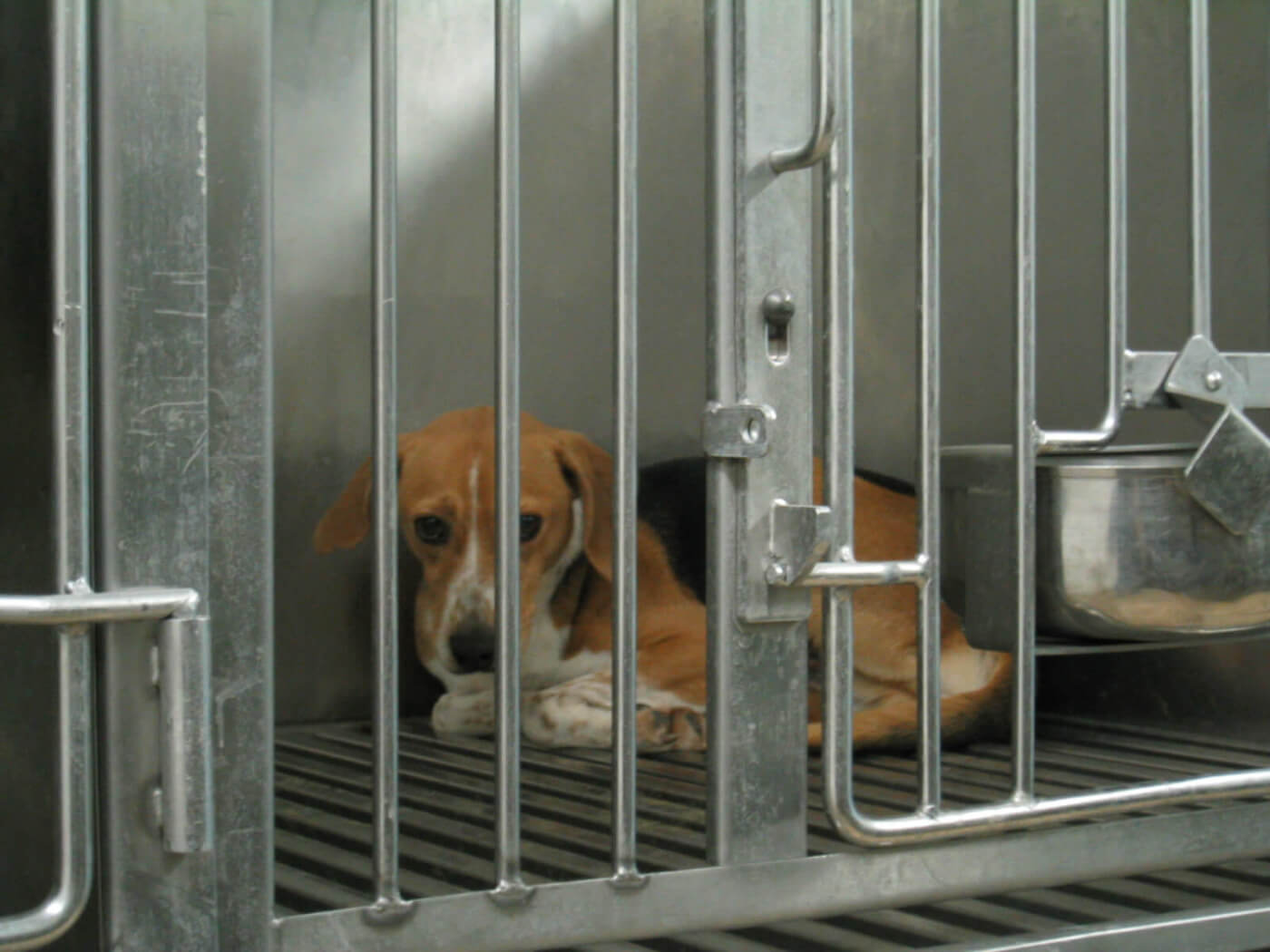
The extreme stress and suffering Pavlov inflicted on dogs should have rendered his findings unreliable from the start—and that’s before considering that dogs have entirely different brains, physiology, and biology than humans. Their reactions can’t be used to explain human behavior.
But there is hope. State-of-the-art animal-free testing methods—such as computer modeling, human cell cultures, artificial intelligence, organ-on-chip systems, and other innovative, human-relevant technologies—are rapidly becoming the frontier of cutting-edge science. These approaches offer real promise for understanding disease and developing treatments without causing animals to suffer.
And YOU can help accelerate this shift. Take action to keep dogs out of laboratories and support PETA’s Research Modernization Now plan, which lays out a clear, science-backed roadmap for replacing outdated animal tests with modern, humane, and more effective research methods. Together, we can push science forward.
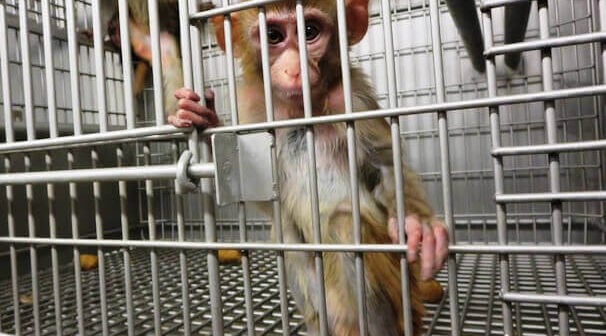
A University of Washington experimenter says he must keep mutilating monkeys to keep his job. Read the full confession PETA obtained and take action!
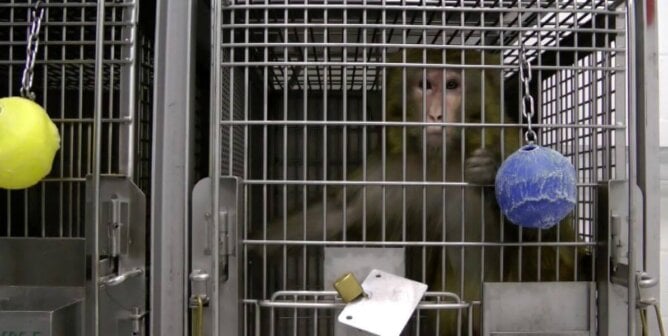
PETA’s new exposé uncovers three University of Washington experimenters who subject monkeys and other animals to painful and deadly brain experiments.

PETA has identified a surge in monkey smuggling cases across Southeast Asia, where traffickers steal monkeys from forests and funnel them into global animal experimentation supply chain.