
Who’s Really to Blame for E. Coli Outbreak?
As fingers are pointed over exactly who or what is responsible for the outbreak of a deadly new strain of E. coli in Germany, cucumbers, tomatoes, and lettuce have taken most of the heat. But just like you can’t squeeze blood from a turnip, you can’t get E. coli from a cucumber—at least that’s not where it originates.
The root of the problem isn’t a root at all. E. coli bacteria live in the intestines and feces of animals, which is why most E. coli outbreaks are associated with meat. When plants do become contaminated, it is because they came into contact with infected meat (via a cutting board or countertop) or because infected animal waste was used to fertilize crops or leaked into waterways. According to the U.S. Department of Agriculture, 70 percent of food poisoning is caused by contaminated animal flesh.
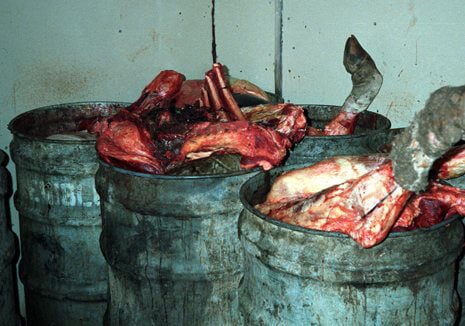 |
| E. coli contamination often starts at the slaughterhouse. |
The World Health Organization is suggesting that people keep raw meat away from other foods. But while the heads of farmers and lettuce continue to roll in Europe, perhaps researchers and government agencies should stop lobbing tomatoes at produce stands and pay a visit to the factory farms.
Written by Michelle Sherrow

