
Whipped, Kicked, and Chained: The Reality of Camel Rides in Morocco
This camel ride operator didn’t think anyone was watching, but a PETA Asia investigator was. What you’re about to watch is the routine abuse of camels at the edge of the Sahara in Morocco, where handlers force them to give tourists rides through the arid desert dunes.
When camels aren’t hauling tourists, operators chain them outside with no protection from the harsh desert elements, leaving them exposed to the sweltering sun and sandstorms. For much of their lives, these sensitive, social animals are tethered alone to the desert ground. They don’t roam, play, or spend time with their families. The only break from the relentless sun comes when it sets, and the only time many are taken off their chains is for a brief drink of water or to carry more tourists through the desert. PETA Asia’s investigator watched as one camel eagerly ran not only to drink but also toward a post to scratch an itch, only to be chased back to the spot where he was chained. An investigator also documented handlers repeatedly whipping camels, kicking them, and violently yanking their tails.
While a camel ride costs between 80 and 100 dirhams for tourists, PETA Asia’s investigation exposes how the camels pay the ultimate price.
Where Are There Camel Rides in Morocco?
Ill-informed tourists may ride camels—also marketed as treks, safaris, or tours—in major cities like Marrakech, villages such as Merzouga, or remote desert camps in the Sahara.
Is It Painful for Camels When You Ride Them?
For vacationers, a camel ride in Morocco may last anywhere from 15 minutes to several hours. For camels, it’s all day long. They trek for hours under the scorching sun or battling winds that whip sand into their eyes and faces, all while burdened with heavy loads that strain their backs and joints.
The cruelty doesn’t end when the rides are over. Another PETA Asia investigation revealed an operator repeatedly beating a tied-up camel with a long stick as the animal struggled to avoid the blows. Investigators also found that some operators muzzle the animals to keep their mouths shut so they can’t defend themselves.
What Happens When Camels Can No Longer Give Rides?
Morocco’s tourism industry treats camels like vehicles until they’re no longer deemed “useful.” After about five years, some are sold at markets to be slaughtered for their flesh, as PETA Asia has revealed in a previous investigation.
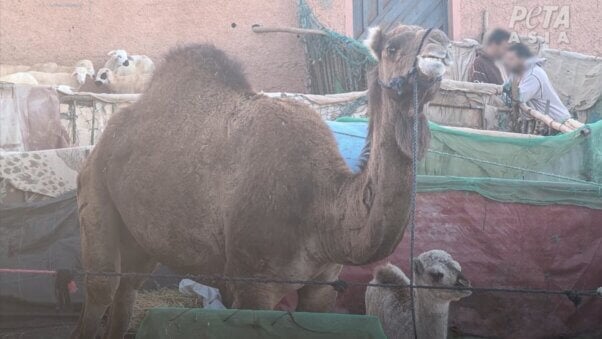
A Global Pattern of Cruelty: How You Can Help Camels Abused for Tourism
Other PETA entity investigations into camel- and horse-riding operations in Egypt found similar abuse: Humans beat animals, forced them to carry tourists in blistering heat without shade or water, and dumped them like garbage or sent them to slaughter when they were too old, sick, or injured to be profitable. Airbnb, Booking.com, Marriott, and many other companies stopped selling animal rides at the pyramids of Giza after hearing from PETA.
Bottom Line: Camel Rides in Morocco Are Never Okay
It’s never okay to ride a camel in Morocco, Egypt, or anywhere else. Camels are intelligent, social animals with their own needs, wants, and interests. When free to roam in nature, they live in herds and talk to each other with sounds and body movements. As a sign of friendship, camels will sometimes blow on each other’s faces. But in the tourist industry, these animals spend their lives in misery and suffering.
More than 30 travel companies have confirmed that they don’t offer camel rides anywhere in the world. Yet GetYourGuide and On The Go Tours continue to promote and profit from this cruel industry. Please send a polite message urging these travel companies to stop promoting camel rides worldwide.

