

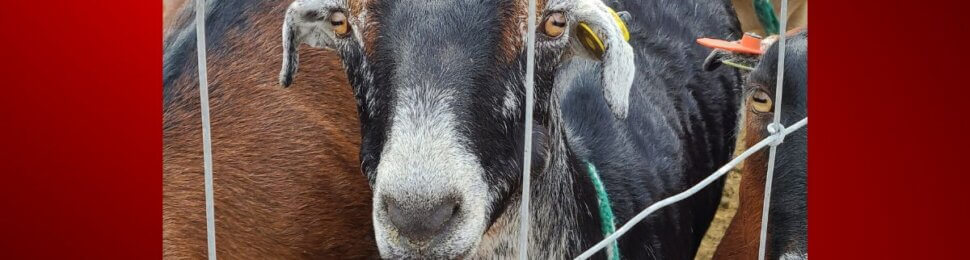
Buyer Beware! Pus in Goat Milk and Cheese!
PETA Reveals ‘Happy’ Goats Used for Dairy Are Diseased and Crippled
Our investigator did all she could to help as a little goat named Tina strained to stand. But Tina’s painfully crippled front legs wouldn’t allow it, and they buckled beneath her. An owner of the farm where she was kept knew that Tina was suffering and said so, but she left her in a cramped, filthy pen and did nothing. Workers on the farm mockingly called her “Kickstand” because she could only crawl on her knees through the urine-soaked hay.
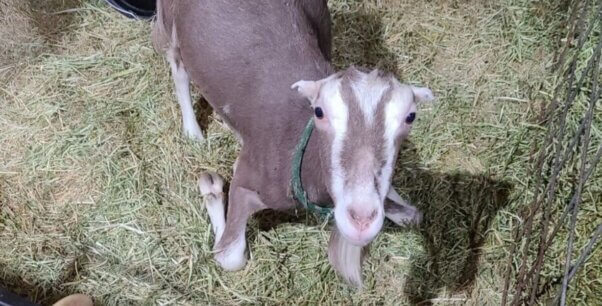
A crumble of goat cheese may look harmless, but it can mean a mountain of misery for goats like this one. At Oregon’s Grand Barr Dairy – which billed itself as a small family farm – a whistleblower alerted PETA that animals were kept in filth, emaciated, denied needed veterinary care, and often simply left to die. We sent investigators who confirmed these allegations and more – proving once again that cruelty isn’t limited to factory farms; it’s the norm wherever animals are exploited for food.
‘Family Farms’ Tear Families Apart
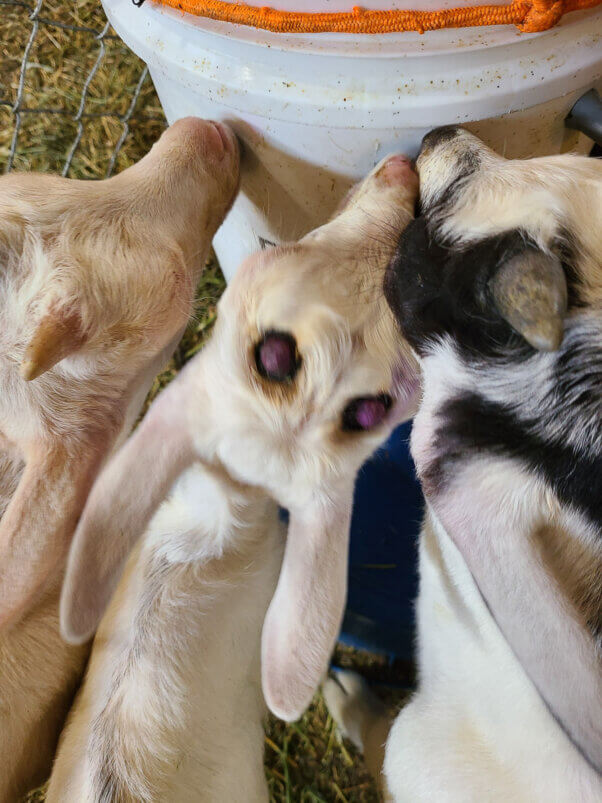
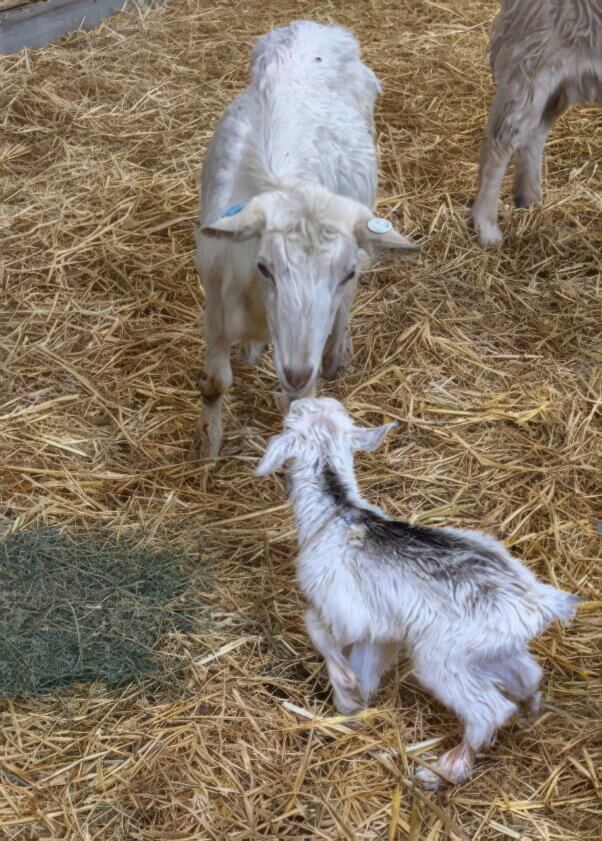
Goats are like puppies: delightfully inquisitive and playful individuals who love to climb and jump for joy. They bond closely, and mothers recognize their kids’ unique cries long after they’ve been apart. But here – as at other dairies – workers tore newborns from those loving mothers so that the milk meant for them could be sold instead.
Five baby goats – a third of the kids PETA’s investigator saw – died in just weeks from pneumonia and other causes. One kid named Charlie was found panting, drooling, and failing fast. Approached to do something to help him, the co-owner said Charlie had “probably been eating dog food” and denied him care. Charlie died that day.
The farm’s co-owners burned off baby goats’ horn tissue with a hot iron and castrated them with tight bands – without any pain relief whatsoever. The co-owners punched and slapped goats and pulled their tails. One worker jabbed a doe’s swollen udder just for “fun.”
Infections, Disregard, Disease, and Death
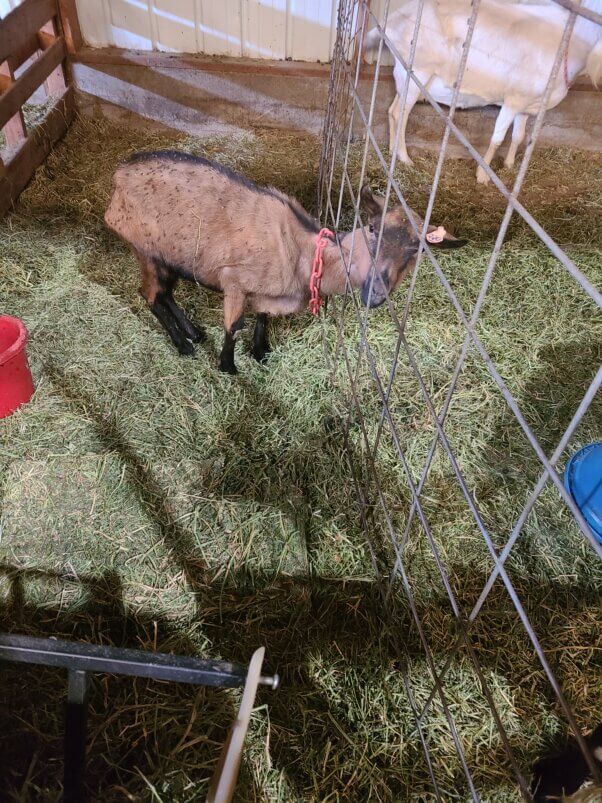
Many goats struggled to walk on painfully overgrown hooves. Dozens had only shredded tarps – or no shelter at all – leaving them to cry in storms and pant in the heat. Smaller goats couldn’t reach water when deep tubs ran low; one tub went for more than a month without being cleaned, coated in thick dirt and scum. Critically ill goats were denied veterinary care and left to die. Their bodies were then tossed onto a dirt pile to rot.
Our investigator ached for Barbara, a goat she found hunched over in obvious pain and growing weaker and thinner by the day. Told that Barbara was “probably going to die soon,” PETA’s investigator took it upon herself to rush her for emergency veterinary care, but her body was already too ravaged by illness and neglect to recover.
One of the farmers admitted that “every goat” had caseous lymphadenitis, a contagious bacterial disease that causes pus-filled abscesses, which were left to burst. Yet goats with these lesions were still milked, even though the disease can spread to humans through contaminated milk.
“I was going home crying every other day because I was having baby goats die in my arms.” —Whistleblower and former Grand Barr Dairy worker
Business as Usual – Milk Sold Despite Failed Inspections
PETA obtained records from the Oregon Department of Agriculture revealing a history of failed inspections, rampant sanitation problems, and milk tests showing “unacceptable levels of bacteria” at Grand Barr Dairy.
At the time of PETA’s investigation, Grand Barr supplied milk to California-based cheesemaker Laura Chenel, which disingenuously claims to source milk from farms “committed to raising happy goats and maintaining the highest standards of care.” After hearing from PETA, Laura Chenel dropped Grand Barr.
PETA submitted evidence of rampant neglect to the county sheriff and kept track of what was happening on the farm. Months later, sick and emaciated goats were still suffering in squalor. After PETA filed additional evidence, Oregon authorities seized nearly 240 goats from Grand Barr. And the dairy’s owners were indicted by a grand jury on a total of 478 charges of felony animal neglect, with each punishable by up to five years in jail and a $125,000 fine, plus 14 misdemeanor charges. As of this writing, 34 goats have been moved to reputable sanctuaries – Humane Farming Association and Wildwood Farm Sanctuary & Preserve – but the sheriff sent more than 200 others to another dairy facility. PETA is rallying supporters to insist that the goats be retired to sanctuaries, where they can finally receive the care they need and deserve.
What You Can Do
Watch PETA’s investigations and demand action for these long-suffering animals. Then, get a vegan “goat” cheese recipe that no one had to die for. And please, share this article with anyone who still eats goat cheese from stolen kids’ milk!

