
Cat Nail Care Tips for Healthy, Happy Cats
Cats depend on us for more than food, water, love, and veterinary care. They also depend on us to understand and respect their natural behaviors. If you share your home with a cat, you may find scratch marks on a piece of furniture, a rug, or a doorframe. That’s because scratching is a natural, healthy part of being a cat. Cats scratch to stretch their muscles, shed the outer layers of their claws, mark territory, and relieve stress. Their claws also help them balance, climb, play, and feel secure.
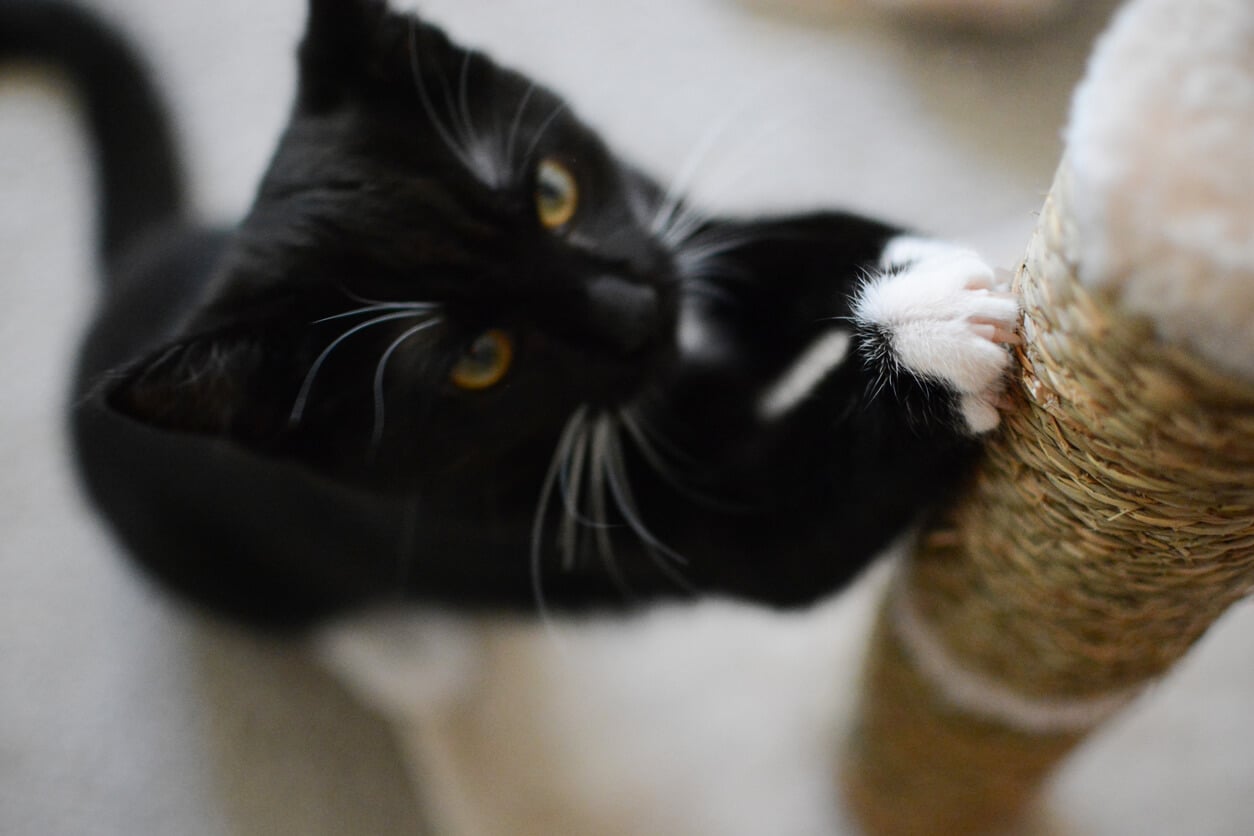
Cat nail care isn’t about stopping cats from scratching; it’s about keeping their claws in good condition while giving them appropriate places to scratch. Here’s how.
Trim Cats’ Nails Regularly
Regular nail trims are among the easiest ways to keep cats comfortable and reduce accidental damage to furniture, clothing, and skin.
The hook-shaped tip of the nail is what tends to snag fabric and upholstery. Trimming only the sharp tip helps minimize these issues. If your cat is nervous, take things slowly and work in short sessions.
Here’s how to trim cats’ claws:
- Use only cat-specific scissors or clippers.
- Look closely at the claw to find the quick, which is the pink part that holds blood vessels and nerves.
- Gently press the top and bottom of the paw to extend the claw. Snip only the clear or white tip, staying well away from the pink quick.
- Stop when your cat has had enough.
- If you accidentally cut the quick and it bleeds, apply direct pressure with a clean cloth and use a clotting agent, such as styptic powder or cornstarch, to stop the bleeding.
Some cats need more nail care than others. Senior cats, less active cats, and cats with mobility issues may not wear down their nails as effectively through normal scratching. Their claws can become overgrown and may even curl into the paw if left unchecked, making regular nail trims especially important.
Never Declaw a Cat
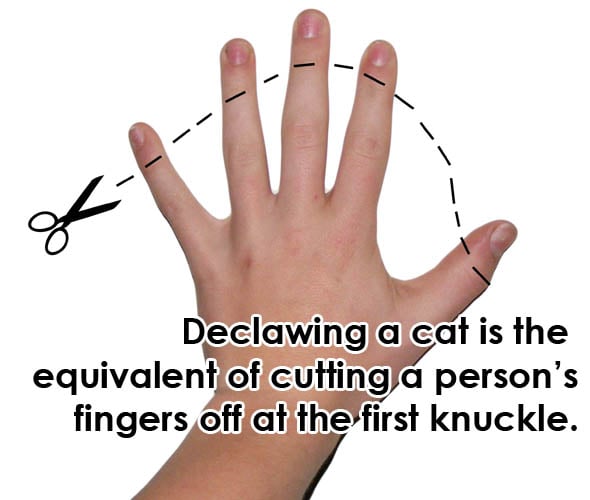
Declawing isn’t a nail trim—it’s an amputation. Unlike human fingernails that grow from skin, cats’ claws are part of their skeletal system, connected by tendons and ligaments that let them slide out or fold back. Declawing involves removing the entire last bone of each toe. In humans, this is equal to cutting off your fingers or toes at the final joint. The procedure can cause chronic pain, impaired balance, and behavioral problems, and permanently alters how cats experience the world.
Provide Plenty of Approved Scratching Spots
Scratching posts can help keep cats’ claws in good condition and their bodies active. Provide several throughout your home, especially in areas where your cat spends the most time. Choose sturdy options that won’t wobble and are tall enough to allow for a full-body stretch. Because cats have different scratching preferences, offer a variety of surfaces and orientations, including vertical posts and horizontal scratchers. Many cats prefer rough materials such as sisal, burlap, or natural bark-like surfaces over plush carpeting.
If your cat ignores a new scratching post, place it near a favorite resting spot or next to furniture they already like to scratch. Sprinkle a little catnip if your cat enjoys it, and use toys, praise, or treats to encourage them to investigate it. While your cat develops new habits, temporary deterrents like double-sided tape or furniture covers can make off-limits surfaces less appealing.
Cats are going to scratch, and that’s okay. With routine nail trims and plenty of suitable places to scratch, cats can maintain healthy claws while doing what comes naturally.
Want even more expert advice? Ingrid Newkirk’s book, 250 Vital Things Your Cat Wants You to Know, is packed with practical tips to help guardians keep cats safe, healthy, and happy.
As an Amazon Associate, PETA earns from qualifying purchases. If you buy something after clicking the Amazon links on this page, a percentage of the qualifying purchase will be donated to PETA and help us protect more animals from exploitation.
Text VEG to 73822 to get the latest vegan lifestyle tips, recipes, and urgent action alerts texted right to your phone.
Terms for automated texts/calls from PETA: https://peta.vg/txt. Text STOP to end, HELP for more info. Msg/data rates may apply. U.S. only.


The iconic actor reveals how animals taught her lessons about trust, authenticity, and unconditional love in this rare, personal PETA interview.
If you can see her, you can “bee” her … adopter! Well, sort of. In truth, PETA has been swarmed with inquiries about this marvelous mutt. Buzz on over to [email protected] to submit your application.

A puggle tethered outdoors? Talk about the worst kind of “oopsie.” Thanks to PETA, this adoptable dog traded being ridiculously kept outside for becoming ridiculously companionable.
Mayor Karen Bass touted efforts to protect animals on Skid Row, but public records obtained by PETA tell a different story. Here’s what we said to the administration at a press conference.