
10 Devices Straight Out of a Horror Movie—Used on Animals in Labs Today
Tens of millions of animals, from monkeys to mice, are trapped in laboratories right now. What really happens behind these closed doors? You may think that the devices below are straight from the set of a horror movie—but they’re real, and experimenters use them to restrain, mutilate, torment, and kill sensitive animals in pointless, wasteful tests.
1. Rodent Guillotines
“Rodent guillotines” may sound like something out of a medieval execution chamber, but these killing devices are business as usual in laboratories. After using gentle, family-oriented rats and mice in cruel tests—which may involve poisoning them, electroshocking them, cutting them open in experimental surgeries, burning them, and infecting them with disease—experimenters often cut off their heads with these crude contraptions.
2. Stereotaxic Devices
Imagine having your whole body, including your head, held entirely immobile in a stainless-steel, vise-like contraption. Using a stereotaxic device, experimenters restrain mice, rats, cats, dogs, monkeys, and other animals this way. For small animals, the ear bars used to hold their heads in place can sometimes puncture their eardrums—an excruciating injury that often goes unnoticed and untreated by experimenters.
3. Restraint Chairs
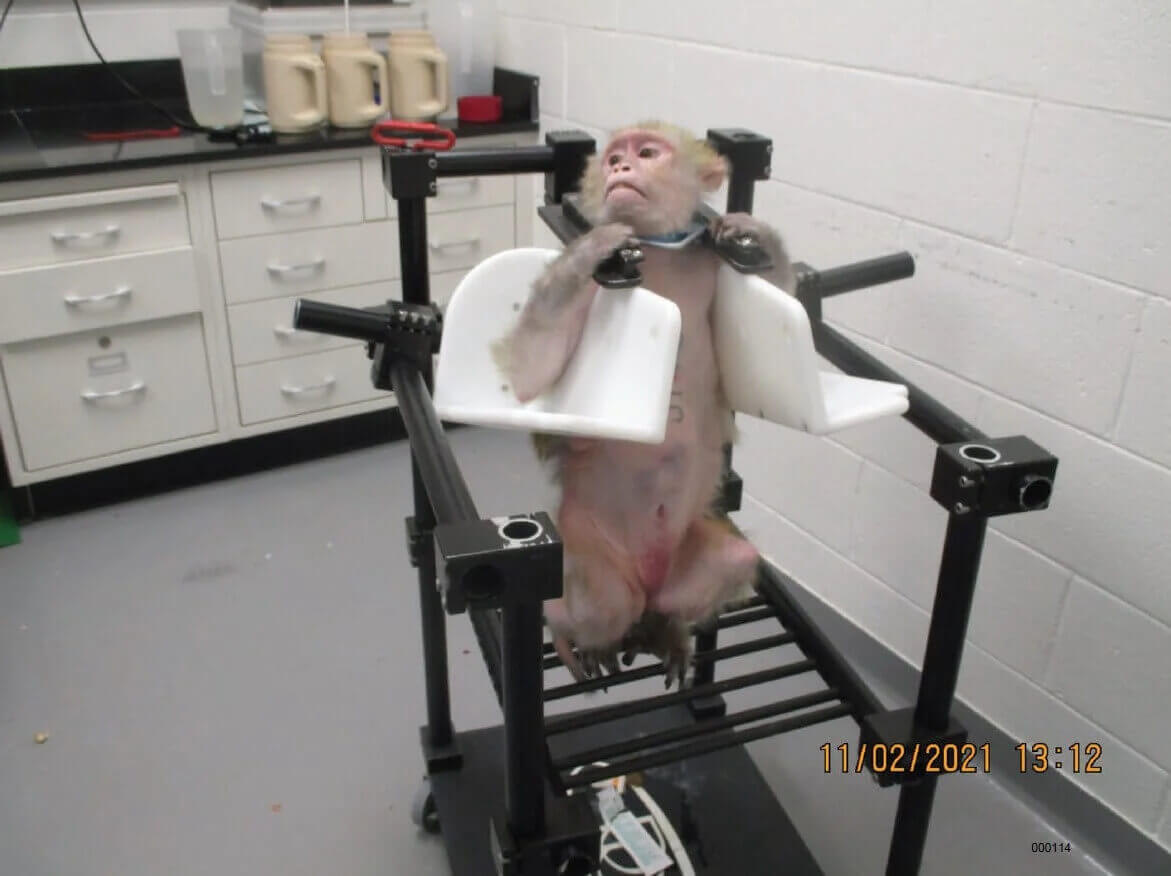
Experimenters use restraint chairs to hold monkeys in a seated or upright position—with clamping attachments around their neck and waist—for hours at a time. They suffer from extreme emotional stress and painful physical injuries, including ulcers, rectal prolapse, and cuts or other wounds to their limbs. Sometimes, these restraint chairs are part of “training exercises” in which experimenters electrically shock or deprive monkeys of water for hours, forcing the animals to “cooperate” to avoid additional painful shocks or to earn a few drops of water.
4. Metzenbaum Scissors
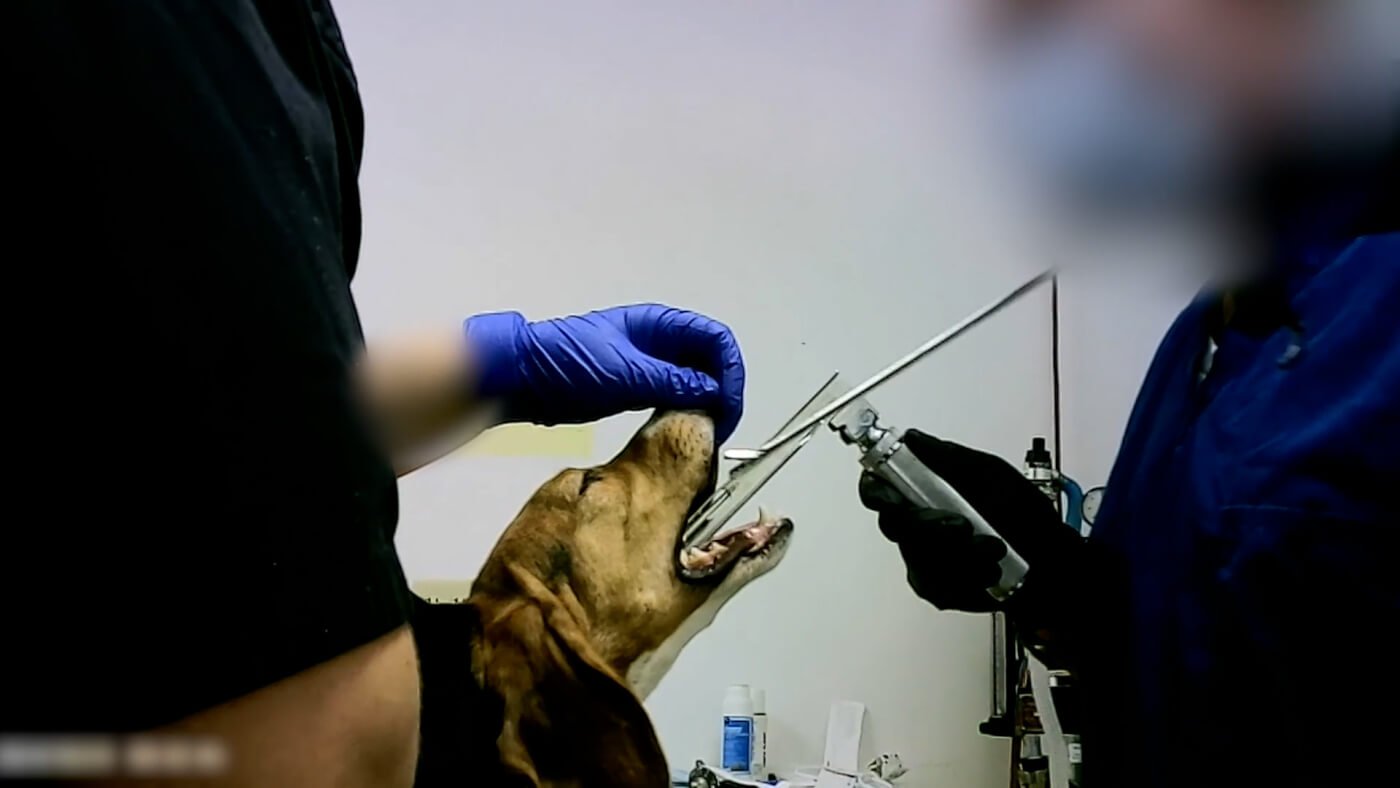
More than 48,000 dogs are locked inside barren cages in U.S. laboratories, where they languish without so much as a gentle touch or comforting presence. These social, loyal animals cry out in panic and loneliness—so experimenters silence them by severing their vocal cords with Metzenbaum scissors. Stripped of their ability to even express their anguish, the dogs’ suffering continues in forced silence.
5. Carbon Dioxide Chambers
Experimenters use carbon dioxide gas to kill tens of millions of rats and mice in laboratories every year. The gas burns their tiny, sensitive noses, throats, and chests as they desperately struggle to breathe. Panicked and writhing, the mice and rats experience a sensation akin to conscious drowning, powerless as the air around them becomes lethal.
6. Shock Cages
Experimenters force dogs, mice, rats, and other animals into cages with electrified floors and repeatedly shock them in cruel psychological tests often designed to make them hopeless, terrified, and depressed. These nightmarish experiments can go on for days or even weeks—subjecting these animals to hundreds of painful electrical shocks.
7. Forced Swim Tank
Forced swim tanks are designed to make mice and rats fear that they will drown. Experimenters force these animals into cylinders filled with water so deep they can’t reach the bottom; their small feet find no purchase on the slippery sides. The animals are then forced to swim for their lives, not knowing when (or if) they will be removed.
8. Restraint Tubes
These narrow, hard-plastic tubes keep animals—mice, rats, and even monkeys—completely frozen in place as experimenters roughly insert needles into their tails and legs, or force them to inhale noxious chemicals, compounding their terror.
9. Electroejaculation Devices
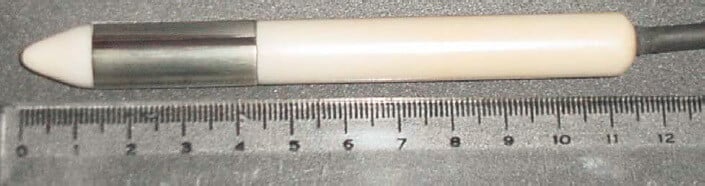
Experimenters insert devices—like this one used on howler monkeys (pictured below)— into rats, mice, and other animals’ anuses and electroshock them from the inside out.
10. Collars and Poles
In many laboratories, experimenters permanently fasten a tight metal collar around monkeys’ necks, which attaches to a long metal pole. Using this contraption, they yank animals from their cages and slam them into restraint chairs or onto examination tables. Despite the high level of stress and potential for injury associated with collars and poles—which are manufactured and sold by large monkey dealers like Primate Products, Inc.—they’re still used in U.S. laboratories.
Help Us End Experiments on Animals
As you read this, mice, rats, cats, dogs, birds, rabbits, monkeys, and other animals are suffering in vile experiments that waste valuable resources and don’t produce reliable, human-relevant results. It’s time to modernize research NOW—and PETA’s scientists know just how to do it.
If you are a U.S. resident, tell your members of Congress to support PETA’s Research Modernization NOW, which outlines a roadmap for replacing tests on animals with human-relevant methods.


The world is mourning Dr. Biruté Galdikas, a tireless champion for our fellow primates and their forests.

PETA continues to save animals and end cruel experiments. Learn which mushroom company just ended tests on animals after hearing from us.

Inside the diseases festering behind locked laboratory doors.