Roadside Zoo Owner Sentenced After PETA Exposed Neglect
Update (September 8, 2026): Brian Tenney, owner of the now-shuttered Bandon, Oregon, roadside zoo West Coast Game Park Safari, was sentenced to seven and a half years in prison after pleading guilty to 47 criminal charges, including 43 counts of animal neglect. The charges stemmed from PETA’s persistent complaints to Oregon State Police and evidence PETA provided documenting the suffering of animals at the facility. Following a 2025 raid, authorities confiscated 322 animals from the roadside zoo. In addition to his prison sentence, Tenney will serve three years of post-imprisonment supervision, is banned from possessing numerous classes of animals for 15 years, and must pay more than $340,000 in restitution for the care of the seized animals. PETA commends Oregon State Police for acting on the evidence and helping secure the rescue of more than 300 surviving animals, who have since been placed at reputable facilities where they can finally receive the care they were long denied.
Originally posted on May 28, 2025:
Huge victory! Following consistent pressure from PETA, law enforcement officials executed multiple search warrants and removed 310 animals from West Coast Game Park Safari—a dilapidated roadside zoo in Bandon, Oregon. Authorities ensured the safe transport of the rescued animals—many of whom were languishing in barren, filthy enclosures at the notorious roadside zoo—to reputable facilities across the country, where they will finally have proper veterinary care, nourishing diets, enrichment, and species-appropriate enclosures—all of which they’ve been denied for so long.
This action follows multiple PETA complaints to the U.S. Department of Agriculture (USDA), U.S. Fish and Wildlife Service, the Department of Justice, and the State of Oregon over the many rampant violations of animal welfare laws at West Coast Game Park Safari.
From Solitary to Sanctuary! How Lucifer the Jaguar and George the Chimpanzee Suffered at West Coast Game Park Safari—and What Their Lives Look Like Now
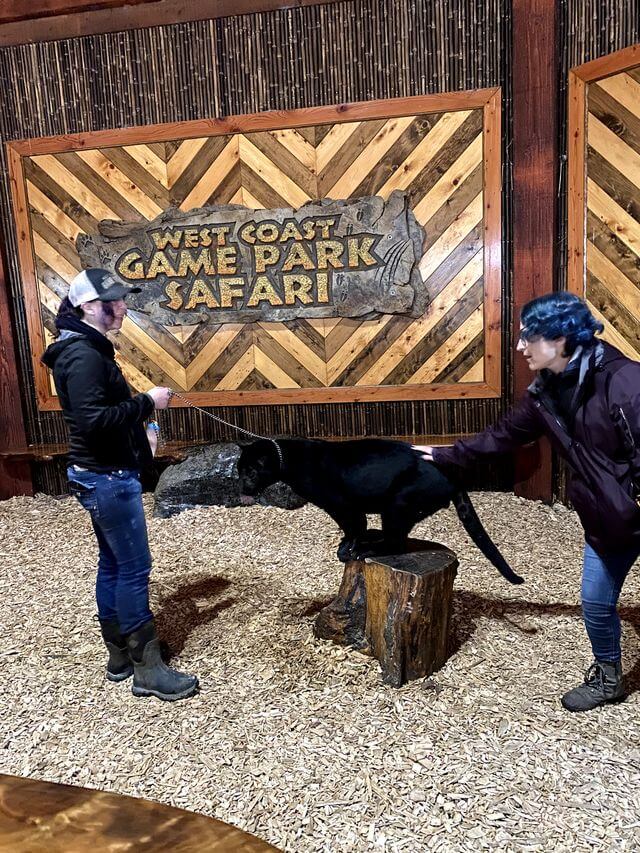
West Coast Game Park Safari used Lucifer, a black jaguar, in illegal, dangerous photo ops—even after the passage of the Big Cat Public Safety Act, which prohibits public contact with big cats. Instead of having the freedom to roam, hunt, and swim, handlers exploited Lucifer like a selfie prop, forcing him into stressful, unnatural interactions with visitors, which continued even when he was nearly a year old and much too large and dangerous for public contact.
When the USDA cited the outfit for this blatant flouting of the law, the facility condemned Lucifer to solitary confinement in a small, barren, concrete-walled gravel pit. There, Lucifer had nothing to do but pace back and forth from apparent psychological distress. Recent footage of Lucifer’s conditions at the roadside zoo showed that he appeared to be unnaturally thin.
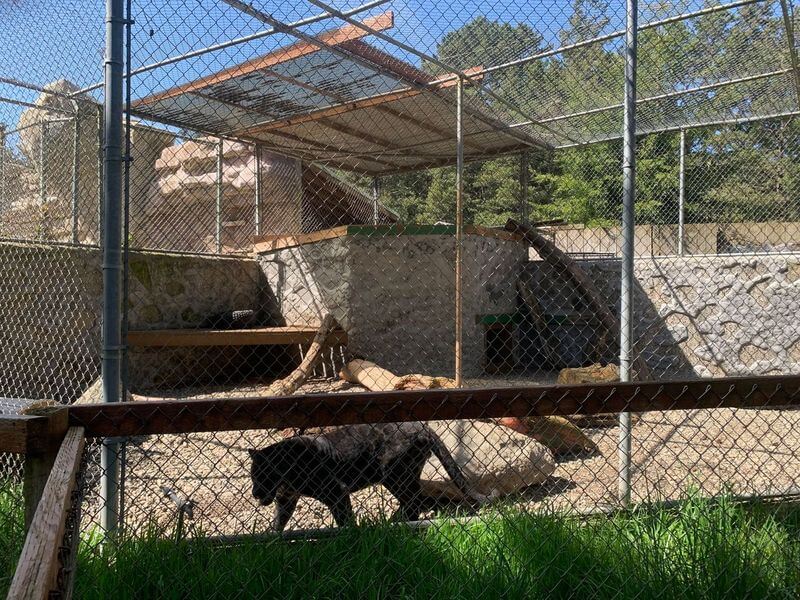
Authorities rescued Lucifer from the hellhole and ensured he and 14 other wild cats at West Coast Game Park Safari were safely transported to accredited and reputable sanctuaries. The three-year-old jaguar will get to live out the rest of his life at The Wildcat Sanctuary, where he can roam a vast, naturalistic environment, receive proper care, and be free of exploitation.
Officials also rescued a 21-year-old chimpanzee named George from isolation. George was suffering in solitary confinement since the death of his companion, Daphne, in November 2023—he was the last remaining solitary chimpanzee in a roadside zoo in the U.S.
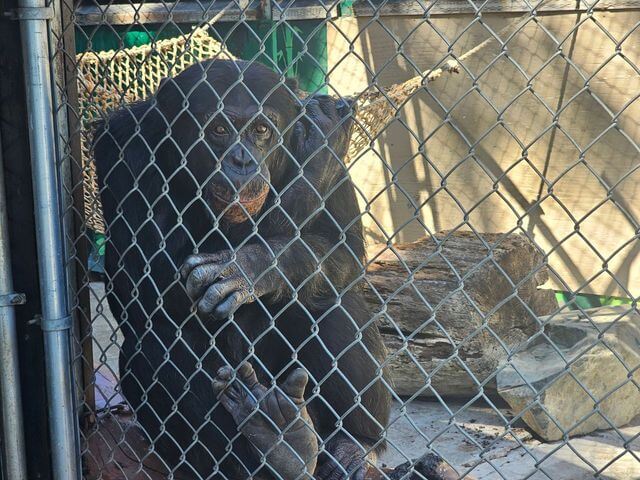
George was born at Steve Martin’s Working Wildlife—a shady animal training company that exploited him for photo ops and a TV show before dumping him at West Coast Game Park Safari. For years, he languished there in a small, barren enclosure that was often wet and appeared to have no warm, dry place for him to go—he was often seen shivering and rubbing his arms, apparently attempting to warm himself up.
In nature, chimpanzees swing through dense forests, forage for food high up in treetops, and nurture their children. These highly social animals thrive in large, complex communities, with whom they play, groom, communicate through unique vocalizations and gestures, and form lifelong bonds. Male chimpanzees never leave the group they are born into. West Coast Game Park Safari deprived George of the rich social life that chimpanzees rely on, as well as mental stimulation and the space to roam and play. He was often observed plucking his own hair out, constantly “Bronx” cheering (making repeated raspberry sounds with his mouth) for attention, and just staring listlessly at the wall—all signs of severe psychological distress. George had plucked most of the hair out of his arms and legs, leaving him with thin and patchy hair.
Thanks to the accredited Chimpanzee Sanctuary Northwest, George’s life in a dismal cage is over. Once he’s out of quarantine, George will be free to explore a spacious, lush habitat—climbing, playing, and potentially forging close friendships with other chimpanzees. In the meantime, George is soaking up the good life: feasting on fresh, species-appropriate meals (grapes and cherries are top-tier treats!) and discovering new enrichment toys that spark his curiosity and joy. After everything he’s suffered through at West Coast Game Park Safari, George is finally on the path to healing—and thriving.
The Animals Suffering at Other Roadside Zoos Deserve the Same Happy Ending as Lucifer and George
West Coast Game Park Safari has a long and troubling history of animal welfare violations. This now-shuttered tourist trap was cited by the USDA for failing to provide adequate veterinary care for a tiger who died after getting into a fight with another tiger, allowing excessive public contact with a baby bobcat and a juvenile bear, and killing two bears, Sugar and Spice, by gunshot.
While PETA is celebrating the removal of hundreds of animals from West Coast Game Park Safari, it’s time to ramp up actions for animals suffering at other similar seedy outfits across the country.
Tell Single Vision, a roadside zoo in Melrose, Florida, to stop exploiting wild animals in cruel public encounters:
Help other chimpanzees like George who are still suffering at roadside zoos or in human homes: