Historic Win: Eastern Virginia Medical School’s Baboon Experiments Are Over After Decades
Update (June 15, 2026): After a years-long campaign by PETA and our supporters, a series of public records requests has revealed a major victory for baboons at Eastern Virginia Medical School (EVMS).
Records obtained by PETA show that EVMS experimenter Gerald Pepe has not purchased any baboons since he killed the remaining four monkeys imprisoned in his laboratory in 2024. As a result, Pepe has had no baboons available to torment, surgically mutilate, or kill in his laboratory.
Pepe has not received federal funding for his baboon experiments since 2009, yet he continued them for years with support from longtime accomplice Eugene Albrecht. That funding has now dried up as well, signaling that the experiments are over.
This development follows years of pressure from PETA and our supporters, including complaints to state and federal authorities, investigations that exposed the suffering of individual baboons in Pepe’s laboratory, and calls from state legislators to close the laboratory and transfer surviving baboons to reputable sanctuaries, which Pepe callously ignored.
PETA will continue monitoring EVMS to ensure that baboons are never again purchased for experiments.
You can help other monkeys suffering in laboratories by calling for the immediate closure of the Washington National Primate Research Center and the release of monkeys to appropriate sanctuaries.
Original post:
For decades, he subjected pregnant baboons to multiple surgeries, cutting out and killing their fetuses. When the feds stepped in to stop him, he killed the animals. Now, we need to stop him.
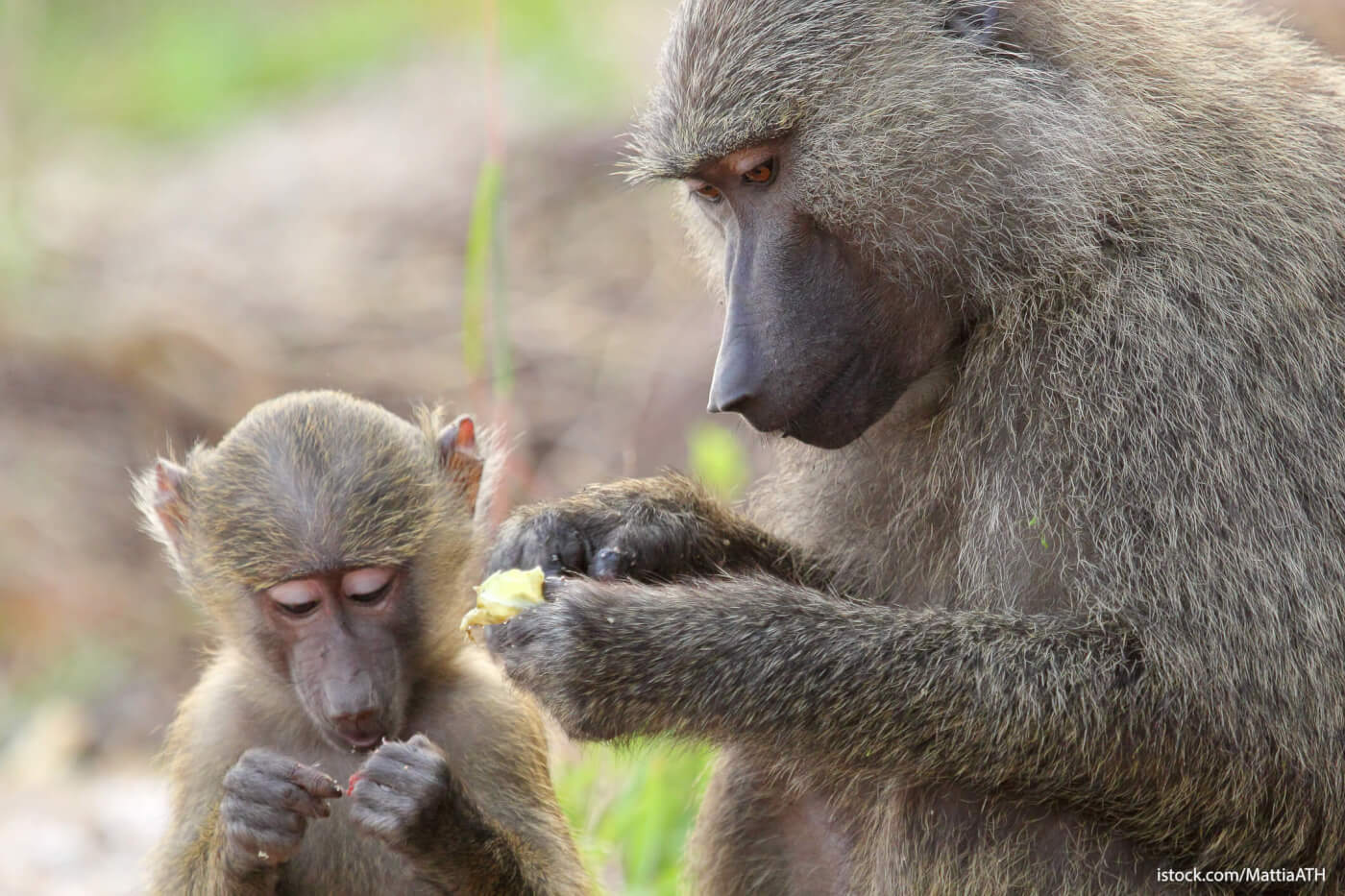
Eastern Virginia Medical School (EVMS) experimenter Gerald Pepe has spent 50 years impregnating sensitive, social olive baboons, shooting them full of various hormones and then cutting out and killing the fetuses—subjecting each baboon to up to six cesarean sections. Nothing from this horror show has ever helped humans, but that hasn’t stopped the experiments—or the funding from the National Institutes of Health (NIH).
In 2023, the U.S. Department of Agriculture (USDA) took a rare action that reveals just how sick this study is: The agency revoked EVMS’ permission to subject the pregnant baboons to more than one major, invasive surgery that they would be expected to recover from.
Because of this, five baboons—Jemma, Alissa, Cookie, Tara, and Toya—were no longer useful to 81-year-old Pepe, who has been doing this to baboons since the mid-1980s. We knew we had to take action.
Alissa died soon after the USDA took its action. She had lost 18% of her bodyweight after her first pregnancy and C-section. EVMS had failed to address this dramatic weight loss. Nevertheless, she had been impregnated again and subjected to a second C-section. She died from aspiration following the surgery.
PETA immediately found placement at a reputable sanctuary for the four other baboons. We spoke with state legislators and contacted the EVMS Board of Visitors (the body that oversees the medical school) and offered to move Jemma, Cookie, Tara, and Toya to the sanctuary, which was standing ready to receive them, immediately. There, we knew these animals, who had endured unmitigated misery, psychological torment, and physiological ailment in Pepe’s laboratory, could finally experience some semblance of a real life.
But the EMVS Board of Visitors did nothing, and without ever responding to our offer, Pepe quickly and quietly killed all four of the baboons. PETA is now calling for him to be dismissed and for the laboratory to be shut down.
In EVMS laboratories, intelligent and sensitive baboons are confined to small, barren steel cages, where they display profound psychological distress through stereotypical behaviors like pacing, biting cage bars so desperately that they wear their teeth down, over-grooming, and self-mutilation.