Songbird U.
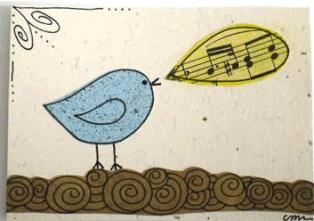
The 4,500-plus songbirds who become temporary inhabitants at Royal Society for the Prevention of Cruelty to Animals wildlife centers will now be receiving free tuition and room and board. According to this BBC story, babies who are taken in for treatment need a chance to learn songs so that they can socialize with their peers once they are released. Because birds learn songs from their parents, growing up at a rehabilitation facility would mean no knowledge of birdsong—until now.
The solution is as simple as a CD recording of birdsong and a small boombox. The babies learn to mimic the songs that they hear in the center, which are real recordings from the wild—exactly what they’re supposed to be learning. Upon completed treatment and release (read: graduation from Songbird U.), they’re ready to go chat it up with friends and family outside the center, saying such cute things as “Food? Now?” and “Mate? Now?”
I always find it heartwarming to come across very elaborate efforts to care for some wild species, which, for some reason or another, ends up at rehabilitation centers. As contradictory as it may seem given the huge animal industries that exist today, rescue and rehabilitation efforts demonstrate just how much humans are capable of caring for animals—both as individuals and as species.
Posted by Sean Conner