
Meet the Cruel Cohort of UW Experimenters Who Kill Monkeys in Brain Tests
PETA is adding three new inductees to the University of Washington’s (UW) jam-packed Hall of Shame: monkey brain experimenters Greg Horwitz, Robi Soetedjo, and Jonathan Ting.
All three hail from UW’s neuroscience department, where they drill into monkeys’ skulls, pump viruses into their brains, deprive them of water and food, and subject them to repeated surgeries that leave animals dead or suffering from painful complications.
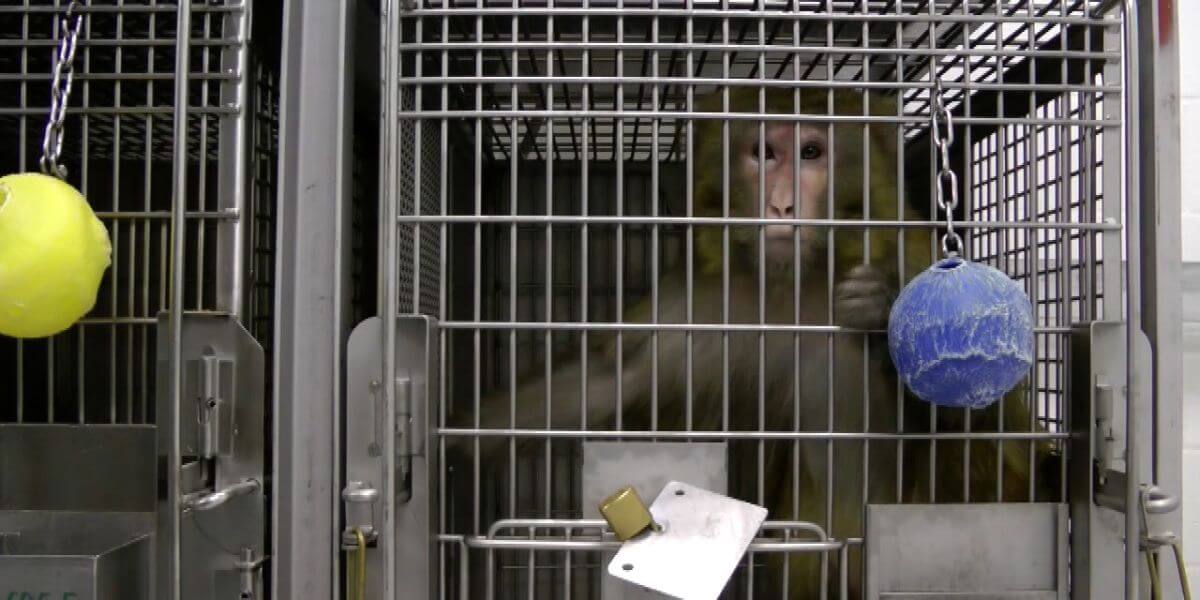
PETA discovered the extent of the trio’s failures after their history of breaking rules and mutilating monkeys briefly landed them in the hot seat at a meeting of the university’s animal oversight committee.
But this flicker of accountability was extinguished by UW’s broken oversight system, which lets experimenters excuse animal suffering, injuries, and deaths.
Trio of Monkey Tormenters
Horwitz, Soetedjo, and Ting join ranks with a long line of UW animal experimenters who thrive where cruelty is rewarded and incompetence is expected. Among them is the notorious former primate center director Michele Basso, another neuroscientist whose blatant disregard for the rules resulted in an unprecedented ban from using animals for at least a year.
In tests led by Horwitz and Ting, experimenters drilled into monkeys’ skulls, jammed plastic probes into their heads, and injected viruses into their brains before killing them. Experimenters also repeatedly sliced into the animals’ backs and struggled to close their surgical wounds.
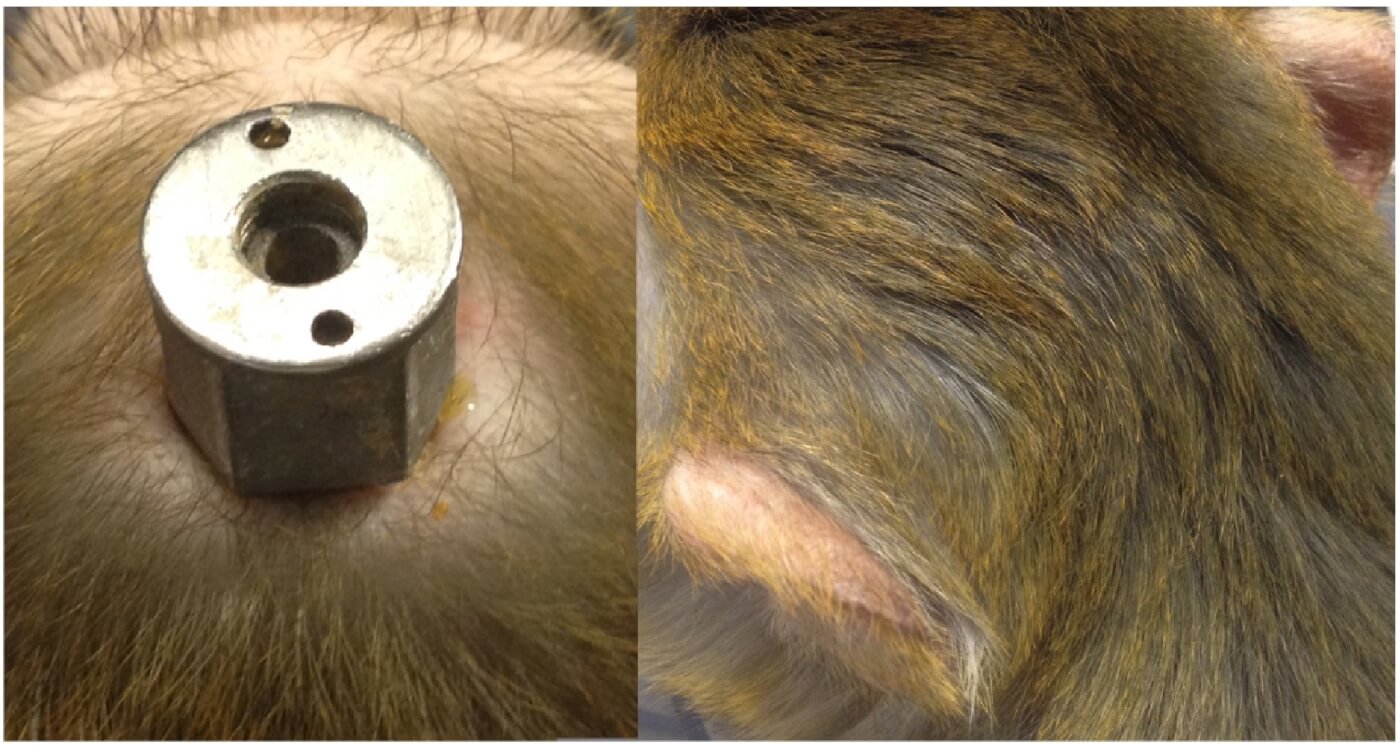
Between 2020 and 2026, they subjected 71 monkeys to devastating brain surgeries, causing many of the animals to lose control of their muscles and endure tremors, weakness, depression, swelling, and death. A staggering 41% of the monkeys suffered complications, meaning injuries, infections, and death. Five had to be killed early, and some monkeys’ wounds failed to heal, requiring more invasive surgeries.
Horwitz admitted at the meeting that his team’s “complication rate” is much higher than at other institutions, but offered no explanation. Even more infuriating, the oversight panel chose not to investigate why the rate was higher.
In experiments led by Soetedjo, staff went rogue by withholding food from a monkey to force his cooperation while training him to tolerate the invasive restraints used in experiments.
Decades and Counting
The trio has co-authored numerous publications, collectively raking in more than $25 million from the National Institutes of Health since 2020. Each has built a long career on forcing monkeys and other animals through a battery of deadly tests.
Horwitz serves as Chief of the Neuroscience Unit at the university’s primate center. He’s subjected monkeys to pointless experiments for nearly 30 years, including slicing monkeys’ skulls, bolting hardware to their heads, stringing electrodes through their brains, and attaching wires to their eyes.
Soetedjo has experimented on monkeys for over two decades. His 2017 paper, co-authored by Horwitz, describes injecting viruses into monkeys’ brains, shining lights into their exposed brains to activate genetically modified cells, and forcing them to complete eye-movement tests before killing them.
Ting has subjected both monkeys and mice to invasive surgeries, including injecting their brains with viruses. Ting celebrated a technique he developed to obtain higher quality fresh brain slices by cutting into a mouse’s chest, sticking a needle into the heart, draining blood, and beheading the mouse with scissors, before cutting open the skull and removing the brain.
One Ting paper describes bolting hardware to a monkey’s skull and replacing his brain’s natural protection with an artificial membrane, allowing experimenters to repeatedly access his brain. In another test, Ting attached clear skull caps to mice, cemented headpost restraints, and removed parts of their skulls. Experimenters then deprived the mice of water to force their cooperation in various tests and probed their brains before killing them all.
Sick Monkeys, Shoddy Science
UW’s neuroscience experiments are also riddled with scientific flaws.
Experimenters use “discounted” monkeys, animals with known health or psychological problems who are recycled from one experiment to another. Monkeys with such complicated medical histories can impact experiment results.
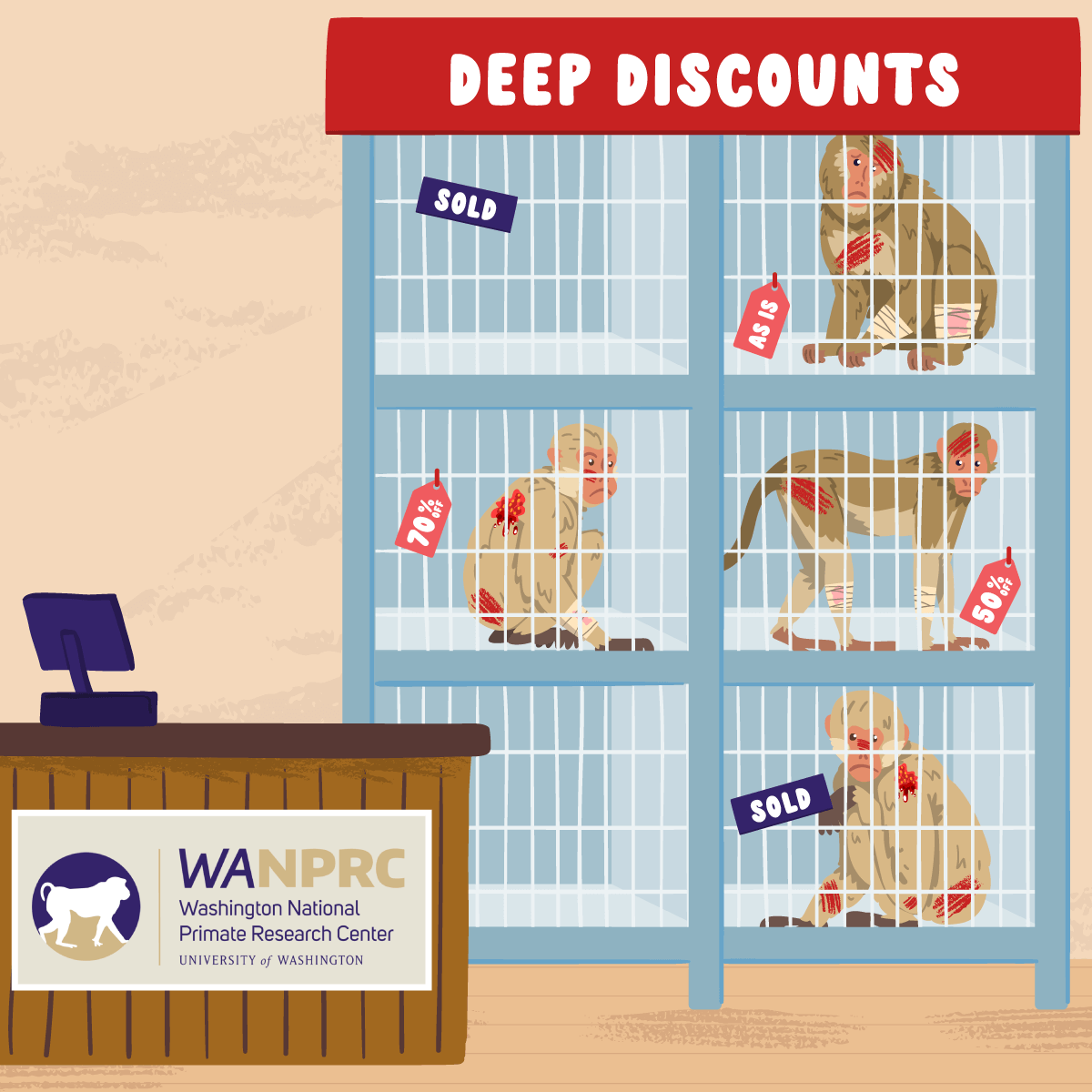
Horwitz and Ting used monkeys from the primate center’s bargain bin of unwanted animals for their brain injection experiments. Many of these monkeys had histories of over-grooming and other psychological problems from spending their lives confined in cages. The two also injected monkeys with viruses from multiple sources that were not manufactured to clinical-grade standards, a practice identified as a possible factor in the devastating illnesses that followed.
What You Can Do
The Washington National Primate Research Center is rife with misery and incompetence, hoarding millions in federal dollars for failed and deadly experiments. Please TAKE ACTION to shut it down: