I Was Assaulted at New York Fashion Week for Speaking Up for Sheep
By Mason Melito
I went to New York Fashion Week to speak up for sheep. I did not expect a fashion executive to try to silence me with force.
On September 13, PETA supporters disrupted COS’ New York Fashion Week runway show to expose how sheep are abused for wool. We peacefully carried signs and chanted for one reason: Sheep can’t walk onto a runway and tell shoppers what happens to them—that’s where we stepped in.
Video of the protest quickly spread around the world. It showed a fashion executive pinning one supporter to the floor, wrapping a leg around her, and covering her mouth and nose as she called out wool’s cruelty. When I kept filming and speaking up for sheep, he shoved me, grabbed me, and covered my face with his hand.
The irony was impossible to miss: We came to expose violence against sheep, and fashion answered with violence against the people defending them.
Why Did I Protest COS at New York Fashion Week?
I’ve always understood fashion as rebellion. It is supposed to challenge what people accept, push culture forward, and make the invisible impossible to ignore. That is exactly why PETA has spent decades crashing runways, exposing cruelty behind fashion’s exploitation of animals, and working with designers and brands that want to do better.
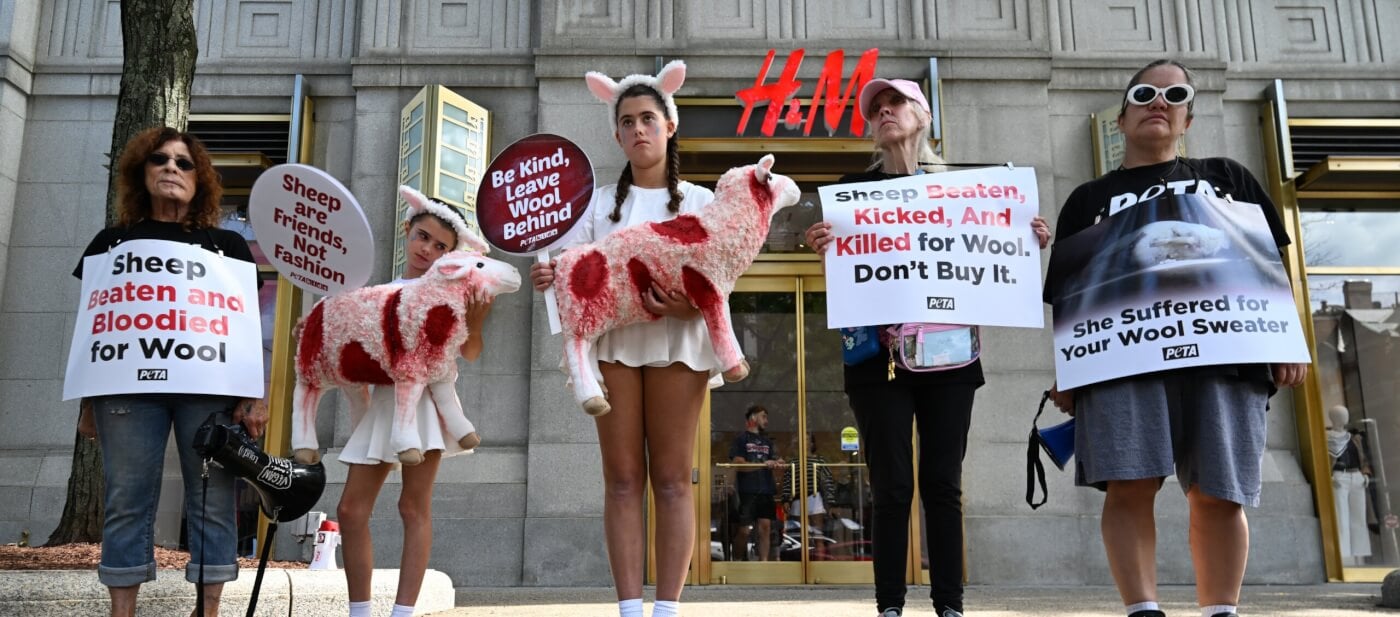
Pressure works. After PETA campaigns, protests, and shareholder actions, major brands and retailers—including Gucci, Prada, Armani, Chanel, Burberry, Michael Kors, Coach, Macy’s, Nordstrom, Saks Fifth Avenue, and Zappos—have banned fur. New York Fashion Week also banned fur from its runways after years of PETA protests and more than 50,000 supporters taking action. I was there to help make wool the next thing fashion leaves behind.
PETA entities have released 17 exposés of more than 150 wool-industry operations in eight countries on four continents. Investigators have found violence and exploitation at every operation. Even farms marketed as “ethical” or “responsible” have failed sheep.
PETA Asia’s first-ever investigation into a NATIVA-certified wool operation found workers kicking and stomping on sheep, dragging lambs by their legs, and leaving sheep with gaping shearing wounds. The farm sold wool through a broker that supplies H&M Group with misleadingly labeled “responsibly” sourced wool. COS is owned by H&M Group.
That is why PETA took the message straight to COS’ runway: No certification label can make wool humane.
What Happens to Sheep Used for Wool?
Sheep are curious, sensitive individuals who form strong social bonds and are known to panic when workers tear them from their families. Humans have bred sheep to grow excessive amounts of wool, trapping them in a cycle of dependence on shearing. But shearing often happens in fast, stressful conditions where workers often get paid by volume.
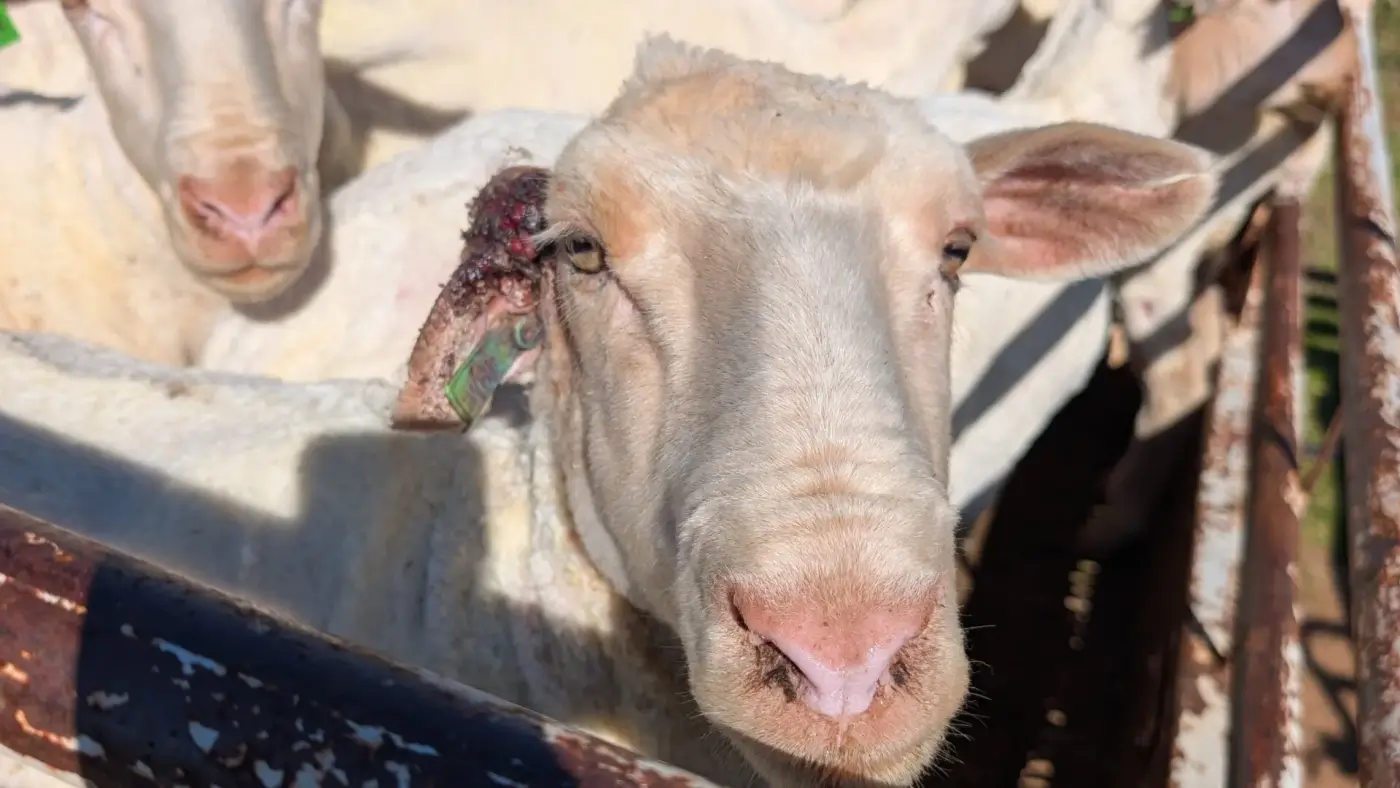
When speed matters more than the individuals on the shearing floor, sheep pay the price. Workers pin them down, twist their bodies, and run sharp clippers over their skin. Investigators have repeatedly found sheep cut open, beaten, and left to suffer. When a sheep’s body no longer produces enough profitable wool, the industry sends them to slaughter.
Why This COS Wool Protest Mattered
The COS runway protest forced one of fashion’s biggest stages to confront its hidden victims: sheep.
Millions of people saw the footage and asked why animal defenders like me would risk arrest, removal, or assault to speak out against wool. The answer is simple: Sheep pay with their bodies and lives, and that wool was never ours to take.
Yes, I was grabbed, shoved, pinned down, and dragged away. But I got to go home. Sheep used for wool never do. They are restrained, cut open, left bleeding, and eventually sent to slaughter when their bodies are no longer “profitable.”
What Should COS and H&M Group Do Now?
If the fashion industry truly cares about violence, they must look at the violence that defines the wool industry.
We are pressuring COS and H&M Group to stop hiding behind misleading labels and ban wool now.
How You Can Help Sheep
Every shopper can help sheep by refusing to buy wool. Choose cotton, linen, bamboo, hemp, Tencel, recycled synthetics, and other vegan materials instead. Brands already have many stylish, warm, animal-free options—they just need pressure from shoppers like you to use them.
Tell H&M that sheep are not wool-making machines. They are thinking, feeling individuals who want to live free from fear, pain, and slaughter.
No sweater, scarf, coat, or runway look is worth a sheep’s life.
Mason Melito
Senior Campaigner, PETA