
As Michael Premieres, PETA and Lionsgate Raise Awareness for Captive Primates
For Immediate Release:
April 24, 2026
Contact:
Moira Colley 202-483-7382
As fans turn out in droves to see the highly-anticipated Michael Jackson biopic—which includes the King of Pop’s chimpanzee Bubbles brought to life using state-of-the-art, humane CGI—PETA is urging moviegoers never to keep primates as “pets,” noting that they are often bred in captivity by dealers, torn away from their mothers as babies, and denied any chance at a natural life.
Michael follows Jackson’s life in the 1980s, before people understood how apes and monkeys suffer when kept in human homes, which is why Lionsgate has shared the following statement exclusively with PETA:
“We have had continuing constructive dialogue with PETA about the portrayal of Bubbles the chimpanzee as a pet. This portrayal is simply based on historical fact and is not intended to be an endorsement of keeping chimpanzees as pets. Bubbles is portrayed in the movie using CGI technology and the real Bubbles has been living a peaceful life at the Center for Great Apes sanctuary for more than 20 years.”
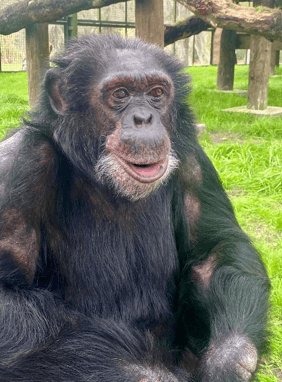
Bubbles at the Center for Great Apes
Credit: The Center for Great Apes
When Bubbles was about seven years old—an age when male chimpanzees would still be by their mother’s side in the wild—he was sent to a disgraced Hollywood trainer until he was retired in 2005. Now 43, Bubbles flourishes at an accredited sanctuary, Center for Great Apes, but most primates aren’t so lucky.
“So much more is known today about what chimpanzees and monkeys need to thrive, including freedom and the companionship of their peers, making film sets and human homes unacceptable for their wellbeing,” says PETA’s Director of Animals in Film and Television Lauren Thomasson. “PETA praises Lionsgate’s decision to use CGI and urges audiences to never buy primates from breeders or keep them as pets.”
In nature, chimpanzees and monkeys spend years with their families, traveling long distances and foraging for food in dense forests. But in the pet trade, they often suffer from debilitating loneliness and depression and develop anxious behaviors like self-mutilation because their complex physical and psychological needs cannot be met in human homes. When they become too big and difficult to control, they’re often relegated to cages, dumped at roadside zoos, or returned to their dealers to breed and churn out even more babies.
PETA—whose motto reads, in part, that “animals are not ours to use for entertainment or abuse in any other way”—points out that Every Animal Is Someone and offers free Empathy Kitsfor people who need a lesson in kindness. For more information, please visit PETA.org or follow PETA on X, Facebook, or Instagram.