
Macaques Are Under Attack! Here’s How to Fight Back
Did you know that endangered monkeys have been imported to the United States by the thousands, destined for use in cruel and deadly experiments? A dire 2022 report put out by the International Union for Conservation of Nature revealed that the animal experimentation industry has helped push two species of monkeys—long-tailed macaques and pig-tailed macaques—to the brink of extinction.
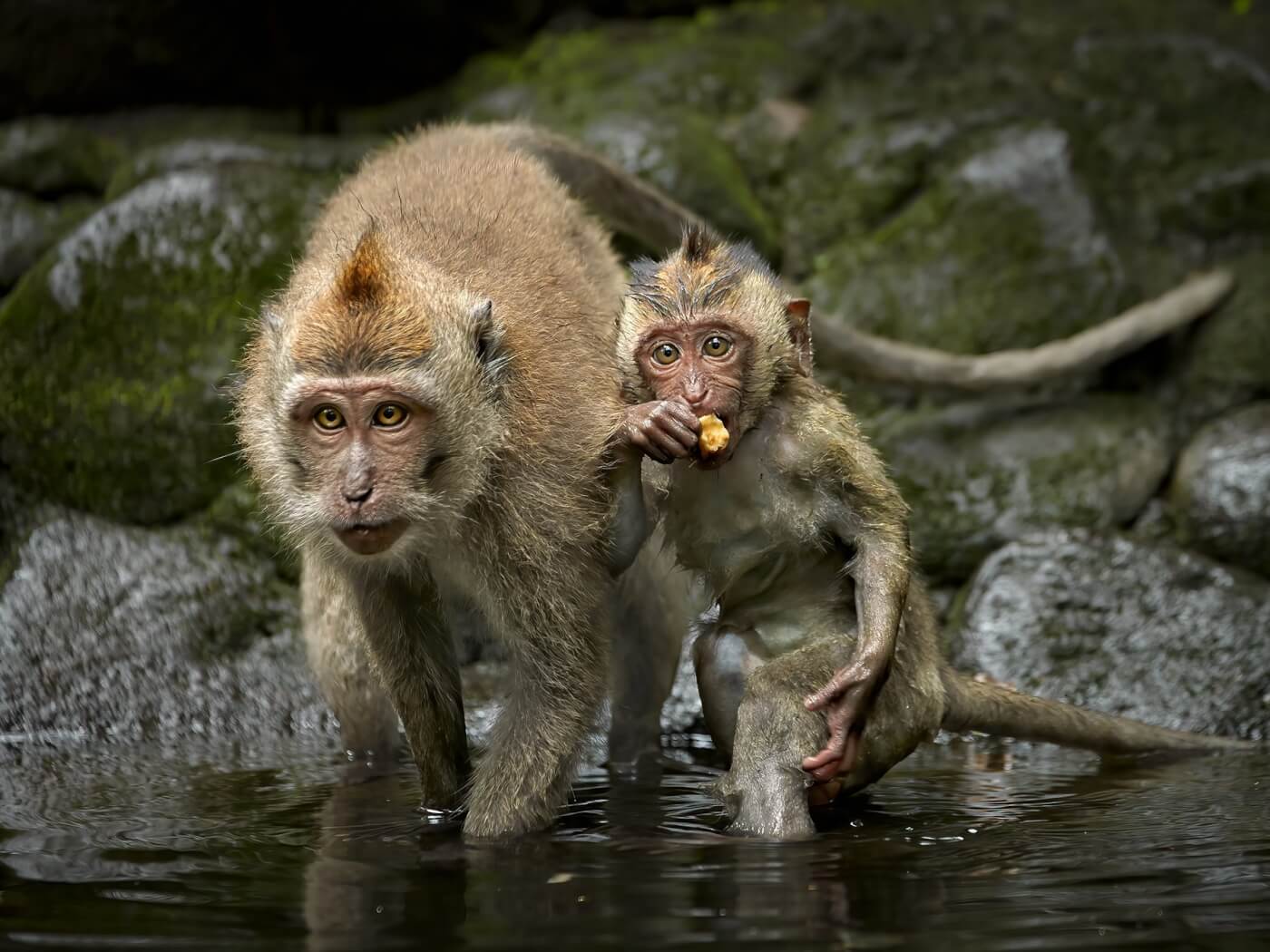
Macaques have been part of social and cultural traditions throughout Asia for millennia. They play critical roles in the ecosystem and are individuals with the right to lead their own lives in their own homes—but they’ve succumbed to the experimentation industry’s demand for a steady stream of animals for misleading and wasteful experiments.
Every Year, U.S. Experimenters Torment Tens of Thousands of Imported Long-Tailed Macaques
Many are caught up in a monkey-abduction pipeline that’s emptying the forests of Asia and Mauritius and filling the cages of commercial importers and experimenters.
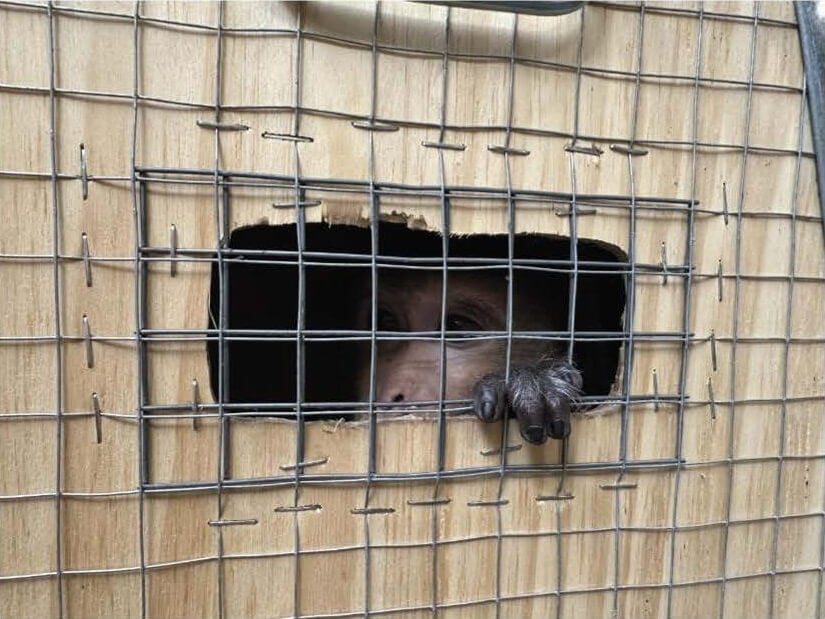
Experts tell PETA that there will soon be no wild long-tailed macaques left in Cambodia, Laos, or Vietnam. The demand for these animals to be captured and sent to the U.S. has surged, and the false claims issued by experimenters about a supposed “monkey shortage” have likely played a role in alleged monkey laundering and smuggling.
Monkeys Transported to Laboratories Are Packed Into Tiny Wooden Shipping Crates and Forced to Sit in Their Own Feces, Urine, and Blood for Hours-Long Journeys
Hunters in Cambodia, Indonesia, Lao PDR, Mauritius, and Vietnam trap mother monkeys, pry their babies away and stuff them into bags, and cram the mothers—along with any of the other troop members who have survived being captured—into crates.
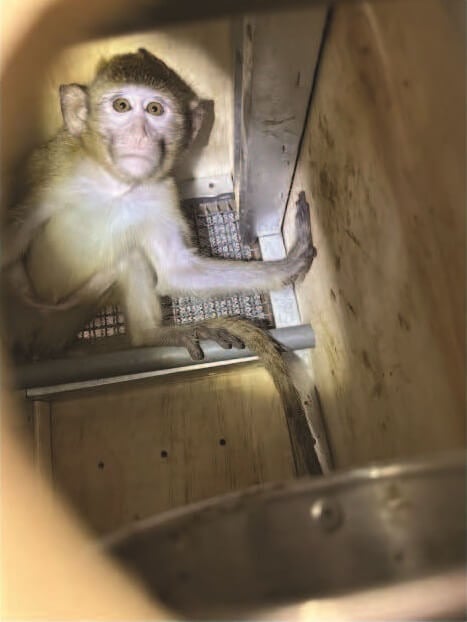
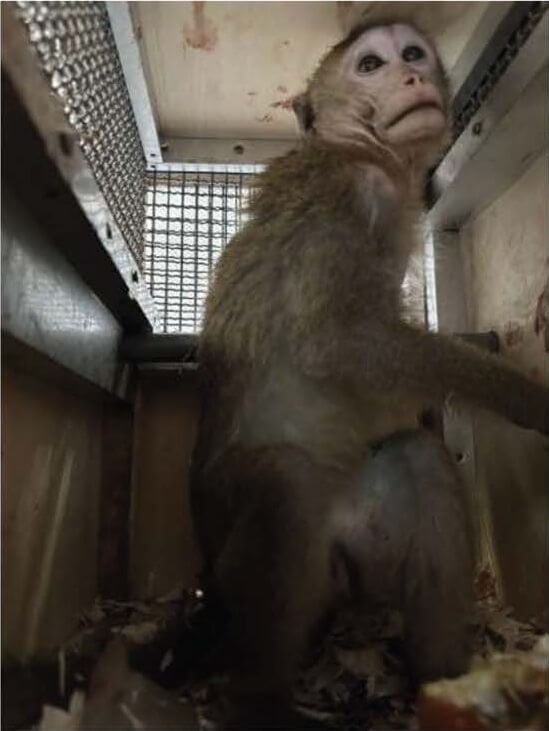
They send the terrified and likely sick survivors—there are no estimates of how many monkeys die en route—to laboratories. There, humans deprive the animals of food and water; mutilate, poison, forcibly immobilize, infect, psychologically torment, or use them in other excruciating experiments; and ultimately kill them.
PETA has uncovered evidence that Africa’s largest airline, Ethiopian Airlines, has shipped thousands of endangered monkeys halfway around the world for use in cruel and deadly experiments.
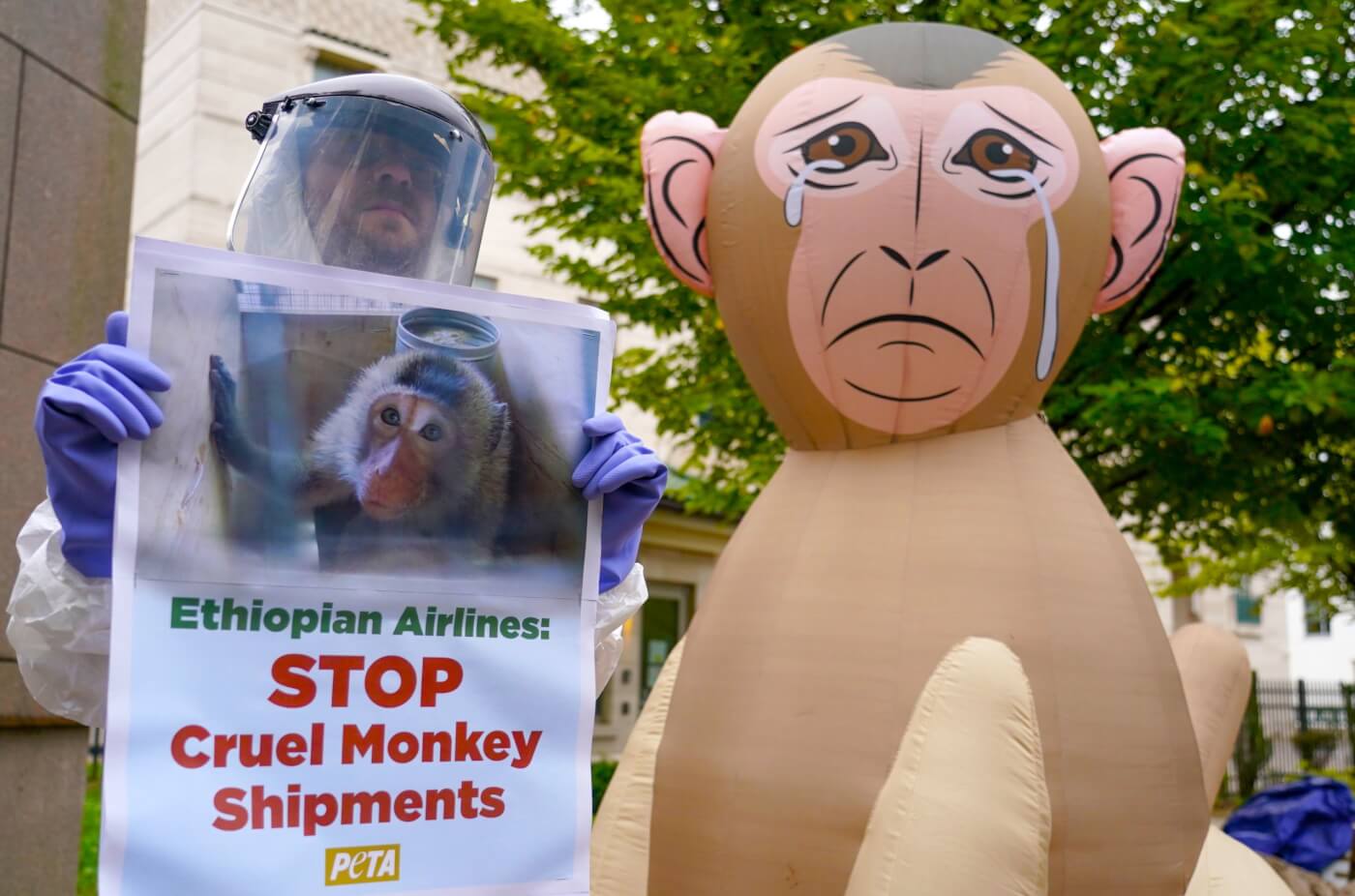
Ethiopian Airlines has ties to a Southeast Asian black market monkey-smuggling ring, which allegedly abducts wild-caught monkeys from their natural habitat and falsely labels them as “captive-bred” before they’re flown to the U.S.
Importing Macaques and Other Monkeys Poses a Grave and Potentially Fatal Public Health Risk
Shipping monkeys—who are already stressed from their capture or from the conditions in filthy, severely crowded breeding facilities— across international borders means also shipping the numerous pathogens that they can carry.
Tuberculosis, an infectious disease that’s readily transmitted between monkeys, humans, and other animals, is circulating in primate colonies globally. The Centers for Disease Control and Prevention acknowledge that more and more infected monkeys are being imported. PETA previously uncovered an outbreak at a Michigan laboratory that houses imported monkeys, and lab workers had to be treated.
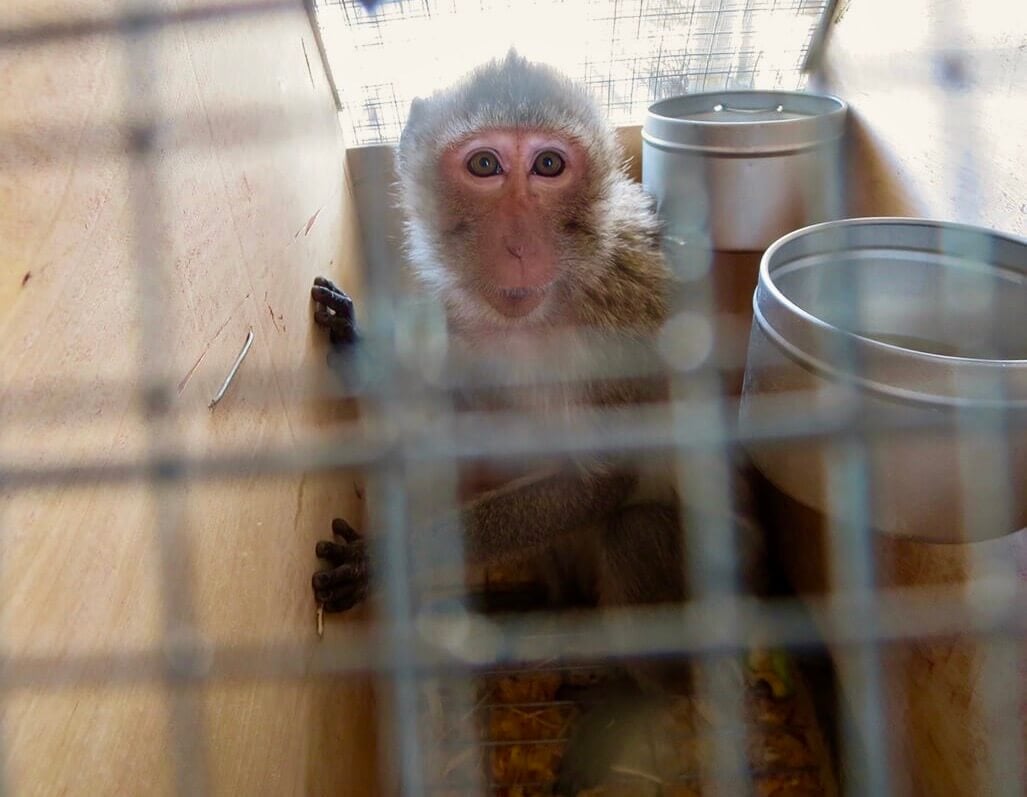
Monkeys from Cambodia have also been the source of a pathogen so deadly that the U.S. classifies it as a bioterrorism agent.
For the past two years, following increased scrutiny by the U.S. Fish & Wildlife Service, which had evidence that tens of thousands of wild monkeys were allegedly smuggled out of the country, there have been no monkey shipments from Cambodia to the U.S.
We’ve received alarming information from a whistleblower that the U.S. Fish & Wildlife Service is now considering allowing shipments of monkeys into the U.S. from Cambodia. Tell the agency what you think of that.
Take Action for Macaques!
These amazing animals need your help. PETA makes it quick and easy to take action for them.
As soon as you complete one action below, another will automatically appear in its place.
Just enter your information once, then keep clicking the “Send Message” button until you’ve finished them all. Once you’ve taken every action, be sure to share this page with your friends, family members, and social media followers. Encourage them to join you in taking action to help macaques.
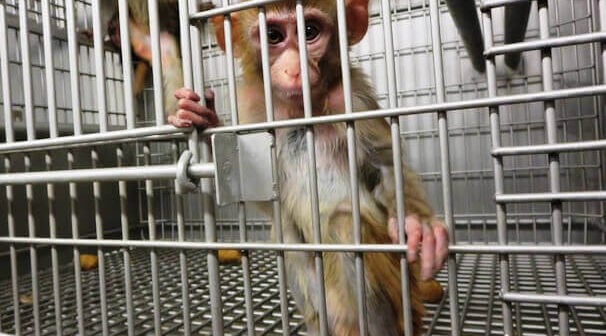
A University of Washington experimenter says he must keep mutilating monkeys to keep his job. Read the full confession PETA obtained and take action!
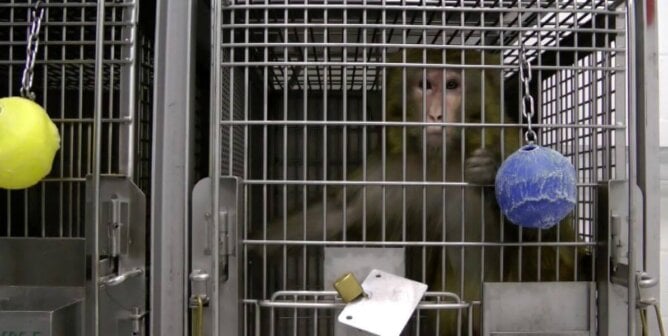
PETA’s new exposé uncovers three University of Washington experimenters who subject monkeys and other animals to painful and deadly brain experiments.
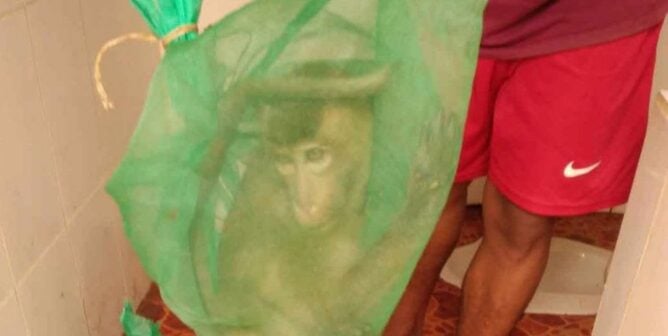
PETA has identified a surge in monkey smuggling cases across Southeast Asia, where traffickers steal monkeys from forests and funnel them into global animal experimentation supply chain.