
From Ticklish Rats to Gaming Monkeys—These Experiments Are Not What They Seem
Have you ever seen headlines talking about “ticklish” rats or a monkey “playing” a video game? Animal experimenters tend to present their junk science in harmless-sounding ways, turning cruelty into clickbait. But here’s what animals need you to know: Every animal used in experiments suffers.
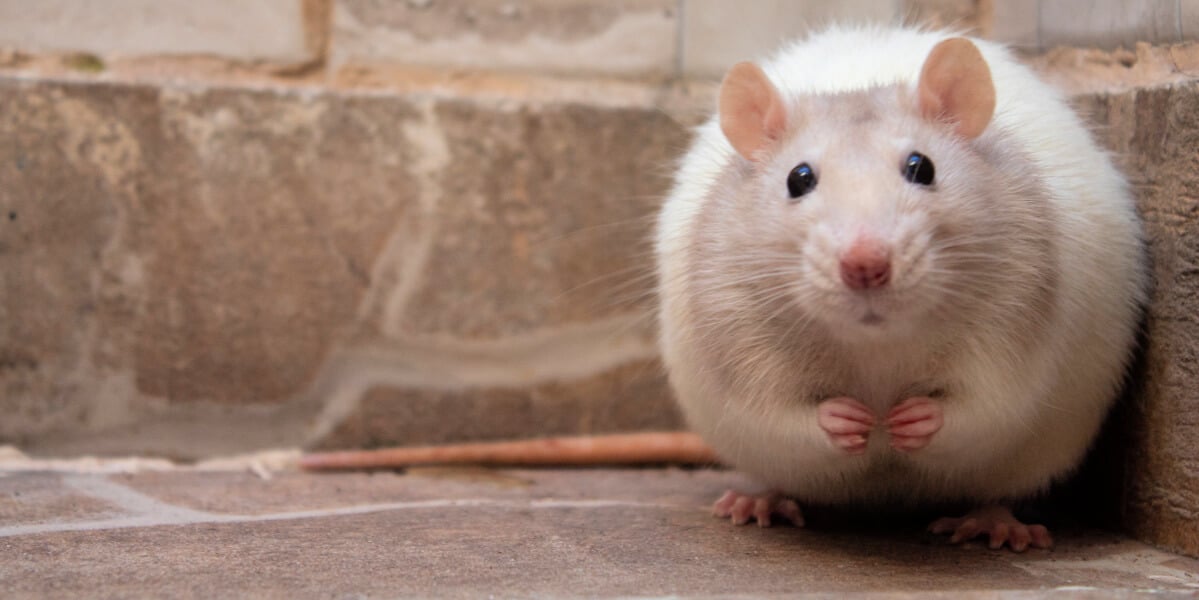
In labs, experimenters torment animals in myriad ways, including by imprisoning them in cages barely bigger than their bodies, injecting them with drugs, and cutting them open. They never get to explore, feel a warm breeze, or choose who to curl up beside. And at the end? The experimenters almost always kill the animals, while the headlines call it “science.”
Here’s what’s really going on behind those misleading headlines:
Monkey Mind Games
Elon Musk’s company Neuralink drew attention after releasing a video of a macaque named Pager playing video games with his mind.
But the PR stunt failed to acknowledge that experimenters cut into Pager’s skull, implanted a brain chip, locked his head and body in place, and made him stare at a screen while he controlled the game for sips of smoothies. According to documents obtained by the Physicians Committee for Responsible Medicine, monkeys used in Neuralink’s experiments “suffered paralysis, seizures, and such poor psychological health that they pulled out their own hair.”
In nature, macaques spend their time raising their families, foraging, exploring lush, dense forests, and navigating intricate social hierarchies. At Neuralink, workers isolated, restrained, and forced monkeys to do unnatural things for a treat. Records also revealed that more than a dozen monkeys died in those Neuralink tests, adding to the estimated 1,500 animals it killed in total.
‘Peekaboo’ Pain
An experiment at Humboldt University of Berlin made headlines for claiming to find that rats enjoy playing “hide-and-seek.” But to reach this unremarkable conclusion (since play is a fundamental aspect of an animal’s life, helping them build physical and social skills), experimenters drilled into the rats’ skulls and implanted electrodes into their brains. And when the tests were over, the experimenters killed the animals and cut open their brains. All that pain and death just to confirm something we’ve already known—that rats are curious, social, and love to play.
Tickle Torment
Another series of tests at Humboldt showcased photos of rats on their backs, seemingly enjoying “tickle” sessions—but it conveniently left out the full picture: Experimenters removed parts of rats’ skulls, poured chemicals onto their exposed brains, and hooked them up to wires and recording equipment to track the rats’ “play” in real time. And of course, there’s no footage of what came after: laboratory workers killing and dissecting these intelligent, sensitive animals.
Mouse and Rat Empathy Tests
We don’t need a bogus test to know that mice and rats care about one another. When given the chance, they comfort and protect their loved ones. But that hasn’t stopped laboratories from turning empathy into a weapon. In one test, experimenters forced rats to swim for their lives while a cage-mate could save them by opening a door. In another test, experimenters made mice as young as 11 weeks old watch while other mice suffered with different levels of pain.
Experimenters inflicted this physical and emotional agony just to confirm what anyone who’s spent time with mice and rats already knows: They feel, they care, and they form meaningful bonds.
Help PETA End Experiments on Animals
From “ticklish rats” to “gaming monkeys,” experimenters use PR tricks to disguise violence as research. They hurt animals and then kill them. It’s time to strip away the spin and call this what it is: cruelty, not science.
Please take action below to help animals suffering in laboratories: