PepsiCo’s Promises Fall Flat While Bulls Pay the Price
Update (March 16, 2026): PepsiCo is falling flat—it’s all fizz, no action. PETA is blasting PepsiCo for failing to investigate whether its suppliers in India are contributing to the well-documented (and videotaped) suffering of bulls used to haul the sugarcane that PepsiCo sources for its branded beverages. PETA alerted the company in early 2025 that the abuse of bulls violates PepsiCo’s own Global Policy on Animal Welfare—yet the company appears to have done nothing to help stop the bulls suffering for its sugar.
Now, PETA is calling on PepsiCo to “Cut the Bull. Choose Cruelty-Free!” in a full-page spread in Crain’s New York Business.
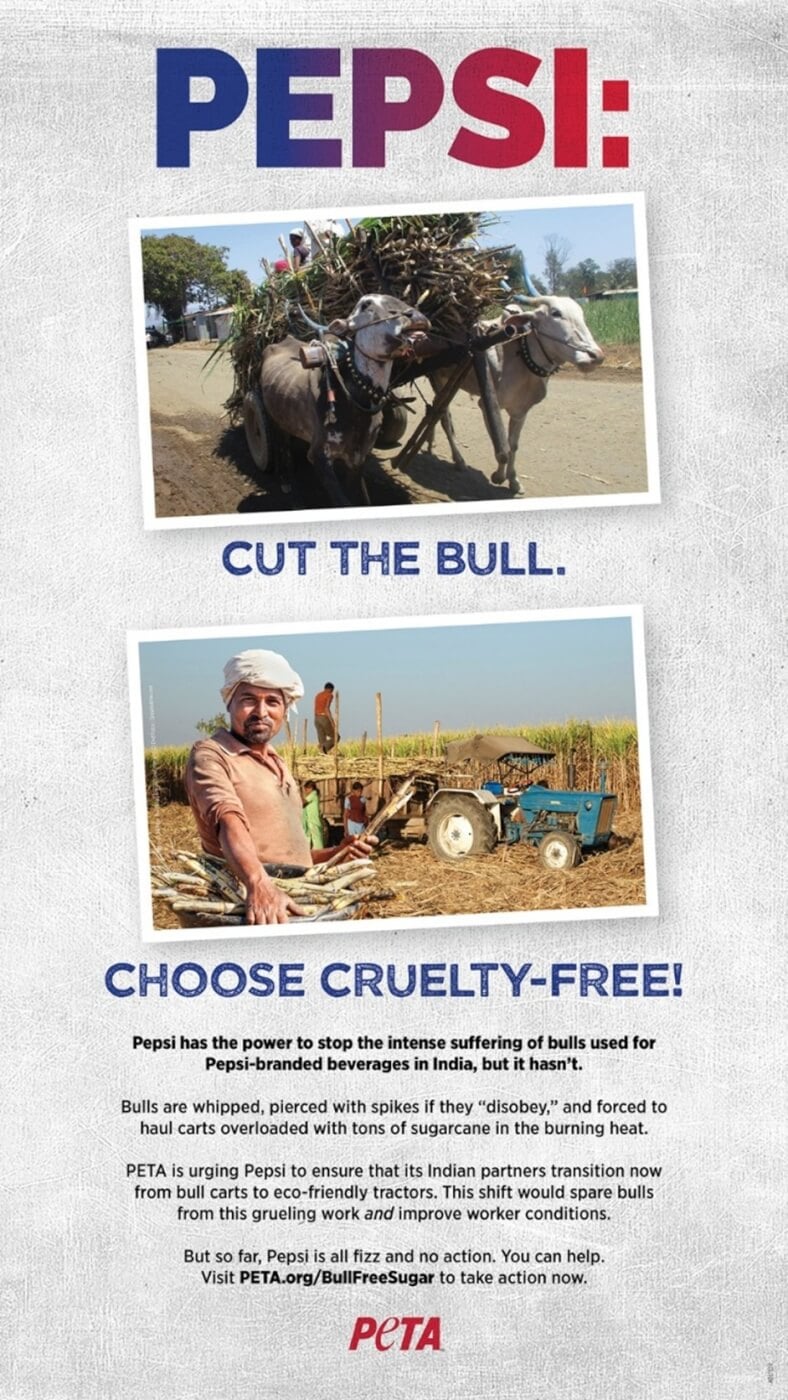
Humane options are already in use, including eco-tractors that can replace bulls and boost efficiency, but PepsiCo’s Indian bottling partner remains tied to an industry where gentle, social bulls are forced to drag carts illegally loaded with up to 8,000 pounds of sugarcane under the scorching sun.
Originally published February 20, 2026
There may be something not-so-sweet about PepsiCo Inc.’s operations, but thanks to the PETA Foundation’s legal action on behalf of a PepsiCo shareholder, the company’s shareholders may soon seek answers. Less than a day after PETA Foundation attorneys sued PepsiCo for trying to block a shareholder proposal seeking an investigation into the treatment of animals in its supply chains, the company reversed course. It swiftly agreed to include a proposal on the matter in its 2026 annual meeting. Pepsi swiftly agreed to include the proposal on the matter in its 2026 annual meeting.
Why PETA Took the Cola Company to Court
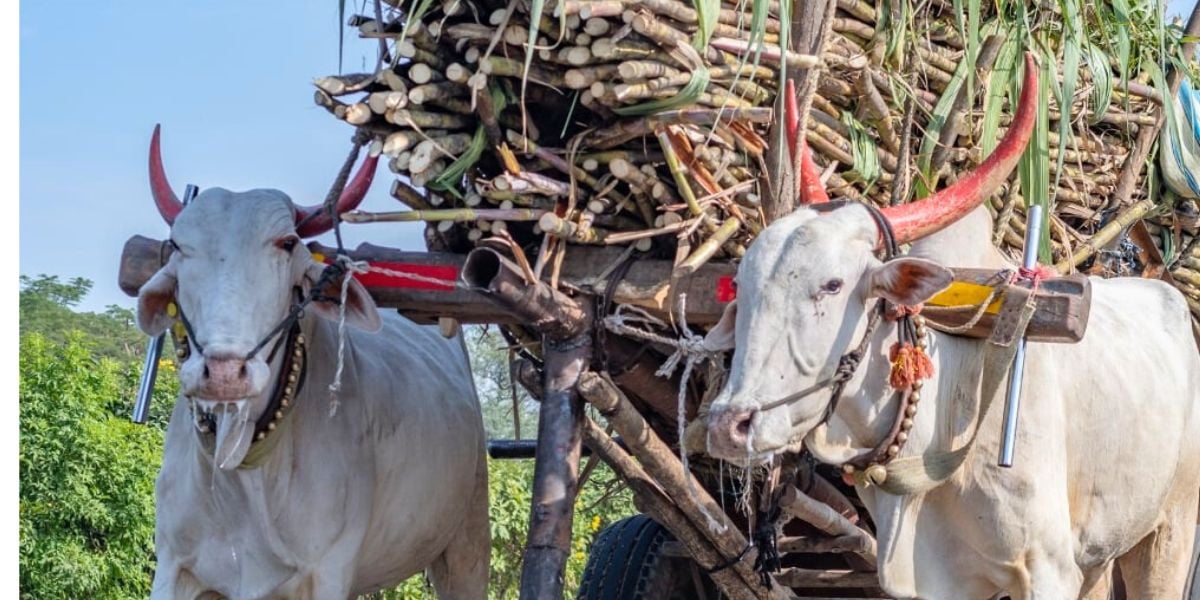
PepsiCo’s bottling partner in India is tied to an industry where workers violently beat bulls with sticks and whips while forcing them to haul carts illegally overloaded with up to four tons of sugarcane. The shareholder resolution, submitted by PETA in November 2025, confronted PepsiCo executives for failing to address the well-documented cruelty—even when kind solutions are readily available, including eco-tractors that can replace multiple bulls in one go and improve production and delivery efficiency.
Instead of addressing the abuse, PepsiCo tried to block the resolution from even appearing on its upcoming annual meeting agenda. So PETA Foundation attorneys filed a lawsuit in the U.S. District Court for the Southern District of New York to ensure shareholders get the transparency they, and animals, deserve.
The lawsuit alleged that PepsiCo broke the law by failing to notify a shareholder of the supposed “deficiencies” in her proposal, while later claiming the issues weren’t fixed in time. Following PETA’s move, Pepsi agreed to put the resolution to a vote.
Sorry to Burst Anyone’s Bubble … Some Sugar Comes at a Cruel Cost
Bulls are naturally social, gentle animals who form close friendships and protect their fellow herd members. But in parts of India’s sugar industry, they’re treated like machines. Humans force them to work long, grueling hours under the blazing sun without rest or water. If the bulls “disobey,” slow down, or turn their heads, barbed-wire spikes dig into their faces, and thick ropes tear at their nostrils. Handlers sometimes even work them to death.
This is the hidden cost of sugar.
How PETA Is Helping India’s Bulls
More than 50,000 PETA supporters have called on PepsiCo to require its partners and suppliers to switch to modern eco-tractors. Animal Rahat, a PETA-supported charity in India, has been leading the charge. Through its Sugarcane Industry Mechanization Project, Animal Rahat has replaced bull-driven carts with efficient, cost-effective tractors. Thanks to these efforts, one-third of Maharashtra’s sugar production is now bull-free.
A single tractor can carry up to 18 tons of sugar per trip, far more than a bull-driven cart—boosting farmers’ incomes while sparing animals from suffering.
PepsiCo can—and should—help us drive this transition. Join us in urging Pepsi to go bull-free: