
5 Jaw-Dropping Iditarod Facts From Just-Released In-Depth Report
Freezing temperatures. Blinding snowstorms. Sharp winds whipping across approximately 1,000 miles of treacherous, icy terrain. This is the environment in which mushers force hundreds of dogs to run each year in the Iditarod. As mushers push dogs’ bodies beyond exhaustion, injured and sick animals are often made to keep running in extreme conditions with little relief. More than 150 dogs have died in the Iditarod since it began in 1973—and as long as the race continues, the death toll is almost certain to keep climbing.
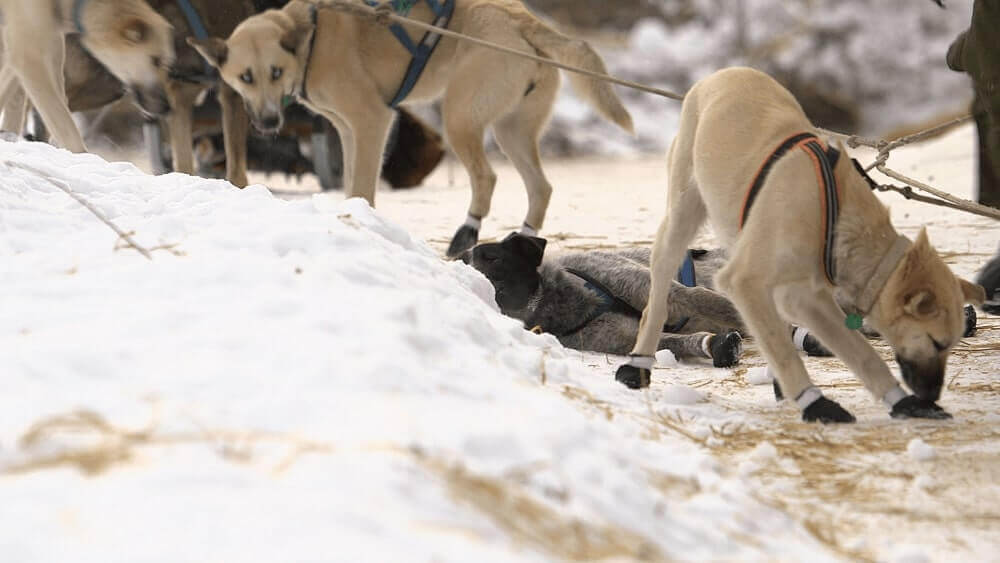
Now, a comprehensive, just-released white paper from PETA lays out, in chilling detail, just how damaging and cruel this race really is. Drawing from peer-reviewed scientific studies, the report is the first in-depth analysis of the severe and lasting damage dog-sled racing inflicts on dogs’ bodies.
Here are five jaw-dropping facts from the report that lay bare the suffering behind races like the Iditarod:
1. The race can alter dogs’ hearts and muscles.
Mushers push dogs beyond their breaking points, leaving many with lasting heart damage. Dogs used in long-distance races can develop “athletic heart syndrome,” a condition in which the heart becomes enlarged and misshapen, impairing normal blood flow. These changes can leave dogs with cardiac damage long after the race ends.
Many dogs also suffer from “sled dog myopathy,” a condition in which intense physical stress causes muscle tissue to break down and release proteins into the bloodstream. This can damage the heart, kidneys, and other vital organs.
2. Dogs suffer severe electrolyte loss and harmful dehydration.
During long-distance races, dogs lose massive amounts of electrolytes through constant salivation, especially in the extreme cold. These minerals are essential for nerve and muscle function, yet they are not replenished when mushers force dogs to run for hours on end. The result is an increased risk of injuries and other serious health problems, as strained muscles and hearts are pushed beyond safe limits. In the Iditarod, dogs are not allowed to stop to drink when they choose, leaving them dangerously dehydrated.
3. Painful digestive conditions are so common they’re considered routine.
Gastritis—painful inflammation of the stomach lining—is widespread among dogs used in the Iditarod. Giving dogs daily medication to suppress stomach acid has become standard practice during races. Even so, many still develop stomach lesions, diarrhea, and other serious digestive conditions. Some ingest gravel, straw, and other foreign materials while racing.
4. Mushers force injured and sick dogs to keep running.
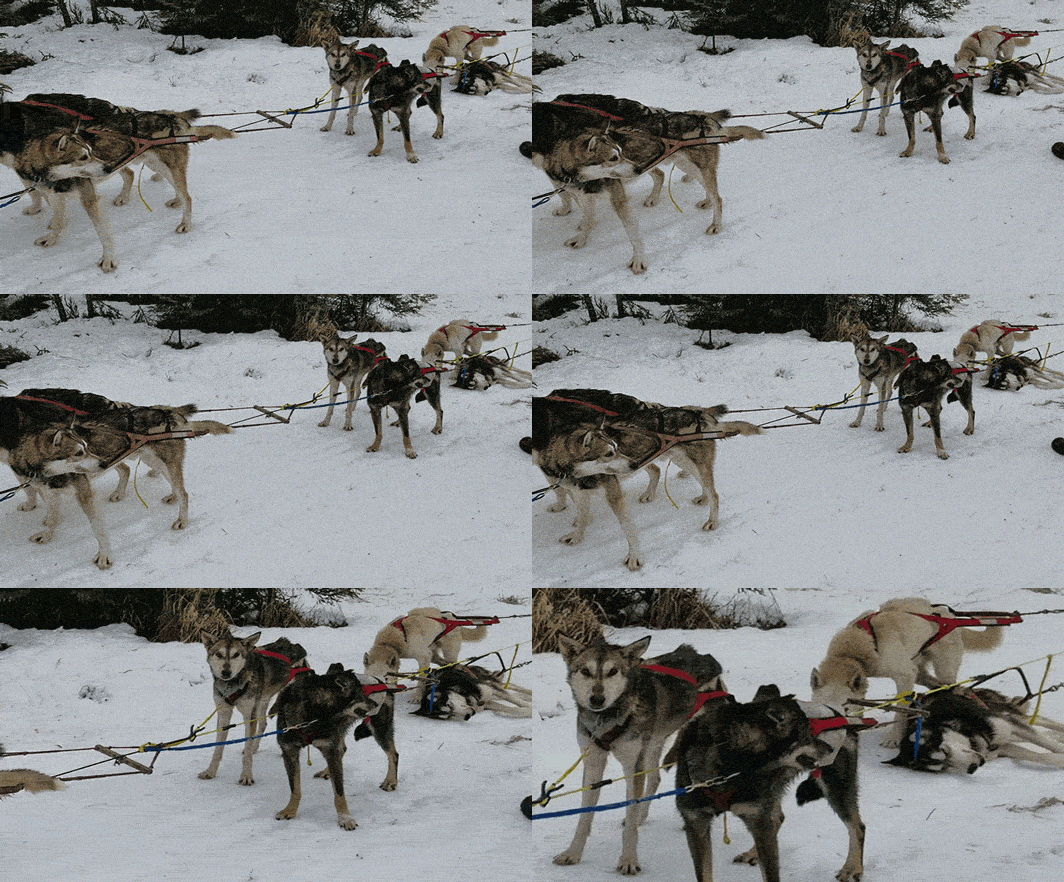
One peer-reviewed study found that more than half of the dogs used in a race exceeding 1,000 miles were injured or became ill during the event—and more than 40% of those dogs were still forced to finish.
5. The suffering continues off the trail.
Even when the race is over, the abuse doesn’t end. Kennels often keep dogs outdoors year-round in extreme weather, chain them for long periods, and force them to live in crowded, unsanitary yards where disease and parasites run rampant.
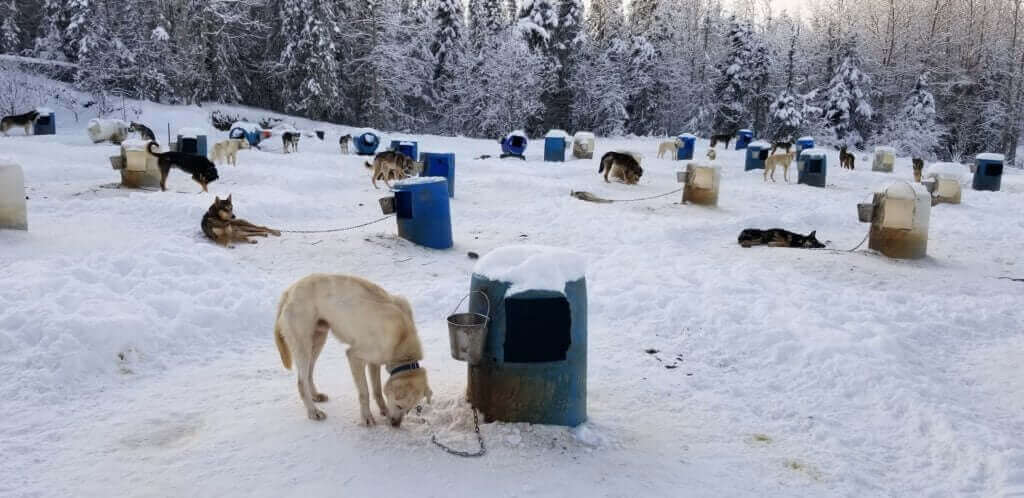
At three-time Iditarod champion Mitch Seavey’s dog yard, PETA’s eyewitness observed scores of dogs continuously chained to barrels, with some running in circles so long that their paw pads were raw or worn down. When a team of dogs broke free from a sled, one dog was dragged to death while another was dragged up to 2.5 miles and left urinating blood. Some dogs’ tongues froze to metal harness lines, tearing off skin, while others’ footpads bled profusely.
A Trail of Blood
The leading cause of death for dogs in the Iditarod is aspiration pneumonia—caused by inhaling their own vomit. In 2025, a four-year-old dog named Ventana, who was in late-stage pregnancy, collapsed and died on the trail after musher Daniel Klein forced her to run more than 300 miles. In 2024, three young dogs—Henry, George, and Bog—collapsed and died on the trail, while more than 200 others were pulled from the race due to exhaustion, illness, injury, or other causes, leaving the remaining dogs to be pushed even harder through treacherous terrain.
This cruelty cannot continue. Take action now—demand an end to the Iditarod today.