
Does Ed Gein’s Story Make You Realize You Have Skeletons in Your Own Closet?
Netflix’s latest entry in its Monster series—this time focusing on Ed Gein—might leave you more than just unsettled. The show traces the life of one of America’s most infamous serial killers, and whether you watch the show or research his life on your own, you’ll walk away with a possibly surprising new outlook on your meals and home décor.
Ed Gein, later known as the Butcher of Plainfield, grew up on a small Wisconsin farm where violence against animals was considered ordinary. From a young age, Ed helped his family slaughter pigs and chickens and prepare carcasses in the same shed where he would later hang human remains. Those early experiences normalized dismemberment and desensitized him to suffering.

Before Gein became recognized for exhuming human corpses and fashioning “keepsakes” from their skin—acts that inspired The Texas Chainsaw Massacre, Psycho, and The Silence of the Lambs—he was surrounded by animal slaughter. Investigators later found items such as chairs, gloves, and a belt made from preserved human skin in his farmhouse—grotesque echoes of the current leather industry. Turning bodies into fashion or furniture items stems from the same belief that skin is a resource and not part of someone who wanted to live.

The show’s visual motifs drive that connection home: Scenes of cutting into chicken, turkey, or “venison” (or was it Ms. Worden’s flesh?), might help you make the connection that our fellow animals don’t want to die to end up on your supper plate, either.
It’s not just Gein. As PETA’s list of notorious killers points out, many violent offenders—including Jeffrey Dahmer and Ted Bundy—began by torturing or killing animals. Dahmer, for instance, collected animal bones and dissected roadkill before targeting humans. This pattern is well-documented: Desensitization to our fellow animals’ suffering often precedes violence against humans.
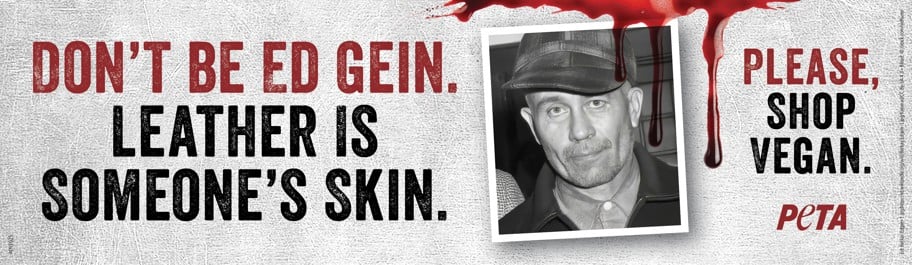
Watching Gein’s story unfold—on screen or through historical accounts—may make you wonder: If we’re horrified by what he did to humans, why do we still pay for animals to be caged, killed, and skinned for fashion and food?

If this series leaves you questioning that line, you’re not alone. Sometimes, the most unexpected outcome of learning about criminals is realizing that empathy shouldn’t stop at our own species.
Are you ready to stop the violence? Take PETA’s 3-week vegan challenge and you’ll quickly realize it’s no challenge at all:

