
Here’s Why You Should NEVER Visit Austin Aquarium
At Austin Aquarium—a shoddy strip-mall aquarium owned by the notorious Covino family—visitors are allowed to “get up close and personal” with sensitive wildlife who don’t want to be pet, poked, or prodded at by humans. The dilapidated petting zoo has been in hot water with federal officials for injuries to guests (including young children), filthy and unsafe enclosures, failing to notify a veterinarian after observing animals’ abnormal behaviors, and more.
Keep reading to learn why you should never visit Austin Aquarium or any facility that forces animals to be poked and prodded.
Injuries to Visitors and Unsafe Conditions
When profit-hungry exhibits like Austin Aquarium confine animals to miserably inadequate enclosures and force them into stressful interactions with humans, the animals may defend themselves out of fear, worry, or even just their natural instincts. These dangerous interactions have led to multiple visitors being injured by wildlife held captive at Austin Aquarium.
- On July 3, 2025, the U.S. Department of Agriculture (USDA) slapped the facility with a second Official Warning, citing the following unsafe interactions and conditions:
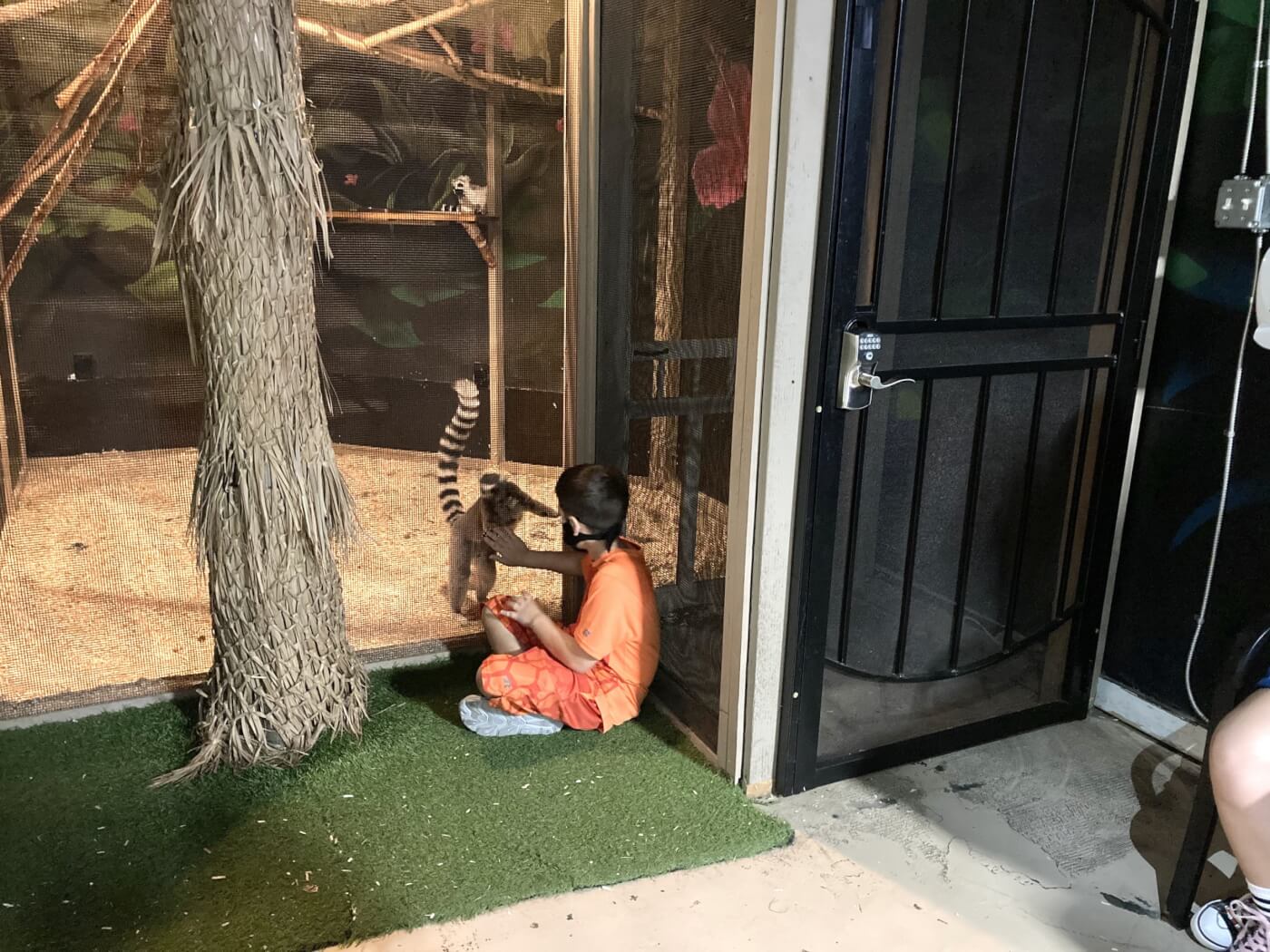
- A ring-tailed lemur reportedly jumped on a visitor’s shoulder, bit her face, and scratched her as soon as she entered an enclosure for the encounter. The woman said that prior to the encounter, an employee had assessed the lemur’s temperament and instructed guests not to bring bags in and not to have anything in their pockets—apparently, though, nothing had been mentioned about the possibility that a lemur would jump on and attack guests. After the incident, the guest said that she was escorted to the back of the facility, where she was given only a napkin and adhesive bandages for her injuries. The woman sought medical treatment for her injuries.
- A ring-tailed lemur bit a boy’s hand, and a kinkajou bit a child during public encounters. (These incidents prompted the first Official Warning from the USDA in October 2022. They were repeat warnings for failing to handle animals in a manner that ensures the safety of both animals and the public.)
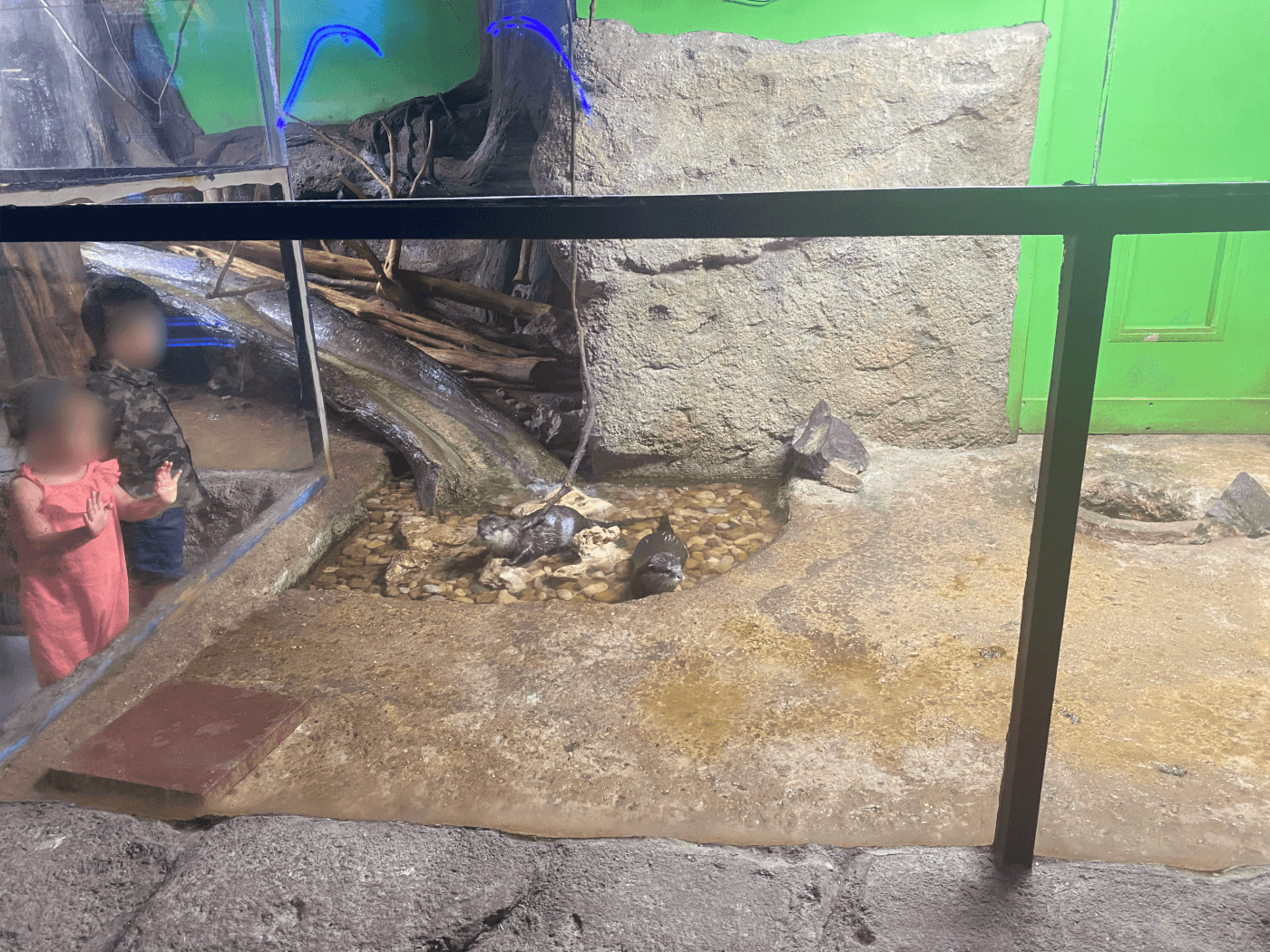
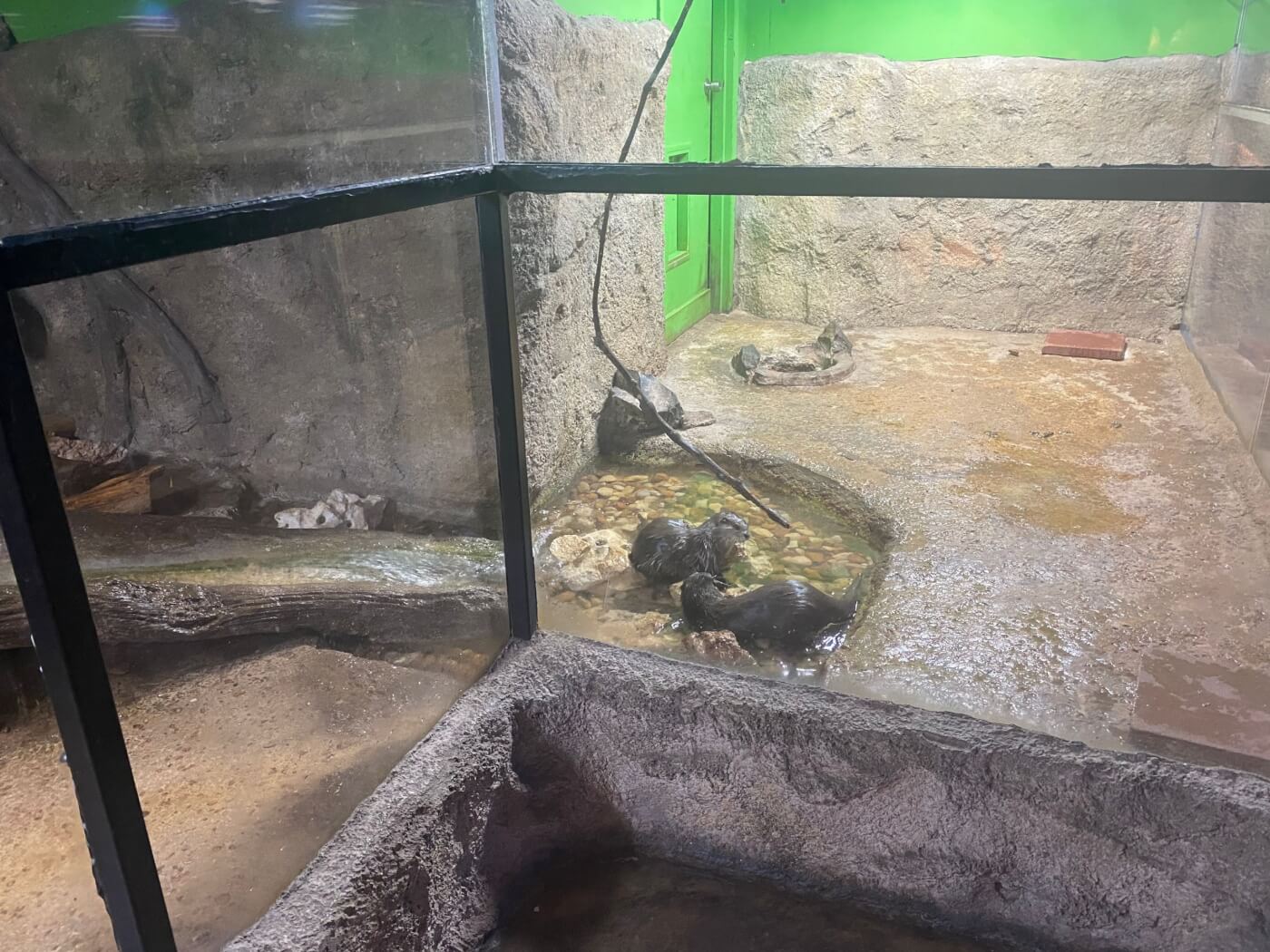
- Officials observed open feeding tubes installed in the otter exhibit to allow public feeding interactions. Unsupervised guests could potentially feed animals inappropriate foods and/or touch the otters through the feeding tubes, posing a risk to both the animals and the public.
- In 2019, the parents of a 10-year-old girl who was allegedly bitten by a lemur filed a lawsuit against the Austin Aquarium.
- Lemurs, like all other primates, have complex social hierarchies and will bite out of instinct to establish dominance. Their bites have been known to injure humans, which is one reason why they should never be used for public interaction.
- Close contact with lemurs poses a serious threat to both humans and other animals, as the risk of transmitting zoonotic diseases is very high.
Austin Aquarium Holds Distressed and Neglected Animals Captive
- Two otters—Scooter and Sadie—were observed exhibiting abnormal, repetitive behaviors at the Austin Aquarium. Scooter was observed “constantly sucking his right front foot,” which remained in his mouth even when he was walking throughout the exhibit. Sadie was seen tossing her head while “repetitively running in a circle around one area of the exhibit.”
- Stereotypic behaviors in animals at roadside zoos and other cruel establishments—like the ones reportedly observed in Scooter and Sadie—are often a sign of mental anguish known as zoochosis. This condition is a common indicator of poor welfare.
- In March 2022, the U.S. Department of Agriculture (USDA) slapped the Austin Aquarium with a citation for violating the federal Animal Welfare Act for not contacting a veterinarian. The facility’s animal care manager reportedly said that Scooter “always sucked his foot and they had expected him to outgrow it,” and that Sadie began her repetitive behavior after they changed her public feeding “from twice a day to allowing it all day.”
- Kangaroos and rabbits who had ear problems were reportedly undergoing “treatment recommended by a facility employee,” but a veterinarian was not consulted before beginning treatment and there was no vet exam to determine the cause of the ear problems in the kangaroos, according to a May 2019 inspection report.
Filthy, Inadequate Enclosures
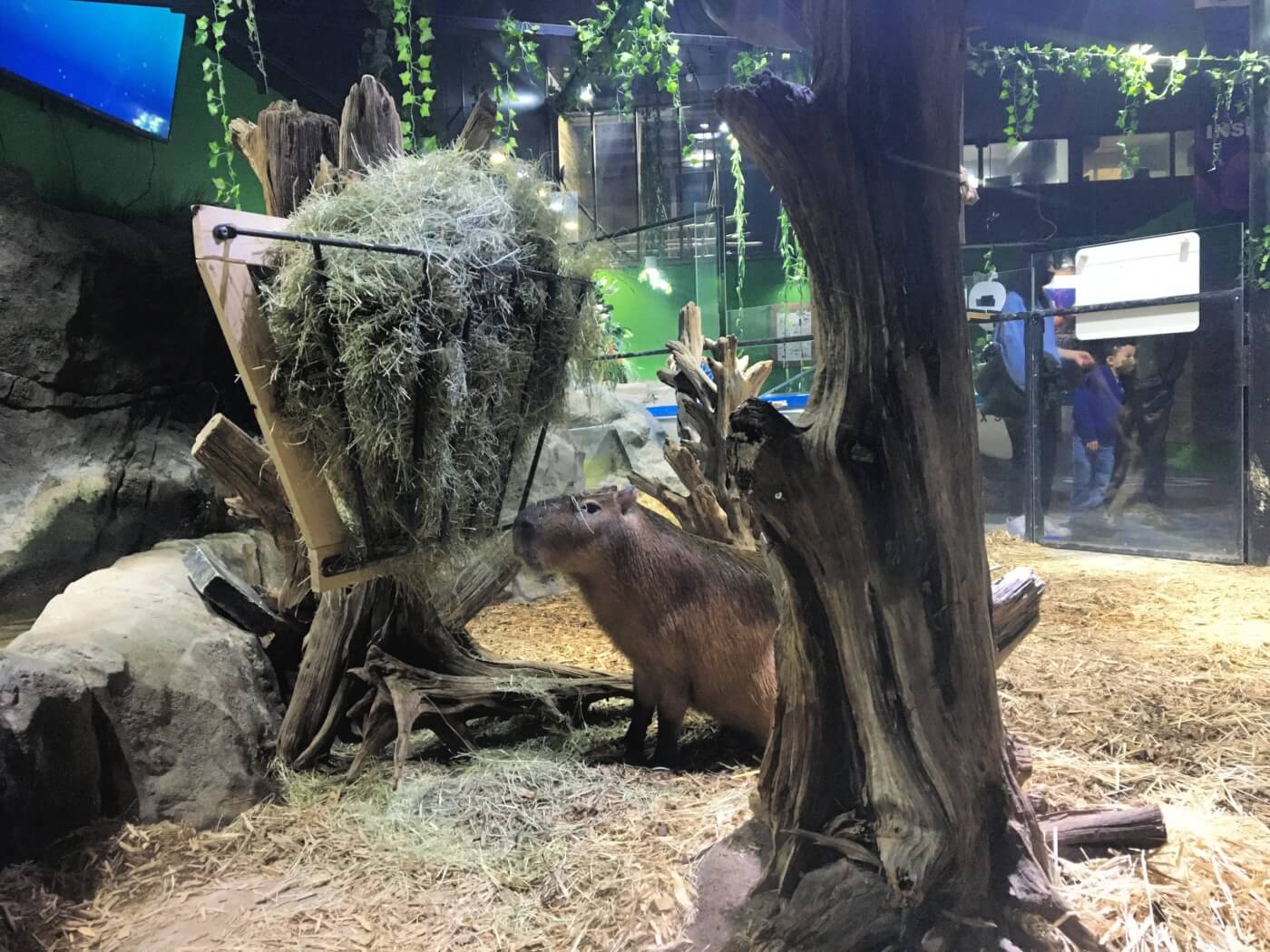
- The USDA cited Austin Aquarium for housing an infant brown lemur in a crate that was too small—workers left the animal there to suffer for 10 to 12 hours at night. The USDA also cited Austin Aquarium for the sheer excess of flies swarming the facility’s capybara and their food. In addition to making animals miserable, flies can spread disease.
- A USDA inspection report revealed that the capybaraenclosure’s pool was “cloudy,” “brown/yellowish in color,” and had “fecal matter floating around.” The pool apparently had no filtration system, relying “solely on [manual] water changes.”
- The accumulation of waste in animals’ enclosures can increase their risk of contracting dangerous diseases.
- In January 2022, the USDA cited the Austin Aquarium for not adequately cleaning the capybara enclosure.
- A room where two miniature pigs were held reportedly had “pitted and eroded areas,” with debris “accumulating in the eroded area of the floor,” making sanitation difficult.
- In May 2021, the USDA cited the facility for failing to maintain the flooring in the animal quarantine room in good repair.
- According to another report, a metal hook was exposed at the top of the coatimundi enclosure that could cause an animal to become caught or entangled; the coatimundi and red ruffed lemur enclosures lacked effective barriers that would ensure the safety of the animals and the public; and the room holding the kinkajou enclosure had black debris along the walls and doorframe.
- In September 2018, the Austin Aquarium received four citations from the USDA for failing to fix these potential hazards.
Our Fellow Animals Don’t Want to Be Trapped at Shopping Mall Aquariums—Speak Up!
Animals don’t want to be kept in small, dirty enclosures, forced to interact with humans, or gawked at. Never visit the Austin Aquarium or any other shady mall aquarium or roadside zoo.
Find out what a PETA investigator uncovered while working at Austin Aquarium—including multiple incidents of animals injuring humans and animals apparently suffering from severe psychological distress—and take action:

