Volunteer with PETA-Supported Animal Rescue Team Killed in Drone Strike in Ukraine; Teams Vow to Carry On
For Immediate Release:
October 28, 2026
Contact:
Moira Colley 202-483-7382
A Canadian volunteer helping rescue animals trapped along Ukraine’s kill zone adjacent to the frontline during active fighting was killed on Sunday in a double drone attack while working with PETA’s Global Compassion Fund-supported Animal Rescue Kharkiv (ARK). The deadly attack occurred as Jesse Adams, 40, from Vancouver Island, Canada, and other civilian rescuers—all wearing helmets and protective clothing—were urgently loading animals into a van from a temporary safe house for dogs and cats, some injured, all displaced by the war, all deeply scared and in need of evacuation as people who survived the bombing of their homes left them as they evacuated. Two drones struck the vehicle, smashing through its windshield, critically injuring Adams with a massive blast of shrapnel and killing a dog he’d just rescued. Another drone struck the animal house, setting it on fire even as rescuers rushed in to pull out the 80 animals trapped inside, before two more drones struck the home. Photos and video of Adams rescuing animals in Ukraine are here.
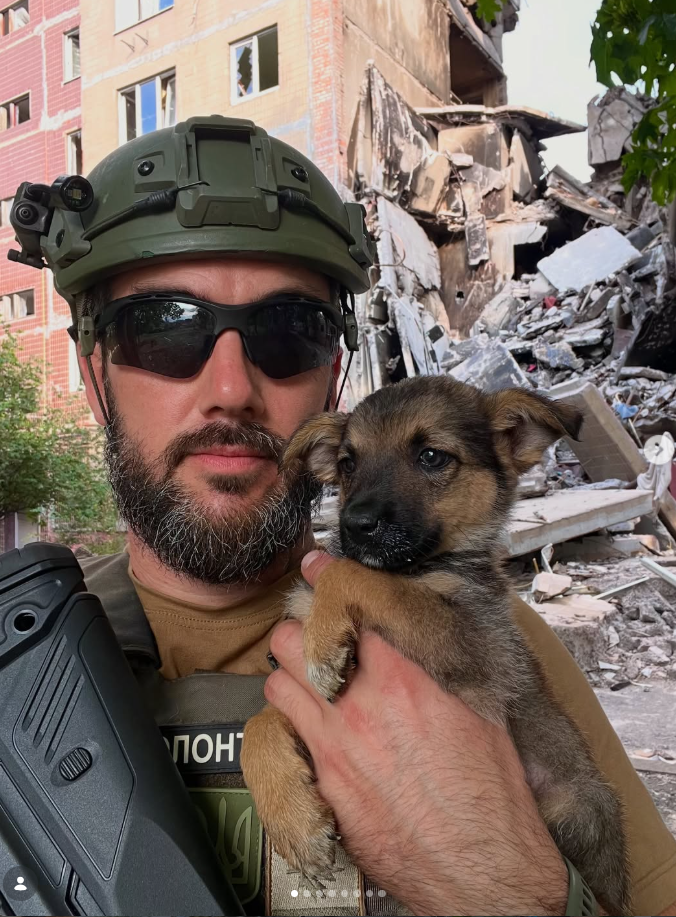
Adams was the co-founder of RainCoast Dog Rescue Society in Canada and one of many volunteers of PETA-supported teams who, for four years, have been risking their lives amid the constant danger of bombs, shelling, and violence to rescue frightened, traumatized, injured, and often severely malnourished animals in Ukraine. Supported by PETA’s Global Compassion Fund, PETA Germany and ARK have delivered more than 4 million tons of food and rescued nearly 40,000 cats, dogs, horses and other animals since the war began.
On one of his last posts on Instagram four days ago, Adams wrote about helping a family who refused to leave their home in an area that was being hit with drones, bombs, and missiles everyday, until they knew their animals could be evacuated safely. Adams and the ARK team helped the family evacuate their more than a dozen animals, then wrote of the work, “We took the great risks because these people and the animals desperately needed our help. We took the risks because we would want someone to do the same for us if we needed help. We took the risks because there are not many that would have.”
Adams’ death is the latest tragedy to strike animal rescuers who worked with PETA Germany and other animal rescue groups. In June 2025, a Ukrainian combat medic Dr. Olena “Leleka” Yeryomenko, who worked with ARK between combat missions, was killed while rushing to help a wounded soldier, shortly after helping evacuate 42 dogs under intense Russian shelling. In August, ARK rescuer Ruslan Horbal, 43, and a French volunteer were seriously wounded when a drone struck their vehicle as they evacuated dogs, killing one of the animals. Despite injuries to his eye and ear, Horbal pulled his team partner from the wreckage, applied a tourniquet to his injured arm, changed a damaged tire, and drove them both to a hospital. Both men required surgery, and the volunteer faced a lengthy hospitalization. Horbal has described the constant threat from drones and his determination to return to animal rescue work by saying, “Knowing they are still out there, waiting for help, I cannot just stay home.”
Despite the deadly attacks, the rescue missions continue. The teams have already established another safe house and resumed evacuating animals from some of Ukraine’s most dangerous areas. Teams are also providing emergency veterinary treatment and reuniting survivors with their families or find them new homes.
For animals trapped in the fighting, the suffering can be horrific, and the rescue teams are their only hope.
- Atya the dog was found suffering on the street, cowering in fear in a puddle of her own blood, her shoulder blown to bits by a barrage of bullets. PETA Germany and ARK helped rush her to a clinic, where a veterinarian was able to remove the shrapnel from her wounds and save her shoulder. Although she has healed physically, she needs emotional support to help overcome the strain of her ordeal. Today, she’s at a partner center in Budapest that helps animals recover from trauma.
- A German shepherd named Lada was found with fleas jumping around her face and maggots eating away at her damaged, infected skin, and she couldn’t walk. After being asked by locals to help her, rescuers got Lada emergency brought Lada to its clinic, where the team shaved her and cleaned her up, gave her painkillers and anti-inflammation treatments for her skin infection, and treated her for the bone spurs in her spine that were keeping her from being able to walk. Now, she has recovered and is able to walk on her own.
- The home of Hamlet and his guardian was hit by a missile and turned to rubble. The dog’s legs, including one of his elbow joints, had been struck by flying shrapnel. The team transported Hamlet to a clinic in Kharkiv for emergency surgery, where the deeply embedded shrapnel was removed and his infected wounds were cleaned. The surgery was a success, and brave Hamlet, having regained the native hue of resolution, was soon wagging his tail around the clinic, cuddling with the staff, and walking once again.
- Victory was a painfully thin dog who could barely stand and whose hair was coming out in clumps. Spider-like mites bore into her pores, and red mange left her in agony. The team found her in an abandoned village in Ukraine. Today, thanks to around-the-clock care at the PETA-funded clinic in Kharkiv, Victory lives up to her name. Her coat is thick and shiny, and her once-inflamed skin is now healthy.
- Rescuers worked urgently—under the threat of heavy shelling—to successfully get 40 terrified dogs and cats out of the embattled Kherson region, which faced 25 direct aerial bombs in the village of Vesele in one day.
“Animals don’t wage wars, but they’re victims of them, left to suffer without food, water, or veterinary attention for grievous injuries unless someone who cares comes to their aid,” says PETA President Ingrid Newkirk. “PETA urges everyone to consider the animals impacted by conflicts and the heroes putting their own lives at risk to help them.”
For more information about PETA-supported animal rescue efforts in Ukraine, visit: https://headlines.peta.org/ukraine-updates/