U of Minnesota Hooks Monkeys on Cocaine, Forces Withdrawal; PETA Calls for Experimenter’s Ban
For Immediate Release:
October 14, 2026
Contact:
Sydney Rader 202-483-7382
In a letter sent today, PETA calls on the University of Minnesota to ban experimenter Jan Zimmermann from conducting experiments on monkeys after he spent months addicting them to cocaine, forcing them through withdrawal, and drugging them all over again, all without demonstrating any benefit to humans.
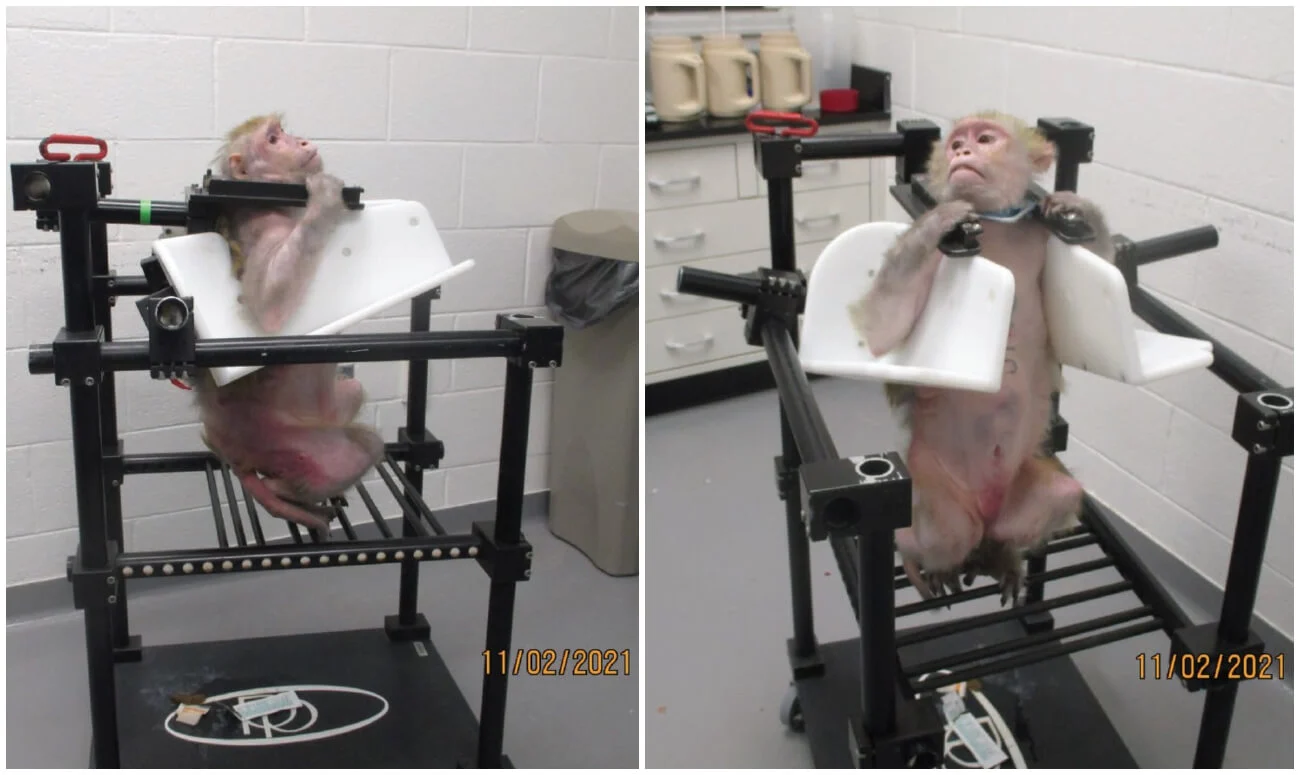
In one recent paper, Zimmermann describes caging highly social monkeys in isolation, fastening metal collars around their necks, and depriving them of water to train them to press a lever for juice. Experimenters then replaced the juice with cocaine, delivered directly into the monkeys’ bloodstreams through surgically implanted ports. For three months, the monkeys were strapped into restraint chairs for sessions held five days a week, receiving up to six cocaine infusions per session.
Experimenters then abruptly cut off the drug for 60 days, causing cravings, depression, agitation, and anxiety before giving the monkeys cocaine again. The conclusion? Different monkeys respond differently to cocaine.
“Zimmermann put monkeys through a living hell of isolation, drug addiction, and agonizing withdrawal just to arrive at a breathtakingly meaningless conclusion,” says PETA Vice President Dr. Alka Chandna. “PETA calls on the University of Minnesota to ban Zimmermann from ever laying hands on another monkey.”
PETA previously exposed Zimmermann, who is neither a surgeon nor a veterinarian, after he reportedly drilled 20 screws so deeply into a monkey’s skull that they pierced his brain, and then tried to conceal what he did. Zimmermann reportedly deleted staff notes that raised alarms about the monkey’s condition, blocked a veterinarian from reviewing his results, and falsely told colleagues that the veterinarian had found no neurological problems.
The monkey, named Everett, suffered for months before he was eventually killed.
After PETA met with local law enforcement officials in 2025 and presented evidence of apparent animal welfare violations in University of Minnesota laboratories, the university this year barred Geoff Ghose—who also conducted invasive brain experiments on monkeys—from experimenting on animals. The university continues to allow Zimmermann to experiment on monkeys.
PETA scientists ranked the University of Minnesota the nation’s fifth-worst violator of federal animal welfare standards among schools with taxpayer-funded laboratories in a 2023 study.
In nature, macaques live in large, tight-knit groups, travel up to two miles each day exploring diverse habitats, and cuddle together in their favorite “sleeping trees” at night, a world away from what they endure in the University of Minnesota’s laboratories.
PETA—whose motto reads, in part, that “animals are not ours to experiment on”—points out that Every Animal Is Someone and offers free Empathy Kits for people who need a lesson in kindness. For more information, please visit PETA.org or follow PETA on X, Facebook, or Instagram.