Summer Camps to Receive Empathy Curricula From PETA After Children Reportedly Kill Rooster
For Immediate Release:
July 17, 2026
Contact:
Nicole Perreira 202-483-732
Following reports that children allegedly beat a rooster to death at Lake Texoma over the Fourth of July weekend, TeachKind—PETA’s humane education division—is rushing emergency resources to local summer camps and other youth programs. The package will include empathy-building curricula with an urgent letter stressing the need for lessons that condemn violence and foster empathy for all living beings. PETA also plans to erect a sky-high message in the area asking residents who suspect any young person of abusing animals to contact TeachKind for free resources that help parents and educators cultivate compassion.
According to news reports, the rooster—identified as “Rusty the Rooster”—had become a familiar sight to visitors at Lake Texoma. The Marshall County Sheriff’s Office is investigating the incident.
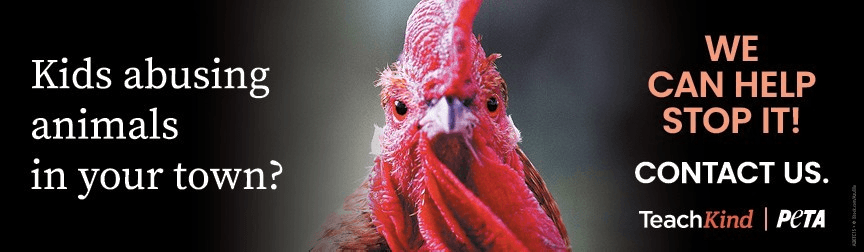
“Any child who beats an animal to death is displaying a dangerous lack of empathy and must be taught that abusing anyone is wrong,” says PETA Senior Vice President Colleen O’Brien. “Humane education helps children call out bullying and contributes to a safer, kinder world, and TeachKind stands ready to support the Lake Texoma community.”
TeachKind points out that cruelty to animals and violence against humans are inextricably linked. Sandy Hook Promise includes cruelty to animals in its list of “10 Critical Warning Signs of Violence.” TeachKind resources are easy to integrate into schools’ existing curricula to help prevent future violence.
TeachKind’s materials include “Empathy Now,” a guide to preventing violence by young people; “Challenging Assumptions” curriculum, which helps secondary school students examine discrimination and other social justice issues; its “Share the World” program kit, which includes lessons that aim to foster empathy for animals and are appropriate for even the youngest learners; and anti-bullying posters.
PETA—whose motto reads, in part, that “animals are not ours to abuse in any way”—points out that when it comes to the ability to feel pain, hunger, and thirst, a rooster is a dog is a boy. For more information about TeachKind, please visit TeachKind.org or follow TeachKind on Facebook or Instagram.