Sonoma Cheese Company Cuts Ties With Supplier After PETA Video Reveals Crippled, Neglected Goats
For Immediate Release:
December 15, 2025
Contact:
Moira Colley 202-483-7382
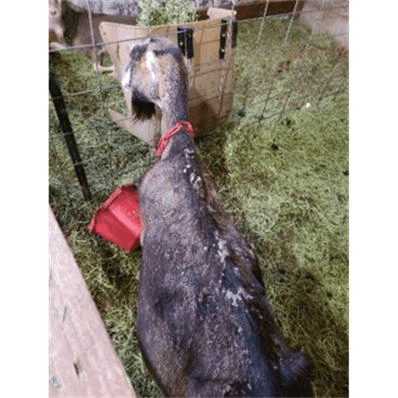
Locally-based cheesemaker Laura Chenel has stopped sourcing milk from Grand Barr Dairy in Oregon after PETA shared photos and video footage captured at the “family” dairy revealing goats suffering from overgrown hooves and lameness so severe and painful that they walk on their knees or limp about, and goats denied veterinary care despite suffering from emaciation and other debilitating conditions, some of whom were even left to die. Photos are available here.
PETA’s exposé reveals the following:
· At least five goat kids died in just weeks, including a young goat who was found panting, drooling, not eating or drinking, and suffering from diarrhea. Dead goats were tossed on a pile of dirt and other goats’ remains.
· A goat who couldn’t walk on her front legs was forced to crawl on her knees in a small pen full of feces and urine-soaked hay. One farm owner admitted that she should be put down but instead left the crippled goat to suffer without care for more than a month.
· A doe the investigator named Carrie was so weak that she couldn’t stand, but a farm owner just left her to suffer and die.
· Goats were plagued with infections for which they received no veterinary care. Some goats had abscesses that the farm owners left to burst, yet they still milked the animals, even though such abscesses are caused by an infection that, although rare, can be transmitted to humans through contaminated milk.
· Baby goats were castrated and dehorned with hot irons without any pain relief.
· Owners and staff slapped and kicked goats and pulled their legs and tails, and one of the dairy’s owners punched a goat eight times.
After the farm’s co-owner told PETA’s investigator that a weak and emaciated goat with diarrhea and maggot eggs around her tail would “probably die soon,” PETA’s investigator rescued the goat and rushed her for emergency care. Despite nearly two weeks of round-the-clock care and even hospitalization, her body was too ravaged by malnourishment and contagious infections to recover, and a veterinarian recommended she be relieved of her suffering.
“Goats at Grand Barr Dairy were left to suffer and die in filthy pens, and deprived of even the most basic necessities, including hoof care and veterinary treatment,” says PETA Vice President of Legal Advocacy Daniel Paden. “PETA urges everyone to please choose vegan milks and cheeses, which leave you assured that no animal suffered out of sight.”
PETA’s investigation followed a whistleblower complaint alleging numerous animals dying on the property; young goats frequently dying of various ailments, including pneumonia; a kid suffering from an infestation of maggots on her hindquarters that caused her skin to “fall off” before dying; goats at the dairy farm suffering from potentially fatal eye infections that cause blindness; goats being deprived of appropriate care and nutrition; and more.
PETA points out that mother goats and their babies form strong bonds, and goats are clean animals who groom themselves and each other. They are happiest in the company of others and can become depressed if they’re separated or isolated from their companions. Like cows on dairy farms, female goats must be repeatedly impregnated to produce milk and are slaughtered when their milk production wanes. Males are raised for their flesh and slaughtered when just a few months old.
PETA—whose motto reads, in part, that “animals are not ours to eat or abuse in any other way”—points out that Every Animal Is Someone and offers free Empathy Kits for people who need a lesson in kindness. For more information, please visit PETA.org or follow PETA on X, Facebook, or Instagram.