‘Show Mercy to All’: PETA Asks U.S. Catholic Bishops’ President to Lead Switch to Vegan Holy Items
For Immediate Release:
February 18, 2026
Contact:
Nicole Perreira 202-483-7382
In time for Ash Wednesday, PETA’s faith outreach division, PETA LAMBS (“Least Among My Brothers and Sisters” from Matthew 25:40), sent a letter today to Archbishop Paul Coakley, President of the United States Conference of Catholic Bishops, asking him to encourage Catholics nationwide to live out Christianity’s core values of mercy and compassion by replacing traditional holy items—typically made of animal products—with vegan versions.
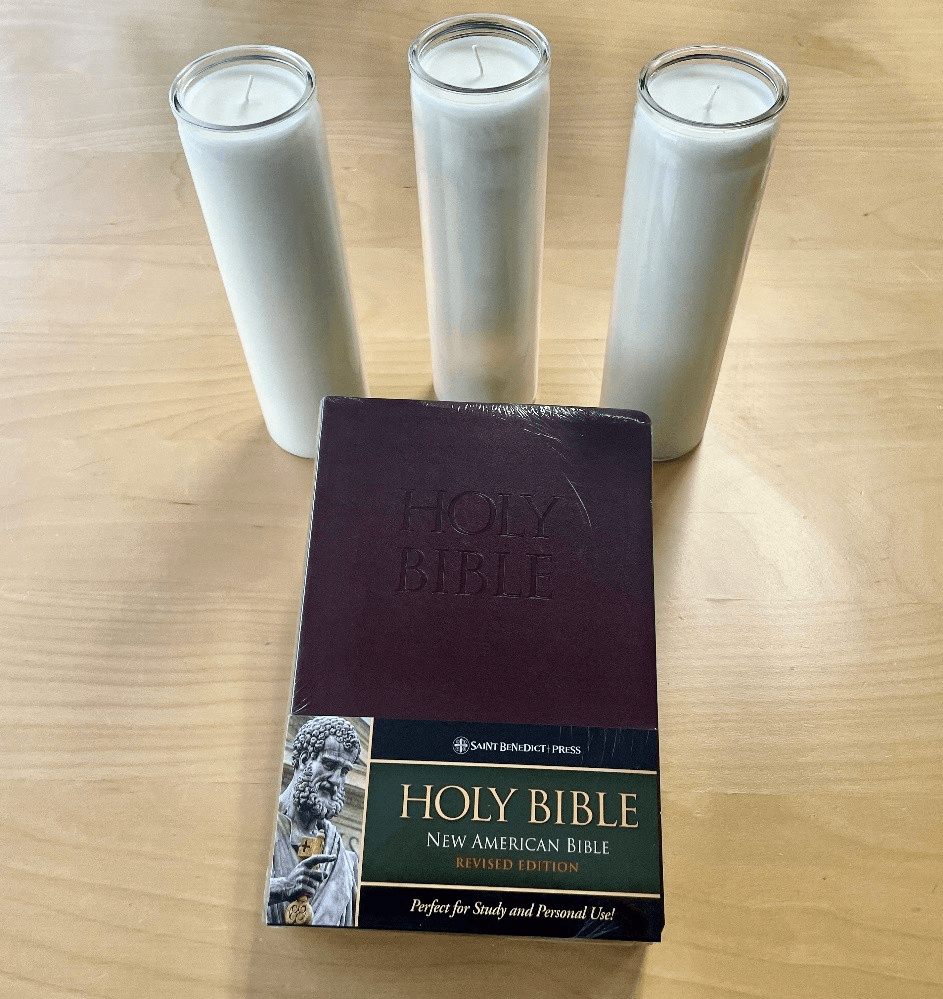
In the letter, PETA points to candles made of wax taken from intensively farmed, stressed bees; Bibles bound with the skin of slaughtered animals; and garments made of wool stolen from sheep who are punched, kicked, and sliced to ribbons in the wool industry. PETA notes that vestments and other garments could easily be made from linen instead of wool, and to demonstrate how simple other compassionate updates would be, PETA is also sending Archbishop Coakley a trio of soy candles and a Bible bound in vegan leather.
“This period of self-reflection is an opportunity to put the Church’s values of compassion and stewardship into practice, and a vegan update to traditional holy items would affirm that all of God’s creation deserves respect,” says PETA Faith Outreach Coordinator Sarah McFarlane, a Catholic. “PETA encourages Archbishop Coakley to lead with kindness by inspiring Catholics across the country to show mercy to animals with just a few simple changes.”
Just like humans, bees love to play, cows form friendships, and sheep grow depressed if isolated from their flock.
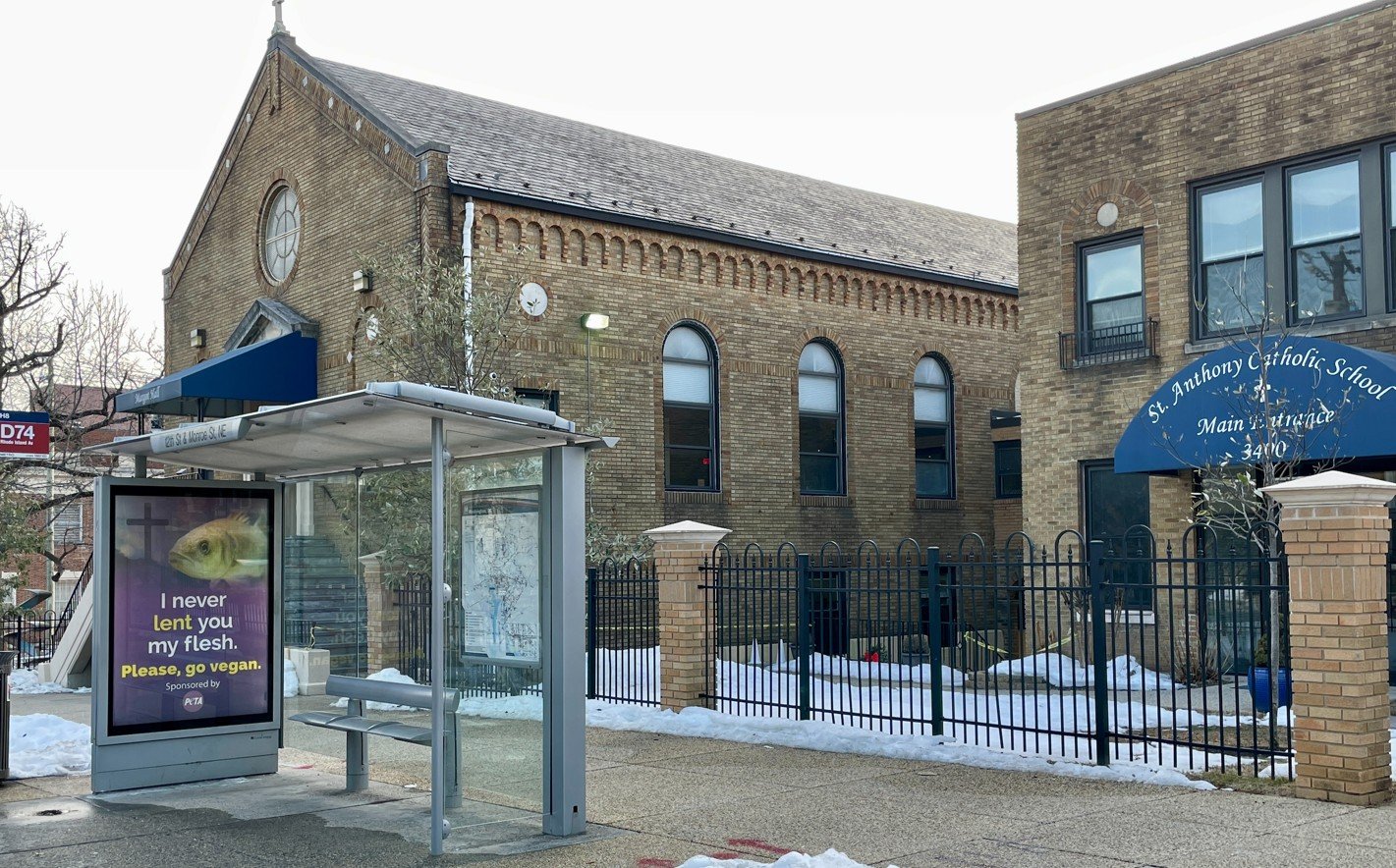
PETA has also placed an appeal near St. Anthony of Padua Catholic Church in Washington, D.C., urging people to leave all animals in peace by going vegan this Lenten season and beyond. PETA offers a free vegan starter kit to help those looking to make the switch.
PETA—whose motto reads, in part, that “animals are not ours to wear or abuse in any other way”—points out thatEvery Animal Is Someone and offers free Empathy Kits for people who need a lesson in kindness. For more information, please visit PETA.org or follow PETA on X, Facebook, or Instagram.
PETA’s letter to Archbishop Coakley follows.
February 18, 2026
The Most Reverend Archbishop Paul S. Coakley, S.T.L., D.D.
President of the United States Conference of Catholic Bishops
Your Excellency:
Greetings from LAMBS, the Christian outreach division of People for the Ethical Treatment of Animals—PETA entities have more than 10.4 million members and supporters worldwide, including more than 52,000 in Oklahoma, and our U.S. headquarters is in the wonderful city of Norfolk, Virginia. We respectfully ask that the Church deepen its commitment to compassion and mercy to all of God’s creations by encouraging Catholics across the country to replace holy items made from animal products with equivalent items made from plants. To share what these options could look like, we will be sending you a vegan leather Bible and soy candles for your consideration.
Candles symbolizing Jesus Christ would better reflect hope for bees if made from soy instead of beeswax. Like all animals, bees can feel stress and pain, but conventional beekeeping practices often involve the use of chemicals, cutting off queen bees’ wings to disable them, and replacing the bees’ vital food source, honey, with a cheap, nutrient-poor sugar substitute.
The Church could encourage Catholics to avoid using Bibles bound by leather, as animals used for their skin are raised on filthy factory farms and subjected to beatings and abuse during “death marches” to slaughter. Fortunately, high-quality, non-leather Bibles are widely available and allow the faithful to honor Scripture without contributing to animal suffering.
Wool garments could be made from plant-based fibers, such as linen, which would spare sheep the violence of shearing and early death in the wool industry. Gentle, clever sheep—whom God compares to His people—deserve better than being thrown around wool sheds, stood on, punched, and kicked.
Removing animal-derived products from holy items would align with the Church’s message of kindness and compassion, reflect that all animals are of God, and honor the commandments not to kill or take from others. We hope you will consider these suggestions in the spirit of love, stewardship, and reverence for all of God’s creation. Thank you for your consideration. We look forward to hearing from you.
In Christ,
Sarah McFarlane, M.A.
Faith Outreach Coordinator, PETA LAMBS