“Chaotic” UW Primate Center Headed for Collapse, Warns Independent Report; PETA Calls for Closure
For Immediate Release:
September 30, 2025
Contact:
Tasgola Bruner 202-483-7382
The Washington National Primate Research Center (WaNPRC) at the University of Washington is “chaotic,” financially unsustainable, and could “ultimately cease to function,” according to a report obtained by PETA. In a letter sent today, PETA urges the National Institutes of Health (NIH) to cut the center’s federal funding.
The 2024 report from the center’s National Scientific Advisory Board, an independent panel of senior scientists from other institutions that evaluates each primate center’s performance, is required by NIH as a condition of funding. These boards assess whether the primate centers are financially sound, scientifically credible, and meeting their obligations to NIH.
PETA obtained the primate center report directly from the University of Washington through a public records request. But when PETA sought the equivalent reports from NIH for another primate center, the agency responded that it did not have them, raising questions about whether some institutions fail to provide these mandatory evaluations to their federal funder and whether critical assessments are withheld.
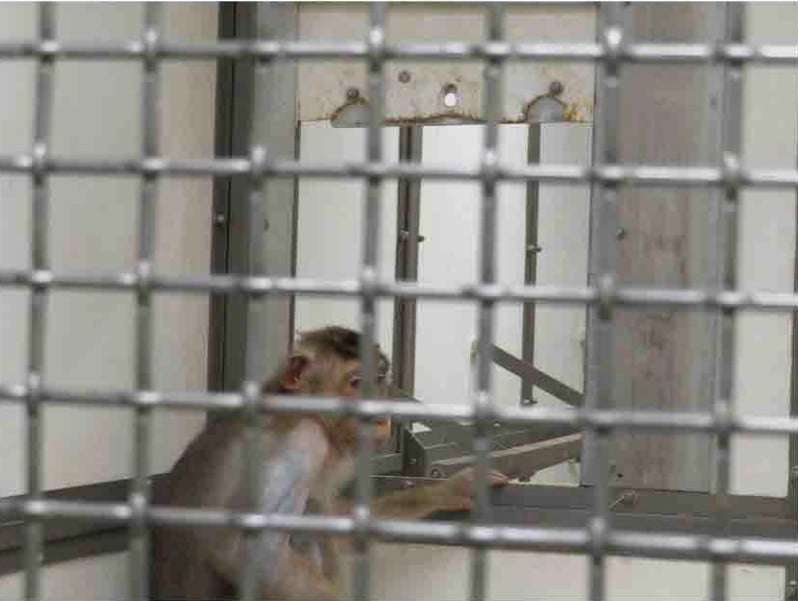
In contrast to WaNPRC’s 2022 report, this most recent evaluation paints a stark portrait of the monkey testing facility that houses nearly 900 primates and has repeatedly violated animal protection regulations. The board warns of fiscal operations in “disarray,” staffing instability, disorganized oversight, strained partnerships jeopardizing NIH-funded projects, and disease outbreaks at the center’s breeding facility in Arizona.
The primate center has also had a breakdown of basic veterinary and scientific practice, the report says. It fails to perform necropsies on numerous dead monkeys at the facility, so a final cause of death can’t be determined, and “many personnel, including the veterinary pathologists, are teleworking from home,” apparently leaving undone work that must be done in the facility. The center’s Arizona breeding colony is plagued by Valley Fever, an airborne fungal infection that compromises any data obtained in experiments on infected animals.
“The NIH-mandated scientific advisors have delivered a blunt verdict: UW’s primate center is financially unsustainable, scientifically compromised, and on a path to collapse,” says PETA Senior Science Advisor Dr. Lisa Jones-Engel. “PETA urges NIH to move swiftly to wind down UW’s failing primate center and guarantee the monkeys’ safe placement in a sanctuary.”
The apparent unraveling of UW’s primate center closely aligns with the 2021 appointment of Michele Basso, who was removed from her position as director last year following a letter from PETA to UW’s Board of Regents. The letter outlined myriad problems with Basso’s appointment, including botched surgical implants in monkeys’ skulls, multiple violations of federal animal welfare laws, and a decades-long record of conflicts with the veterinary staff at two universities where she worked. Deborah Fuller now holds the title of director, after years as Basso’s associate director, but the center’s collapse shows she has apparently not been a corrective force—underscoring that the crisis goes deeper than the leadership.
PETA—whose motto reads, in part, that “animals are not ours to experiment on”—points out that Every Animal Is Someone and offers free Empathy Kits for people who need a lesson in kindness. For more information, please visit PETA.org or follow PETA on X, Facebook, or Instagram.