Buyer Beware! As Egg Prices Plummet, Buying Picks Up, PETA Says Don’t Buy the Cage-Free Lie or Any Eggs at All
For Immediate Release:
February 24, 2026
Contact:
Sara Groves 202-483-7382
As declining egg prices have shoppers scrambling to get the little cholesterol bombs back into their refrigerators—despite the availability of vegan egg brands like Just and Follow Your Heart—PETA is distributing a stunning new white paper that warns people not only not to buy any eggs at all, but not to be duped by “cage-free” labels, as both support severe factory farm cruelties. The study reveals that conscientious consumers are willing to forego cheap eggs and pay higher prices for eggs with “cage-free” and other humane-washing labels, unaware that cage-free systems do surprisingly little to improve hen welfare—and in some cases can even cause more suffering. The paper is a systematic review of peer-reviewed studies from leading academic journals, data and policy documents from federal agencies, insights from agricultural industry groups, and more.
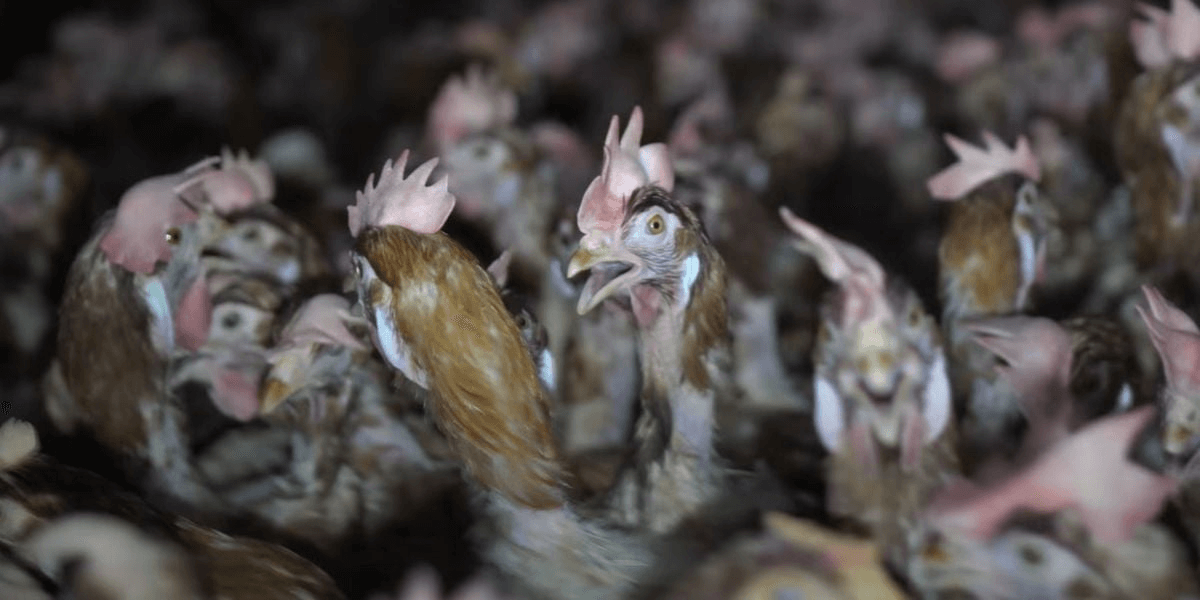
“Hens in deceptively named cage-free facilities suffer from painful beak mutilations, skin lesions, and respiratory infections from breathing ammonia-saturated dust 24/7, while the egg industry profits from consumer confusion,” says PETA President Tracy Reiman. “PETA urges everyone not to be fooled by misleading labels—and to please skip the chicken eggs and choose vegan eggs that leave birds in peace.”
PETA’s white paper reveals that feather pecking, fighting, and cannibalism are more common in cage-free systems due to frustrated hens being packed in barns by the thousands and competing for food, water, and nests. 85–97% of cage-free hens suffer painful keel bone (sternum) fractures and impaired mobility from the strain of constant egg-laying and collisions or falls, and they’re more likely to suffer from chronic respiratory infections and skin lesions due to litter soaked with feces burning their feet and legs, often causing infections, and ammonia-saturated dust burning their lungs and eyes, even leading to blindness. Since hens have only one to one and a half square feet of floor space each, they often suffocate under one another (crowd crush).
Experts from a range of fields—including veterinary medicine, environmental advocacy, ethics, and animal welfare—have endorsed the paper (all of the endorsements are available here). Otto Brockway, director of the documentary Eating Our Way to Extinction, writes, “If you think buying cage-free eggs means ‘happy hens,’ you need to read this report. … It’s time to move past this broken system and switch to plant-based options that are actually kind to animals.”
Chickens form complex social structures, dream when they sleep, and worry about the future, just as humans do. PETA notes that delicious vegan egg options are widely available, including Just Egg and Yo Egg. The global vegan egg market reached $1.5 billion in 2022 and is expected to reach $4.5 billion by 2030. PETA’s free vegan starter kit is filled with tips to help anyone looking to make the switch.
PETA—whose motto reads, in part, that “animals are not ours to eat”—points out that Every Animal Is Someone and offers free Empathy Kits for people who need a lesson in kindness. For more information, please visit PETA.org or follow PETA on X, Facebook, or Instagram.