


A Door Opens for Danny …
As PETA Closes in on the Cruel Bird Trade
For eight long years, Danny, a rose-ringed parakeet, sat alone in a tiny cage in a veterinary clinic. Left behind by his elderly guardian, he received little attention from staff. On weekends and holidays when the clinic was closed, Danny was left by himself in the dark with a blanket covering his cage.
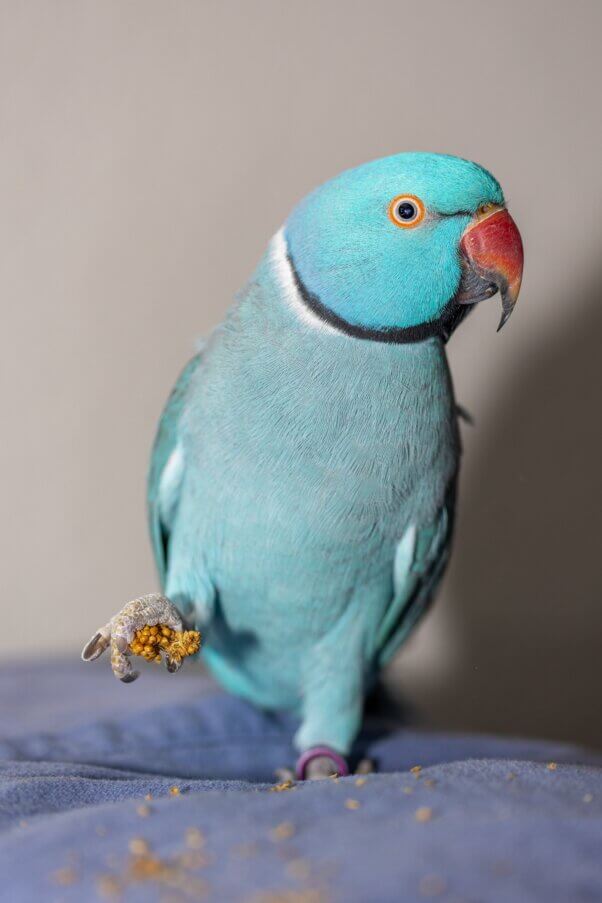
When his now-guardian started working at the clinic, she noticed the shy blue bird immediately. Danny had spent nearly a decade with almost no stimulation, little interaction, and nowhere to fly. After a year of asking, the clinic finally agreed to let her take Danny home and give him a better life.
The moment he arrived, she and her husband opened the cage door – and left it open. Slowly, Danny began to explore, to trust, and even to talk. One day, they heard him practicing softly to himself:
“I … love … you.”
While Danny still has lingering trauma and is protective of his tail feathers – which his previous owner pulled as a form of punishment – today, he also plays with his toys, enjoys watching nature shows on TV, practices new words, and calls out greetings to his guardians from the window. Millions of other captive birds will never get that chance.
Born to Fly, Caged for Life
Birds aren’t decor; they are intelligent, sensitive individuals with big, active brains and rich emotional lives. Birds are smart as a whip. In one incident in Boise, Idaho, parrots trapped in a burning home cried out for help until firefighters reached them. And at a wildlife park in England, newly adopted parrots learned from one another so quickly – and picked up on humans’ reactions so sharply – that, as staff put it, “When one swears, one laughs.”
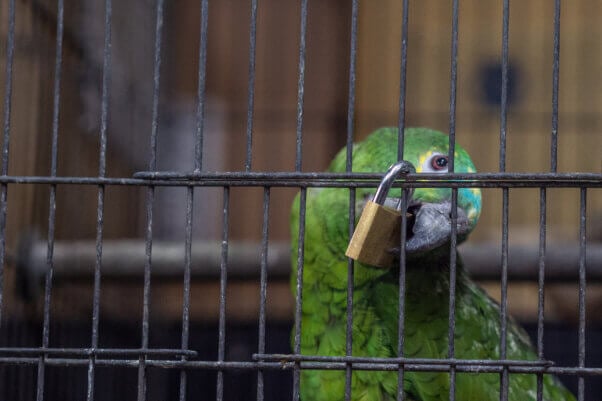
In nature, parrots fly dozens of miles a day, forage with tightly bonded flockmates, and communicate constantly. But birds suffer when their world is reduced to a see-through box and they’re forced to spend decades alone, barely able to stretch their wings, let alone fly. Some big-box stores recommend parakeet cages that are 27 million times smaller than a parakeet’s natural range. Not surprisingly, captive birds sink into frustration and depression. They scream, pace, and pluck out their own feathers as they try to cope with deep distress.
Factory Farm Breeders and Smuggling Rings
PETA’s investigations of breeding mills – where most birds sold in stores come from – have revealed disease outbreaks, neglect, and immense suffering. At Sun Pet in Atlanta, officials found birds infected with avian chlamydiosis – a disease that can cause nostril and eye discharge, diarrhea, anorexia, difficulty moving, and sudden death – in a room housing hundreds of others.
At Great Pets in Ohio, birds were routinely – sometimes fatally – denied adequate veterinary care. Cockatiels who suffered from eye and upper respiratory infections and other illnesses were kept for weeks in small plastic tubs that lacked perches and sufficient ventilation.
Other birds are illegally taken from their homes: Poachers tape their beaks shut before stuffing them into bottles, tires, or cramped containers to traffic them across borders. More than 70% die before they ever reach a buyer.
Change Is Taking Flight
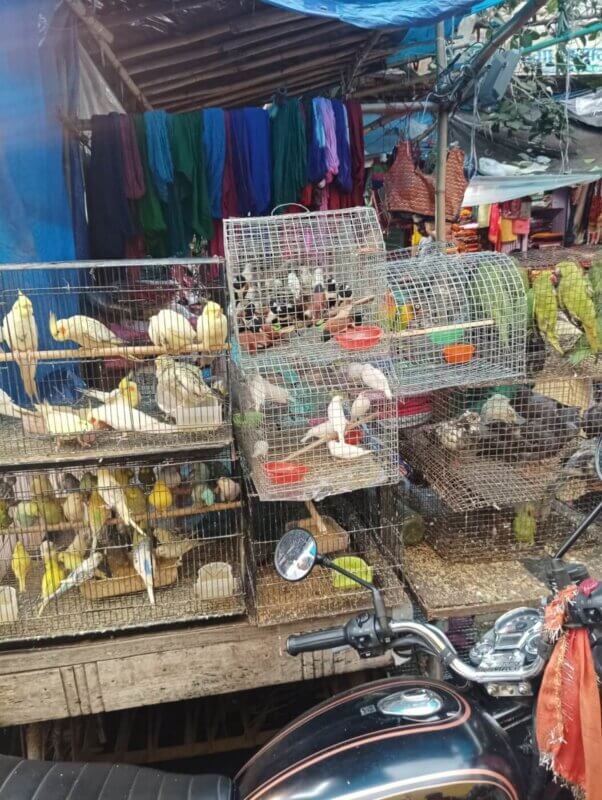
Around the world, PETA entities are fighting the wildlife trade. In India, where buying or selling native birds goes on but is illegal, PETA India has partnered with law enforcement to shut down trafficking rings and rescue thousands of birds from abuse.

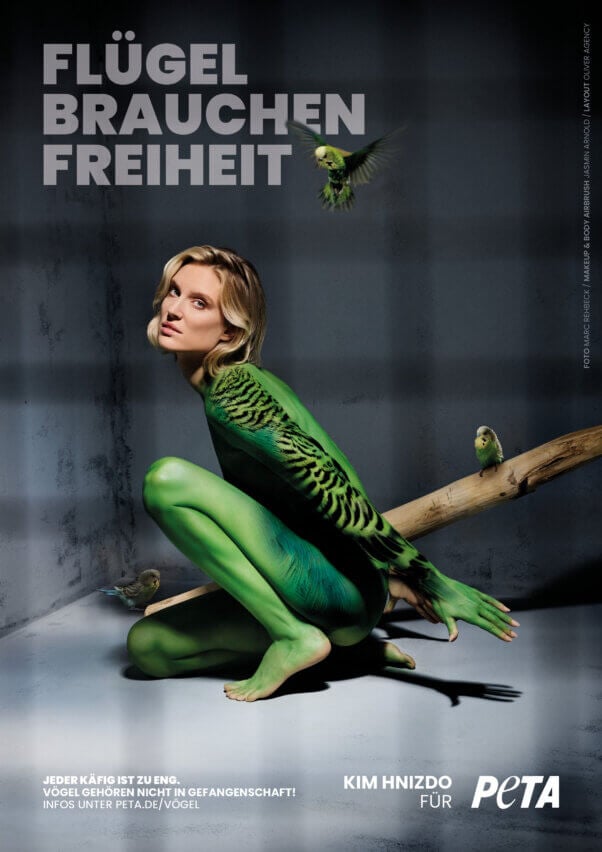
Celebrities are helping us. Actor and PETA honorary board member Kate del Castillo’s powerful new PETA ad urges people never to buy birds, and Germany’s Next Topmodel winner Kim Hnizdo joined PETA Germany in calling for an end to bird captivity.
No More Cages
Even well-intentioned guardians struggle to meet birds’ immense physical and emotional needs. Many assisted-living and memory-care facilities keep birds in cages, even though residents frequently express sadness about seeing a bird confined.
If you already share your life with a bird, please provide enrichment, lots of space to move about in, vital social interaction, and opportunities for communication. (See our tips.) Computer tablets allow birds to express preferences, request enrichment, or even discuss past experiences. These efforts show what birds are capable of when given even a fraction of the agency they deserve.
What You Can Do
PETA’s campaign led Petco to end sales of large birds, but the company still sells smaller ones. Take action!

