
Sweet Relief for Bullocks!
PETA-Supported Team Sees 100,000th Bull Retired From the Sugarcane Industry
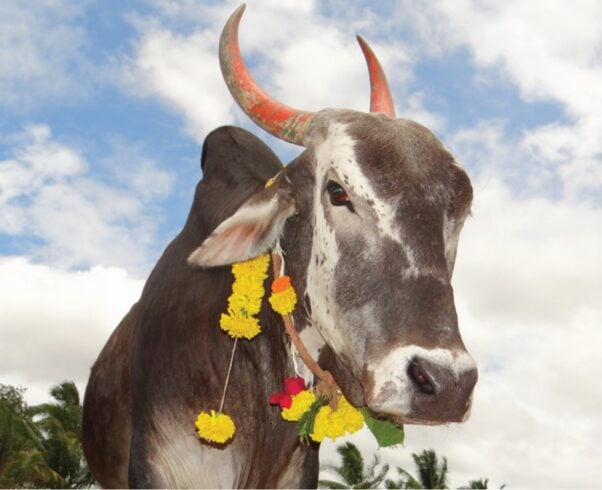
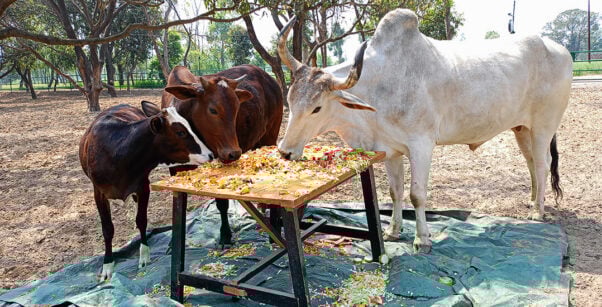
This handsome fellow is Thomas. Born into a life of hard labor, he was forced to trudge along in India’s sweltering heat, straining to pull more than 7,200 pounds of sugarcane for long, grueling hours – without water, rest, or shade. Knowing that his owner could not afford veterinary care, staff with Animal Rahat, a PETA-supported animal protection group in India, provided the weary old bullock with free checkups and treatments, establishing a positive, trusting relationship. Eventually, the group helped Thomas’s owner replace him with an efficient mini tractor – and Thomas was whisked off to one of Animal Rahat’s peaceful sanctuaries. Today, he is a healthy and happy elder, enjoying his retirement among the many friends he has made.
Demand ‘Zero Bull’ Sugar
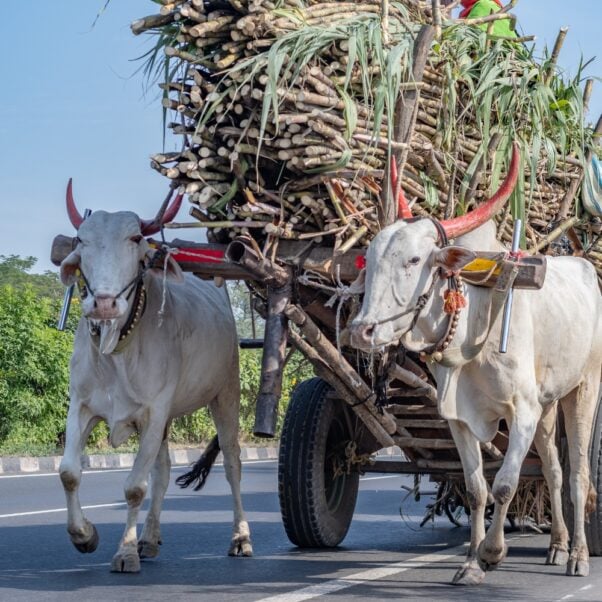
In India’s sugarcane industry, it’s common for factories to exploit desperately poor migrant workers who use exhausted,
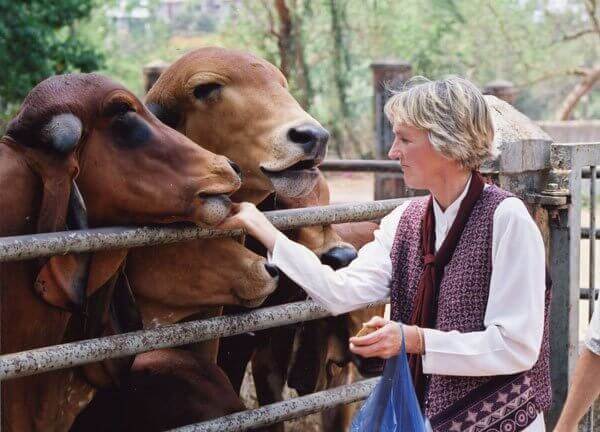
injured, and ailing bullocks to haul heavy loads of cane. At Coca-Cola’s annual meeting earlier this year, PETA founder Ingrid Newkirk – who has long owned stock in the company – drew attention to the animals’ plight by calling on the beverage behemoth to honor its sustainable agriculture principles and commit to “bull zero” or bull-free sugar. We’ve also appealed to Pepsi to source only bull-free sugar.
Newkirk has seen illegally overloaded carts weighed down with tons of cane and pulled by bullocks who strain, stumble, and falter. She has even put all her might into trying to help struggling bullocks pull a cart out of the mud. These dear souls suffer from lameness, swollen joints, abscesses, muscle tears, and other painful conditions. Their owners beat them with sticks to force them to keep going under the blazing hot sun and hit them with leather-tipped whips, even when the carts are stuck in ruts and they cannot take another step. Barbed-wire spikes attached to yokes dig into their necks and faces if they “disobey” by turning their heads, and thick nose ropes tear their tender nostrils. Many bullocks are literally worked to death.
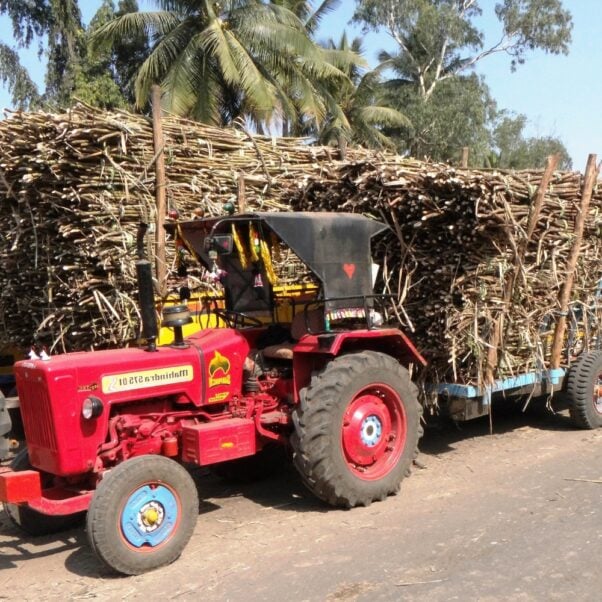
A bullock cart owner’s entire working family makes less than 4,000 USD a year, barely enough to buy one onion and a few chapatis for their evening meal. Replacing beleaguered bulls with dependable eco-tractors is a win-win situation, saving bullocks from backbreaking work and reducing sugarcane industry workers’ poverty.
Marching Toward Mechanization
Thomas was among the first bullocks retired by Animal Rahat, back in 2012, but he’s far from the last. Since 2011, the group has been replacing bullock-driven carts with more efficient and cost-effective mechanized alternatives through its Sugarcane Industry Mechanization Project. Due to the project’s influence, one-third of Maharashtra state’s sugar production has been mechanized, and more than 106,700 bullocks have been retired from sugar factories, replaced with over 18,800 trucks and tractors and 270 harvesters. A tractor, capable of transporting 8 to 18 tons per trip, can replace multiple bulls and gives owners improved income opportunities. Not all the bulls that Animal Rahat pushes into retirement can go to its sanctuaries; some may end up ploughing fields, but they are still far, far better off.
What You Can Do
Bulls are smart, sensitive, highly social animals who form long-lasting relationships with other members of their herd. Food industry giants have the power to stop bullocks from suffering and being worked to death to sweeten their products. Please share this information with others and give a nice nudge to Pepsi and Unilever. And support Animal Rahat’s lifesaving work.