
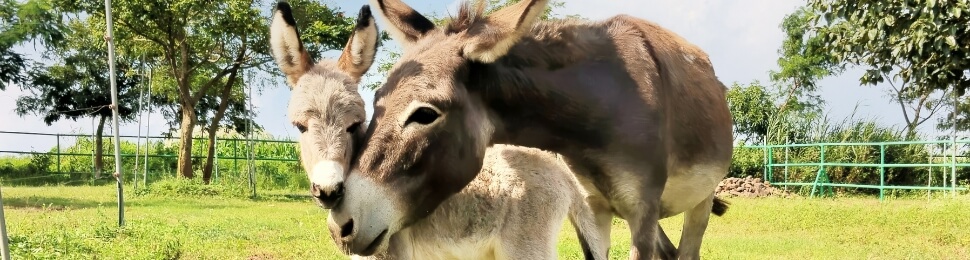
Karuna and Doshi Are Safe
550 Donkeys Discover Friendship and Joy Thanks to PETA Supporters
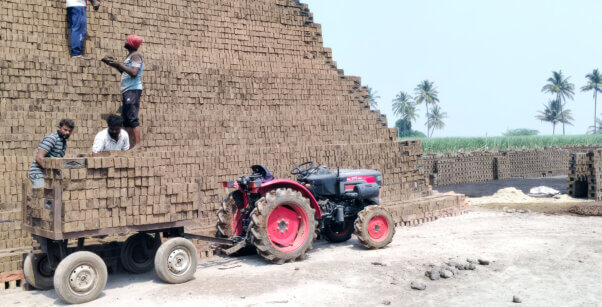
Karuna is a truly gentle donkey who used to toil from sunup to sundown, trudging through oppressive heat, carrying mountains of bricks on her back. Her skin was painfully raw from the rough cloth chaffing her body, and her master believed that giving her water would make her lazy. When she slowed down, she felt his whip, and her only “rest” came at night when she was turned out to scavenge along the roadside for something to eat.
Karuna was also pregnant.
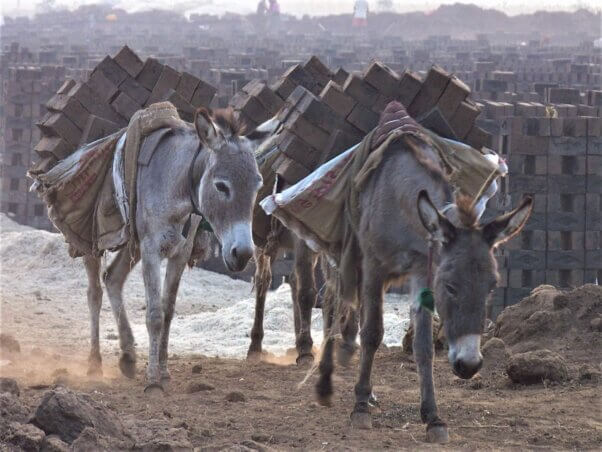
There are many Karunas in Maharashtra, India, where PETA President Ingrid Newkirk founded Animal Rahat, a PETA-supported veterinary service and rescue organization, but this Karuna’s lucky day was about to arrive. She and the 22 other donkeys at “her” brick kiln – five of them expectant mothers – were swapped out for tractors! Off they went to one of Animal Rahat’s sanctuaries, where Karuna’s daughter, Doshi, was born, joining the happy family of rescued donkeys.
From Hard Labor to Jubilation
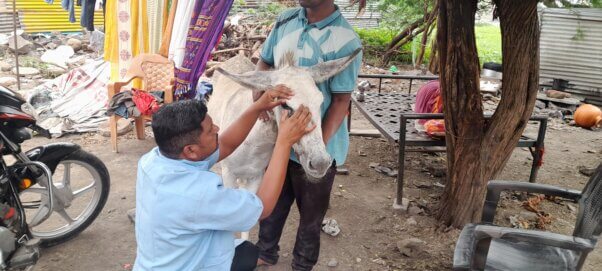
While tourists ride Maharaja trains, served iced drinks by turbaned waiters, or glide down the Ganges in a luxury boat, donkeys and other animals are forced into backbreaking labor in India’s brick kilns, sand-mining operations, sugarcane fields, ice factories, and timber markets. But, with support from donors to PETA’s Global Compassion Fund, Animal Rahat veterinarians make these working animals as comfortable as they can, performing free checkups and treating them for abrasions, infections, open wounds, dehydration, malnutrition, joint injuries, lameness, and painful injuries caused by ill-fitting, heavy wooden yokes.
Owners are desperately poor and can usually barely afford more than a few chapatis and onions with which to feed themselves and their families. Paying for veterinary care is out of the question. Animal Rahat staff members tout the benefits of replacing animals with tractors, increasing efficiency and income, and will even subsidize the initial cost, helping owners get on their feet and liberating animals from servitude. As a result of the mechanization program, PETA and Animal Rahat have retired thousands of animals, including more than 550 donkeys from brick kilns alone.
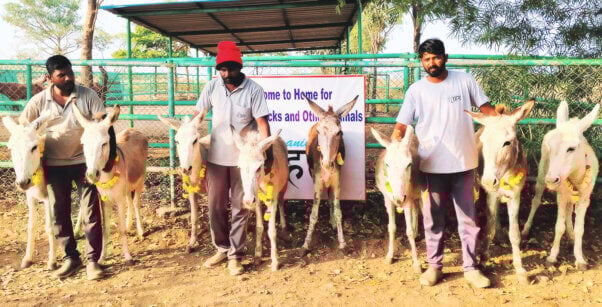
Retiree donkeys need shelter, sustenance, and medical care – often for many years – which they receive at one of Animal Rahat’s four sprawling sanctuaries that are home to more than 600 animals and counting. Here, amid green fields dotted with trees or shady paddocks of soft earth that soothe aching limbs, physical and emotional wounds heal. And foals, like Doshi, can experience a life their mothers never realized existed.
Not Stubborn, Thoughtful
Donkeys are exceptionally intelligent and intent on making the wisest decision before following through, leading many humans to wrongly label them “stubborn.” For them, sanctuary life means finally being able to make choices without fear of punishment. They often pick a best friend to graze, frolic, and explore with. Many form close bonds with their caregivers and readily respond when called, knowing that a carrot treat, a grooming session, or a flower garland is waiting for them.
The Two-for-One Special
Frequently, rescuers know that they’re getting a “two-for-one deal,” as they did with Karuna, who welcomed daughter Doshi named for the generous donors who fund her care) a few weeks after her arrival. But some donkeys surprise us!
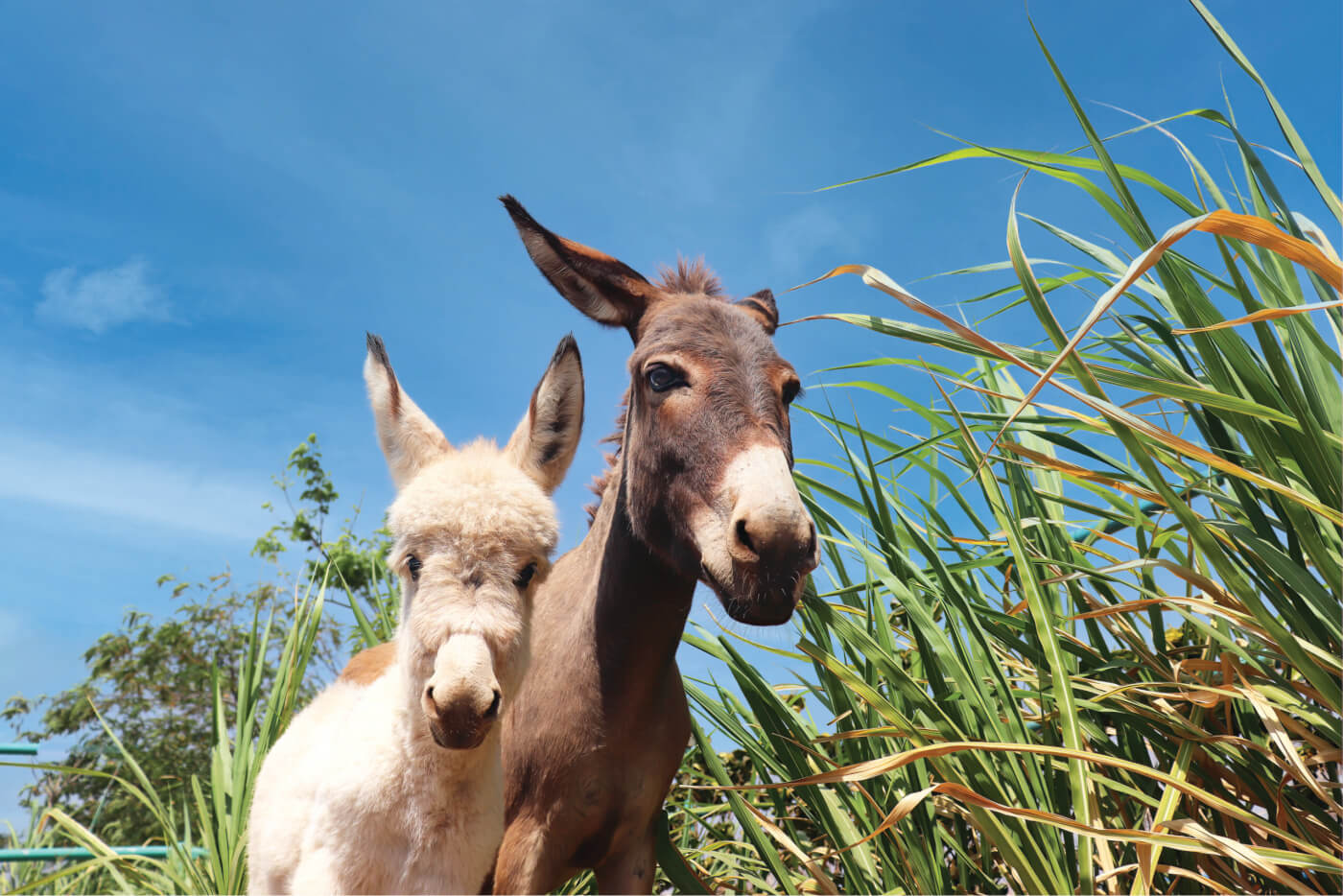
Anika was being used in an illegal sand-mining scheme, forced to carry up to 440 pounds (200 kilograms) of wet sand from a riverbank to a secret location night after night. The police lay in wait and then sprang, shutting down the venture, seizing all 36 donkeys. Would Animal Rahat please take them in? Er, yes! A short time later, it became clear that Anika had been hiding secret rescue 37. Her colt, Daya, will never have to carry anything heavier than a tasty apple – like all of these cherished tenants.
What You Can Do
Please sponsor rescues like these worldwide through PETA’s Global Compassion Fund, or support Animal Rahat directly.

