
What You Need to Know Before Considering a ‘Pet’ Hamster
Hamsters are sometimes referred to as “starter pets,” a harmful characterization that implies that they have less worth and fewer needs than other animals. Hamsters should never be used as a “learning experience” for children grappling with responsibility for the first time. Hamsters are just as worthy of respect as you, a dog, or a tiger, and they have specific needs just like the rest of us. There is no such thing as a “starter pet.”
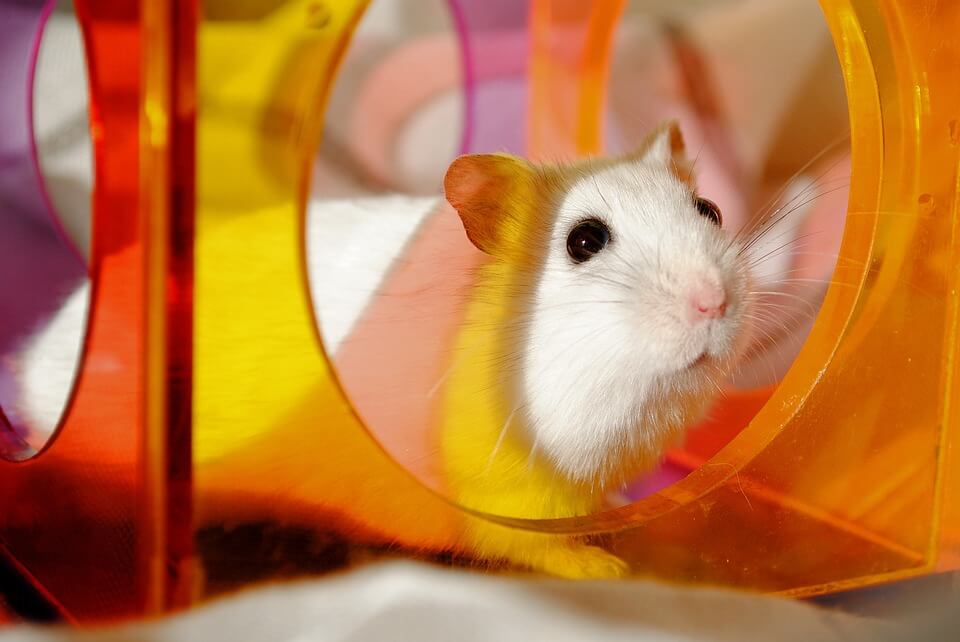
Hamsters are timid and don’t like loud or frightening noises, so a calm, quiet environment is essential to their well-being. They have distinct personalities just as all animals do. Many take a long time to adjust to being picked up and held by humans, if they ever do. A hamster who doesn’t want to be held may stand on their hind legs, show their teeth, hiss, chatter, or bite, and their bites can be painful. If a startled guardian drops a hamster, the fall—even from just a few inches above the ground—can cause serious injuries. Children, and even most adults, likely won’t have the patience to earn a hamster’s trust slowly and aren’t equipped to provide the level of care that these sensitive animals require.
If you’re thinking about adding a hamster to your family or are already caring for one, here are some important things to consider:
1. A Lone Hamster Is a Happy Hamster
While many animals need friends and companionship, hamsters prefer solitude. Some can bond with a human guardian, but they should not live with another hamster. These animals defend their own territories vigorously and will likely fight. Dwarf hamsters, including members of the Roborovski, Russian, and Chinese species, can live with a companion if introduced at a young enough age. However, disagreements and fights can still occur, no matter how long they’ve coexisted. Instead of adopting another hamster to keep yours company, be your hamster’s best friend—spend time observing and talking to them and enriching their environment with stimulating activities. Since they don’t usually like to be handled, only hold them to bond and to perform a physical assessment if they are awake, appear unafraid, and are comfortable with you doing so.
2. Hamsters Need Large, Secure Homes
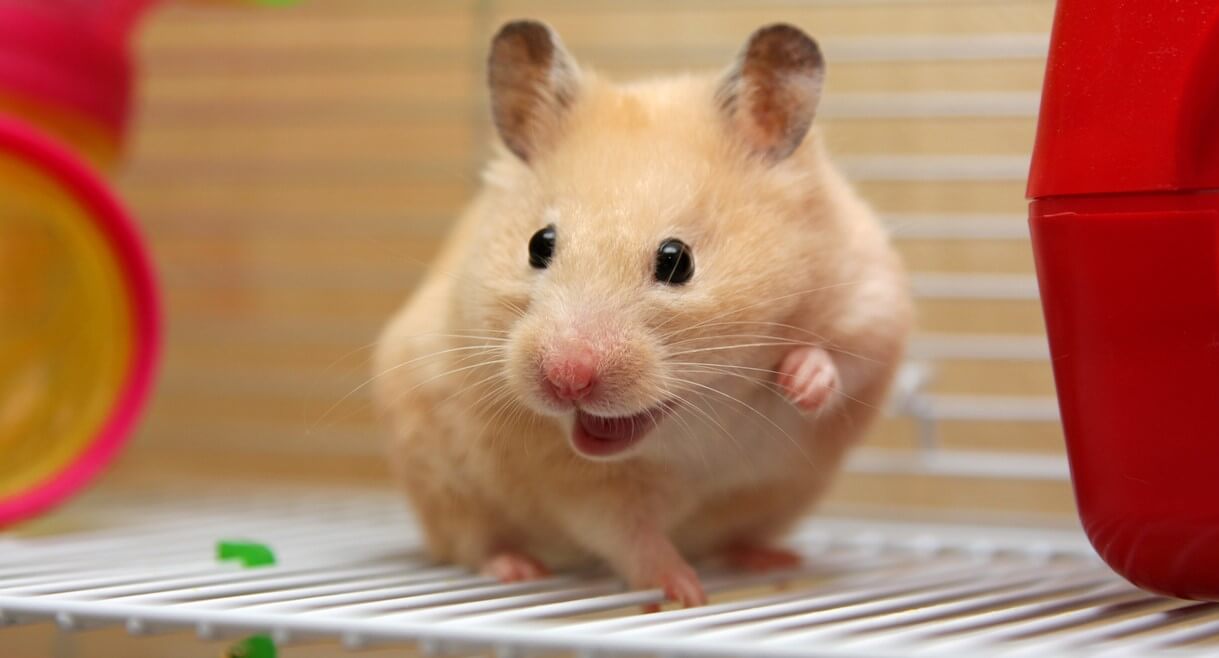
Other animals may see hamsters as prey and could harm or kill them if proper safety measures aren’t taken. To help prevent animal companions from harming one another, hamsters must have a safe, spacious, and sturdy enclosure to call home.
Cages sold at pet stores are woefully inadequate to meet a hamster’s unique needs. If an enclosure is too small, the animal can develop “cage rage,” a condition caused by mental distress. This stress can lead to excessive urination, biting, and incessant cage-bar biting, which can cause serious harm to a hamster’s teeth. Large hamsters should have a minimum of 800 square inches of floor space, and dwarf hamsters should have at least 640. Because few commercially available cages meet these recommendations, we suggest building your own hamster enclosure. If you’re unable to create your own, another option is a 75-gallon (or larger) aquarium with a fitted mesh lid.
You may also be able to use an infant playpen that is completely enclosed with a sunshade or other topper if your hamster doesn’t chew through the mesh. Talented and fast climbers, some have scaled standard playpens in seconds. Other options include a swimming pool for large dogs made of materials too slick for climbing, or a converted bathtub.
Hamsters love to explore, so a larger space will make your hamster happier and healthier.
Make sure any barred cage doesn’t have spaces larger than half an inch (for large hamsters) or a quarter-inch (for dwarf hamsters), as they could squeeze through. Hamsters are talented escape artists who can flatten their bodies and fit through very small holes and crevices. They are easily lost, difficult to find, and may be injured or killed while on the loose.
3. It Can Be Difficult to Find a Veterinarian for Your Hamster
Hamsters must always receive timely care when they appear ill in addition to regular, routine check-ups. A hamster is considered an “exotic animal” and must be seen by a specialized veterinarian. Many people don’t know this, and when their hamster becomes ill, they are unable to find an appropriate veterinarian in their area, thereby delaying treatment. When a guardian finally does find a vet who sees “exotic” animals, they are often farther away and more costly than a vet who treats cats and dogs.
Hamsters hide signs of injury or illness, so when guardians notice that something seems wrong, the condition is often advanced. They are also highly sensitive to environmental changes—if temperatures drop or lighting conditions shift, a hamster can enter a state called torpor.
During torpor, a hamster may appear lifeless: Their body becomes cold and stiff, their breathing slows to just a few breaths per minute, and they may not respond to touch. To someone unfamiliar with this emergency survival response, it can look like the animal has died. Unlike true hibernation, torpor is dangerous for hamsters and can quickly become fatal without proper intervention. Recognizing the difference between torpor and illness—and knowing how to respond—requires careful attention and experience, underscoring how complex their care really is.
Hamsters are highly susceptible to “wet tail,” a bacterial infection. It’s difficult to treat and is frequently fatal within 48 hours after the onset of symptoms. Cancerous tumors are also common, as are bladder stones, parasitic infections, salmonellosis, abscesses, and overgrown teeth. Guardians must be vigilant in monitoring the animal’s weight, appetite, appearance, and energy level and catch small changes that could indicate a larger issue.
4. Hamster Balls and Saucers Are Not All Fun and Games
While hamsters need to be able to play and explore, a “hamster ball” and a “hamster saucer” aren’t designed with the animal’s well-being in mind.
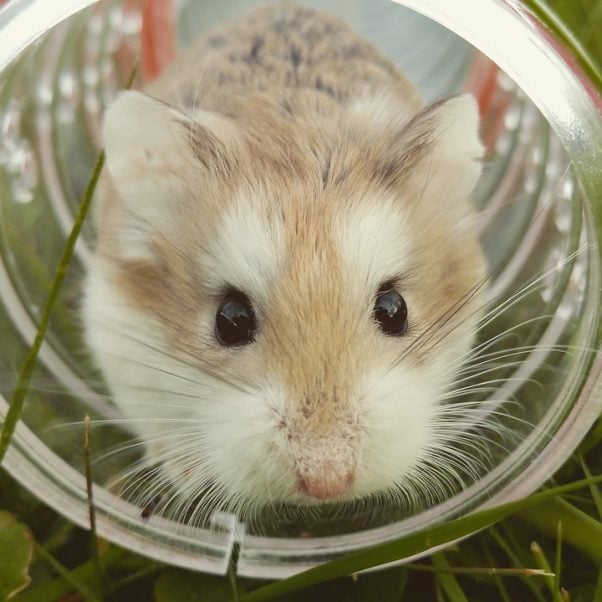
Hamsters are easily frightened because they don’t have the best eyesight, and they use their whiskers to navigate. Plastic balls rob them of this vital sense and are confusing and scary. The balls are also commonly made too small, forcing animals to arch their backs unnaturally and putting pressure on their spines. And hamsters’ legs can become caught in the ball’s air holes, causing broken bones. Hamster saucers are also dangerous because these animals are fast runners and can fly off the saucer’s slippery surface and injure themselves. Running for long periods of time at an angle can also cause spinal issues.
Instead of a ball or saucer, purchase a running wheel for your hamster that is made of solid material with no holes or gaps that their legs can become caught in. To ensure your companion can exercise comfortably without arching their back, look for one in a large size, which may be marketed for chinchillas or other larger animals. To provide variety, consider making a network of tunnels with paper towels, bathroom tissue rolls, and cardboard boxes with holes at each end. Stuff the boxes full of hamster-safe material like timothy hay or shredded paper and hide treats inside for a fun game. You can also hamster-proof a room and allow your hamster to exercise in it under your diligent supervision.
5. Hamsters Need Special Bedding and Nesting Materials
There are several affordable, safe bedding options to give your hamster the comfortable home they deserve. However, it’s important to know what’s safe. Even packaging for dangerous bedding, such as pine or cedar shavings, may feature a photo of a hamster. Cat litter, newspaper, and “fluff” bedding can cause life-threatening ailments for your hamster and should be avoided. Aspen shavings, paper bedding, and hemp are all acceptable litter choices and can even be mixed in a hamster’s enclosure. Your animal will also appreciate a small container of sand for dust baths.
Bedding depth should be a minimum of 8 to 12 inches. Hamsters will naturally urinate and defecate in a specific spot, and that area should be cleaned at least weekly. All the bedding should be replaced every six months or less, but a handful of used bedding should be retained to help the hamster feel secure.
6. Hamsters Have a Sleeping Schedule
Hamsters in captivity are active mostly from dusk to dawn and spend the majority of the day in their nest. This can be frustrating for a guardian who wants to play with their companion during daytime hours. Waking a sleeping hamster not only deprives them of critical rest but can also be stressful, prompting them to act nervously or aggressively. There are valid reasons to wake a sleeping hamster, just as there are reasons to wake a sleeping human, such as to administer medicine or alter something potentially hazardous in their environment. Just wake them with care and caution!
7. When You Buy a Hamster, You’re Supporting Cruel Breeding Factories
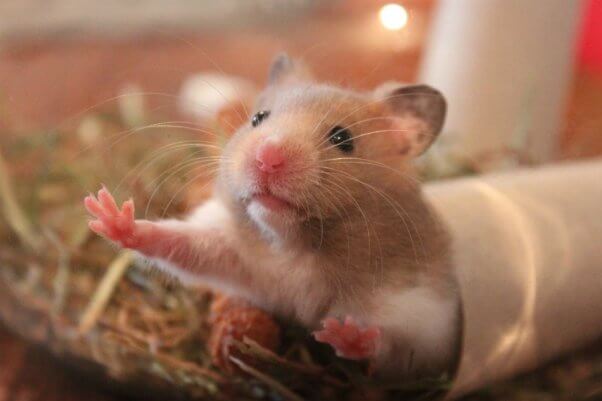
Much like puppy mills, breeding operations that sell small animals to pet stores operate on a large scale. PETA investigations and U.S.D.A. inspections have repeatedly revealed pervasive cruelty and neglect. At a Bakersfield-area breeding facility operated by Pet Brokers, Inc., hamsters baked to death in 105-degree heat, drowned in flooded enclosures, and died of severe wounds after employees failed to separate incompatible animals. A federal inspection of a Michigan dealer found “petrified dead hamsters” in more than 50 enclosures and animals confined to cages that contained “more feces … than bedding.” Hamsters who had been “sorted for euthanasia” were left to die slowly instead.
A PETA investigation of U.S. Global Exotics (USGE) in Texas—one of the nation’s largest sellers of “exotic” animals to pet stores, including Petland and suppliers to PETCO and PetSmart—uncovered that hamsters were denied access to food and water as well as veterinary care for wounds and infections. Being cruelly crammed into crowded, filthy litter boxes led to extreme psychological distress and deadly fighting. As a result of our investigation, officials raided the facility and seized more than 26,000 animals—one of the largest seizures of exotic animals in U.S. history. The operation was shuttered, and the owners became federal fugitives. But breeding mills like USGE will continue to exist as long as customers keep buying animals.
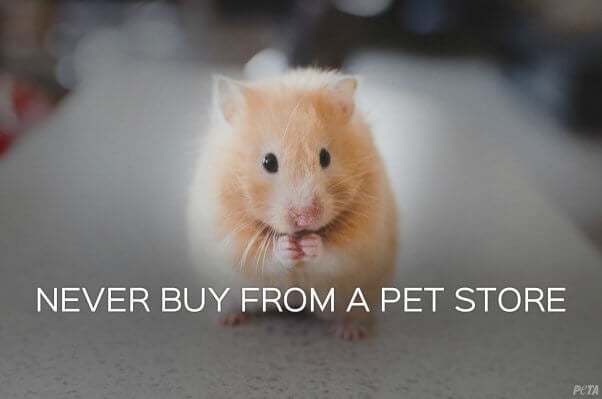
Never buy a hamster or any other animal.
8. Hamsters Have a Specific Diet
The bulk of a hamster’s diet should be store-bought pellets designed specifically for them (rotating among brands for variety). The pellets can be scattered in their bedding or provided in a bowl. Most nuts, fresh fruits, and vegetables can be offered as treats in very small portions—typically, no more than a quarter teaspoon two or three times per week. Any uneaten morsels should be removed before they start to rot or attract flies, unwelcome guests in your hamster’s home. Hamster teeth never stop growing, so you must provide hamsters with hard, digestible items that they can chew to keep their teeth from getting too long, such as dog biscuits and portions of nontoxic tree branches, like organic apple or pear branches.
9. Hamsters Need Mature, Experienced Guardians
Although hamsters are small, they still entail a big commitment. They require daily care, exercise, and attention just like cats and dogs. Guardians must be willing to provide for their unique (and often expensive) needs and be prepared to dash to the vet at a moment’s notice.
How can you help hamsters? Respect them as individuals and never treat them as “starter pets” for children to “learn on.”
Please also never buy an animal from a pet store, and tell friends and family not to, either. Shelters and rescues are full of wonderful animals of all species in need of devoted caregivers.
Text VEG to 73822 to get the latest vegan lifestyle tips, recipes, and urgent action alerts texted right to your phone.
Terms for automated texts/calls from PETA: https://peta.vg/txt. Text STOP to end, HELP for more info. Msg/data rates may apply. U.S. only.


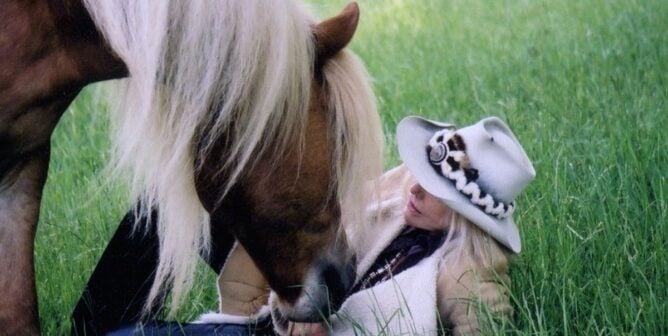
The iconic actor reveals how animals taught her lessons about trust, authenticity, and unconditional love in this rare, personal PETA interview.

If you can see her, you can “bee” her … adopter! Well, sort of. In truth, PETA has been swarmed with inquiries about this marvelous mutt. Buzz on over to [email protected] to submit your application.

A puggle tethered outdoors? Talk about the worst kind of “oopsie.” Thanks to PETA, this adoptable dog traded being ridiculously kept outside for becoming ridiculously companionable.

Mayor Karen Bass touted efforts to protect animals on Skid Row, but public records obtained by PETA tell a different story. Here’s what we said to the administration at a press conference.