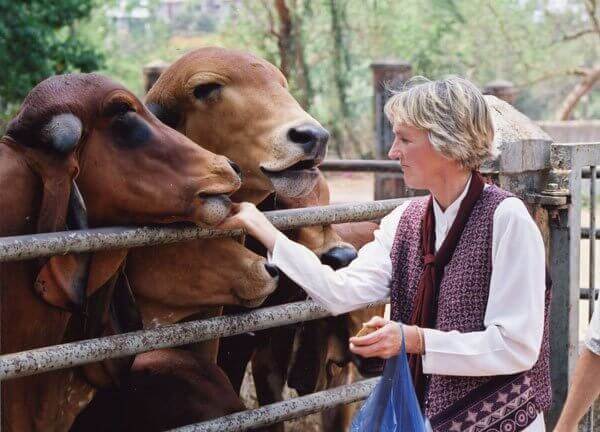
Compassion en Español: PETA Latino’s Yennifer Martinez
PETA Latino, like PETA, focuses on liberating animals from experimentation, and the food, entertainment, and skins industries. But with a Latin approach.
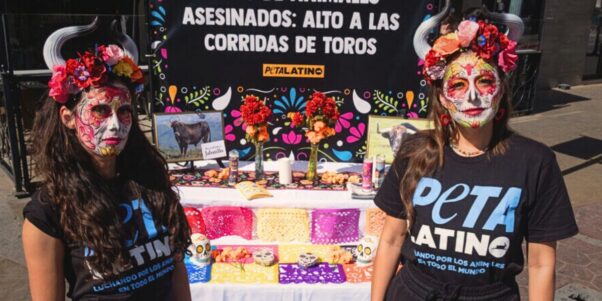
Animals suffer at the hands of human exploitation in every culture and every language. That’s why, in 2013, PETA launched PETA Latino to engage with Spanish speakers throughout the Americas.
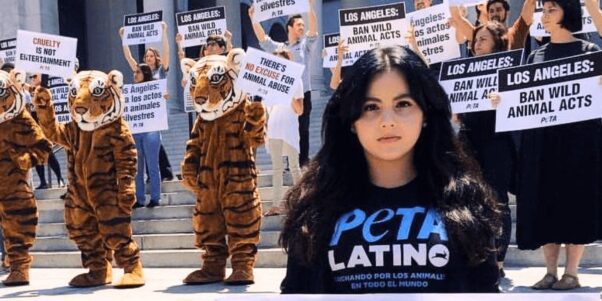
We caught up with PETA Latino’s Associate Director Yennifer Martinez to find out about her work for animals and to learn more about PETA Latino’s vital work.
_______________________________________________________________________________________________
What are PETA Latino’s priorities right now?
Right now, our main priority is getting bullfighting banned across all of Mexico. Recent court rulings and congressional action have effectively banned bullfighting in Mexico City, including in the world’s largest bullfighting ring. The court also declared that torture cannot be justified as “culture.”
This victory follows years of relentless work by PETA Latino and our partners in Mexico, including Animal Heroes, AnimaNaturalis, CAS International, and other dedicated local groups that form the coalition México Sin Toreo. Together, we’ve helped build momentum that’s already led to bullfighting bans in multiple states and a growing national movement that recognizes compassion as a Mexican value.
Is how you talk about animal liberation different from PETA?
Not really, because at the end of the day, we all want the same thing: to end animal suffering everywhere, no matter the country, background, or language.
I was born in Havana, raised in Mexico, and grew up in the U.S., so for me, animal liberation is deeply intersectional. The issues we focus on can look different, like our campaigns to help dogs left on rooftops in Latin America, which mirrors PETA’s work for “backyard dogs” in the U.S., but the heart is the same. Every campaign, every story, every rescued animal comes from the same truth: animals deserve respect, freedom, and love. The language might change, but the compassion never does.
The language might change,
but the compassion never does.
What have you done at PETA Latino that you are most proud of?
Without question, my work for Lolita the orca and our campaign against the Miami Seaquarium. As a Miami native who visited the park as a child, it hit close to home. I attended countless demos, ran online campaigns, and spoke to media outlets like Univision and Telemundo, always with hope that she’d one day swim freely in a seaside sanctuary.
When Lolita passed away, while plans were finally underway to return her to the ocean, it broke my heart. She spent over 50 years confined in the smallest orca tank in North America, forced to perform tricks for tourists, separated from her family and ocean home. But I know she was part of something larger, her story changed millions of hearts and inspired the movement that finally made a difference.
Now, with the Miami Seaquarium officially closing its doors, I can’t help but think of her. I wish she were here to see it, but I know she’s part of this victory. She will always be remembered, and this closure means no other marine mammal will suffer there again.
Tell us about the animal companions in your life.
My first dog, Cody, passed away a few years ago. Loving him taught me that animal companions are our chosen family, and that we owe it to them, and to all animals, to fight for their rights and never give up. He had a beautiful life, but so many others don’t, and that keeps me going.
My dog Atlas has been with me for more than seven years, I adopted him in Chicago, he moved with me to Miami, then Fort Lauderdale, through every adventure, even motherhood. My daughter Amelie is now his sister, and watching their bond grow is pure magic. It reminds me every day that compassion starts at home. I want her to understand that animals like Atlas, and cows, pigs, and chickens, feel the same joy and fear, the same love. That connection is the foundation of everything I do.
What are some Latin American foods that vegans should be sure to check out?
Honestly, you have to try them all before you decide, because Latin American vegan food is pure joy. From vegan empanadas in Colombia and Venezuela, to Mexico’s pozole and colorful tacos, to Cuba’s arroz con morro, and the Dominican Republic’s mangú, the flavors are endless. So much of our traditional food is already plant-based or easy to make vegan. Once you taste it all, you’ll realize compassion never means giving up flavor, or our roots, it just means seasoning it with kindness.
_______________________________________________________________________________________________
Thanks to passionate, dedicated humans like Yennifer, PETA Latino has been active on all fronts. They’ve undertaken free spay/neuter clinics in Cancun more than a dozen times, worked with top-tier Latin celebrities like Clarissa Molina and Sherlyn, and promoted vegan living throughout Latin America.
Whether it’s stopping the cruel public torture of bullfights, sparing sensitive, loving bulls from a nightmarish spectacle of fear and pain, or rescuing loyal and social dogs trapped in the hot sun on roofs, PETA Latino is the story of a compassionate journey that started with street activism and has grown into a movement for animals across the Americas.
We’re grateful that Yennifer and everyone at PETA Latino is doing this important work. Because every animal is someone, no matter what language they speak.
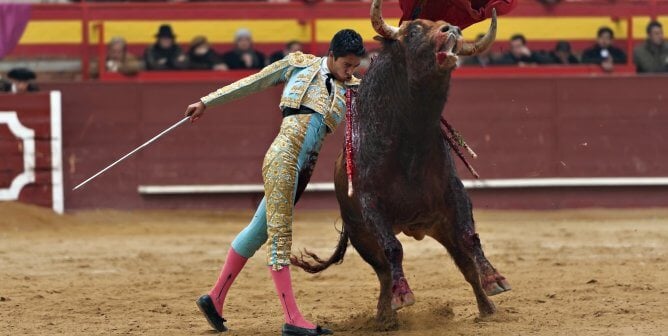
Is bullfighting “macho”? Not according to men in Mexico City. Watch what happened when we surveyed men about their thoughts on the violent spectacle.
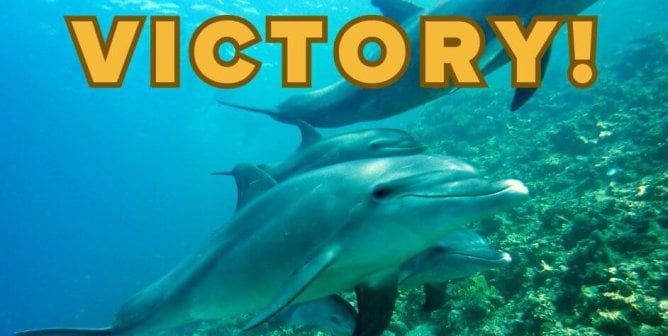
A historic new law in Mexico just changed the lives of dolphins used for entertainment. Find out how it happened—and how you can help dolphins in the U.S.
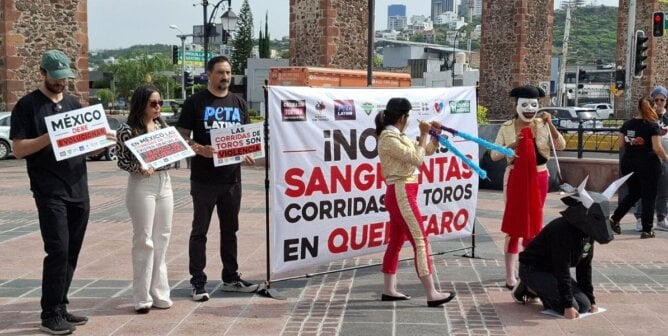
From Querétaro to Guanajuato, PETA Latino is taking the anti-bullfighting front to the streets to end bullfighting in Mexico. Check it out!