
PETA
Donate Now
  • Help Animals
    • Urgent Alerts
    • Our Campaigns
    • Action Team
    • Activist Guide
    • Get Active Online
    • Leaflets & Stickers
  • News
    • Features
    • Videos
    • Adoptable Animals
    • Rescue Stories
  • Investigations
    • Investigations & Rescue Fund
    • Report Cruelty to Animals
  • Animal Rights Issues
    • Animals Used for Experimentation
    • Food
    • Clothing
    • Entertainment
    • Companion Animals
    • Wildlife
  • Lifestyle
    • Lifestyle 101
    • Personal Care & Fashion
    • Food & Health
    • Recipes
    • Parents
    • Humane Home
    • Entertainment
    • Animal Companions
  • Students
    • peta2
    • PETA Kids
    • TeachKind
  • Shop
    • PETA SHOP
    • Cruelty-Free Database
    • Literature
    • PETA Shopping Guide
    • PETA-Approved Vegan
    • PETA Presents
  • About
    • Our Story
    • Our Views
    • Victories
    • Milestones
    • Volunteer
    • Work at PETA
    • Intern
    • FAQ
    • Contact Us
    • PETA Global
  • Donate Now
    • Donate Now
    • Vanguard Society
    • Tribute
    • More Ways to Support
    • Membership Services
    • Gifts in Wills
    • Corporate Partnerships
Report Cruelty to Animals
Skip to Content
PETA
Donate Now
People for the Ethical Treatment of Animals
Report Cruelty to Animals
PETA
Animals are not ours
to experiment on, eat, wear, use for entertainment, or abuse in any other way.
  • Help Animals
    • Urgent Alerts
    • Our Campaigns
    • Action Team
    • Activist Guide
    • Get Active Online
    • Leaflets & Stickers
  • News
    • Features
    • Videos
    • Adoptable Animals
    • Rescue Stories
  • Investigations
    • Investigations & Rescue Fund
    • Report Cruelty to Animals
  • Animal Rights Issues
    • Animals Used for Experimentation
    • Food
    • Clothing
    • Entertainment
    • Companion Animals
    • Wildlife
  • Lifestyle
    • Lifestyle 101
    • Personal Care & Fashion
    • Food & Health
    • Recipes
    • Parents
    • Humane Home
    • Entertainment
    • Animal Companions
  • Students
    • peta2
    • PETA Kids
    • TeachKind
  • Shop
    • PETA SHOP
    • Cruelty-Free Database
    • Literature
    • PETA Shopping Guide
    • PETA-Approved Vegan
    • PETA Presents
  • About
    • Our Story
    • Our Views
    • Victories
    • Milestones
    • Volunteer
    • Work at PETA
    • Intern
    • FAQ
    • Contact Us
    • PETA Global
  • Donate Now
    • Donate Now
    • Vanguard Society
    • Tribute
    • More Ways to Support
    • Membership Services
    • Gifts in Wills
    • Corporate Partnerships
  • Help Animals
    • Urgent Alerts
    • Our Campaigns
    • Action Team
    • Activist Guide
    • Get Active Online
    • Leaflets & Stickers
  • News
    • Features
    • Videos
    • Adoptable Animals
    • Rescue Stories
  • Investigations
    • Investigations & Rescue Fund
    • Report Cruelty to Animals
  • Animal Rights Issues
    • Animals Used for Experimentation
    • Food
    • Clothing
    • Entertainment
    • Companion Animals
    • Wildlife
  • Lifestyle
    • Lifestyle 101
    • Personal Care & Fashion
    • Food & Health
    • Recipes
    • Parents
    • Humane Home
    • Entertainment
    • Animal Companions
  • Students
    • peta2
    • PETA Kids
    • TeachKind
  • Shop
    • PETA SHOP
    • Cruelty-Free Database
    • Literature
    • PETA Shopping Guide
    • PETA-Approved Vegan
    • PETA Presents
  • About
    • Our Story
    • Our Views
    • Victories
    • Milestones
    • Volunteer
    • Work at PETA
    • Intern
    • FAQ
    • Contact Us
    • PETA Global
  • Donate Now
    • Donate Now
    • Vanguard Society
    • Tribute
    • More Ways to Support
    • Membership Services
    • Gifts in Wills
    • Corporate Partnerships
  1. Home
  2. /
  3. Features
  4. /
  5. PETA Exposé: Vietnam’s Deceitful and Dangerous Monkey Trade
A forest in Vietnam

PETA Exposé: Vietnam’s Deceitful and Dangerous Monkey Trade

Monkey farms in Vietnam are draining forests dry of globally endangered long-tailed macaque monkeys to feed the insatiable animal experimentation industry, and a new investigative report by PETA has uncovered just how deep the corruption goes.

Our findings, based on analysis of publicly available data and official documents, suggest that long-tailed macaques are being illegally captured from their homes, falsely labeled as “captive-bred,” and sold to overseas experimenters who torment and kill them in depraved tests, in a large-scale scheme that threatens public health.  

We’re urging the U.S. Fish and Wildlife Service, the Department of the Interior, and the Centers for Disease Control and Prevention to take immediate action and shut down this deceitful and deadly trade.

PETA combed through government databases and international reports to build upon Sandy River Research’s in-depth, independent investigation. Here are our key findings.

A Barrel of Monkey Lies

PETA’s analysis revealed a biologically impossible surplus of nearly 4,000 monkeys on Vietnamese breeding farms in 2024—strongly suggesting that monkeys are being illegally captured from their natural habitats to supply the trade. One farm exported more monkeys than it had in its inventory, while another reported more monkeys than expected after accounting for exports and deaths. The farm documents  also blatantly showed manipulated breeding records.

The numbers simply don’t add up.

U.S. Laboratories Fuel the Fire

Vietnam farms sell monkeys to major U.S. research facilities, including Charles River Laboratories and Envigo—two companies with a gruesome and consistent history of violating animal welfare guidelines.

Monkey peddlers often pay more than $10,000 per animal, fueling a billion-dollar industry that includes trappers, international breeders, commercial importers, airlines, and U.S. domestic trucking companies.

Monkey Victims

Thousands of long-tailed macaques are imported into the U.S. from Vietnam and beyond each year to meet the ever-growing demand from animal experimenters.
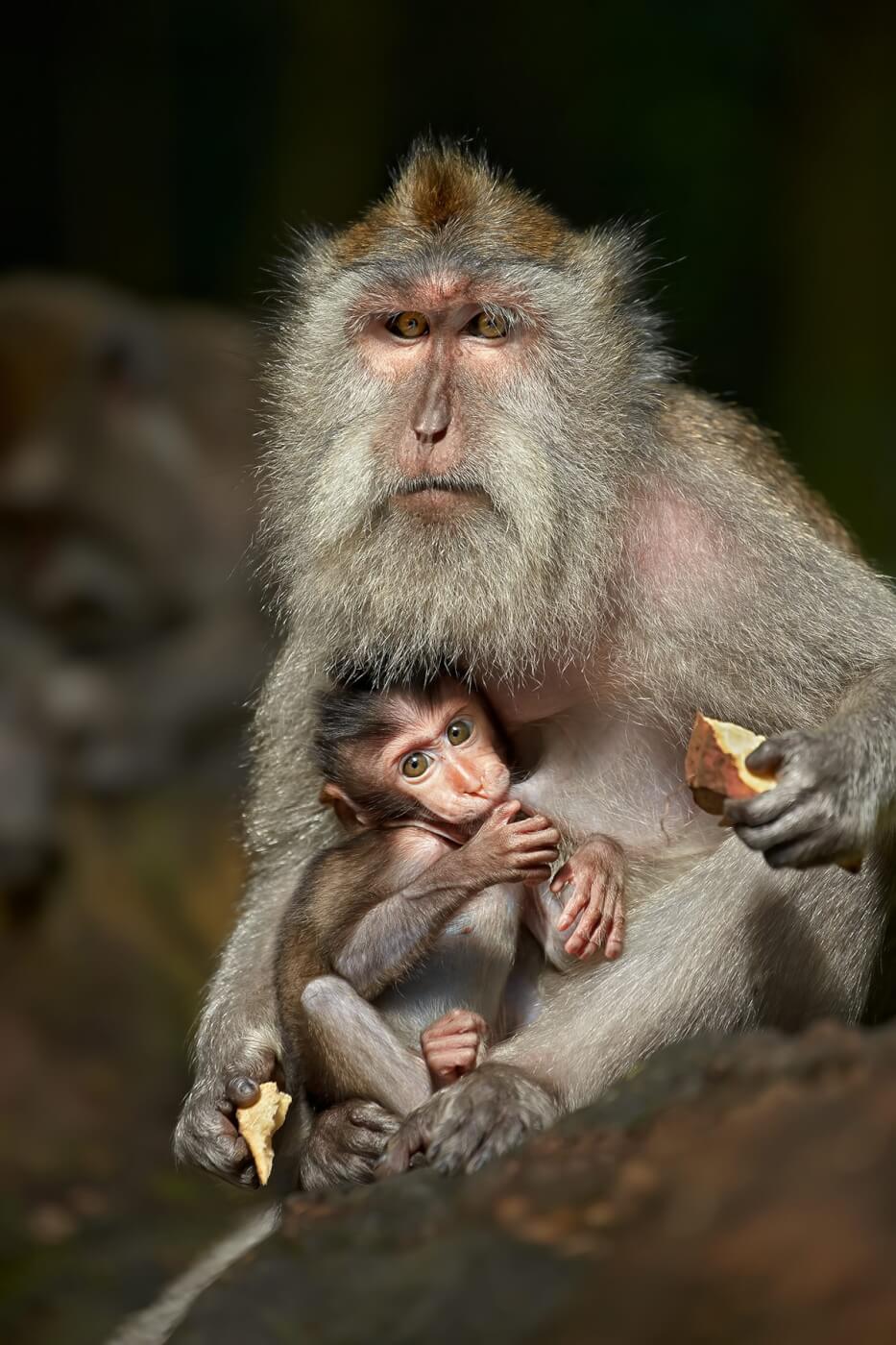
A mother and a juvenile long-tailed macaques walking into a stream

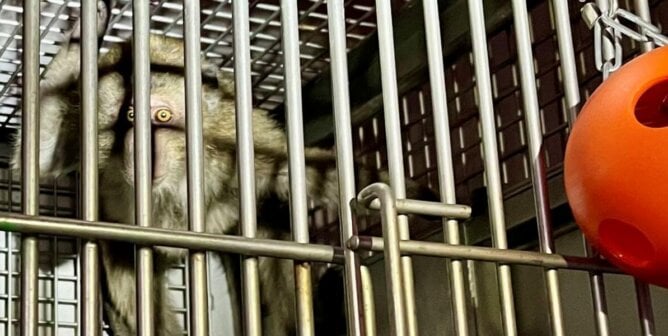
Whether monkeys have been ripped from their forest homes, often as babies, or were born on squalid breeding farms, they’re locked inside barren cages, removed from their social groups, and deprived of everything that’s natural. All suffer from chronic stress, injuries, and disease. Some die during transit, while the rest are shipped across the globe for use in gruesome and deadly experiments, spending the rest of their lives in isolation and fear.

Kindling a Public Health Disaster

Monkeys imported for experimentation are known to carry dangerous pathogens and diseases, including herpes B virus, tuberculosis, Ebola-like viruses, hepatitis, shigellosis, salmonellosis, malaria, and more.

Monkeys exported from Vietnam have been linked to tuberculosis outbreaks in the U.S. and Europe, with Vietnam-origin macaques linked to the largest recorded tuberculosis outbreak in monkeys used in laboratories. Despite the risk of transmitting dangerous diseases to humans, U.S. laboratories import thousands of monkeys each year with little to no oversight.

Governments Turn a Blind Eye

Despite public health risks and rampant fraud, U.S. biomedical research institutions and pharmaceutical companies spend millions to keep the monkey pipeline flowing.
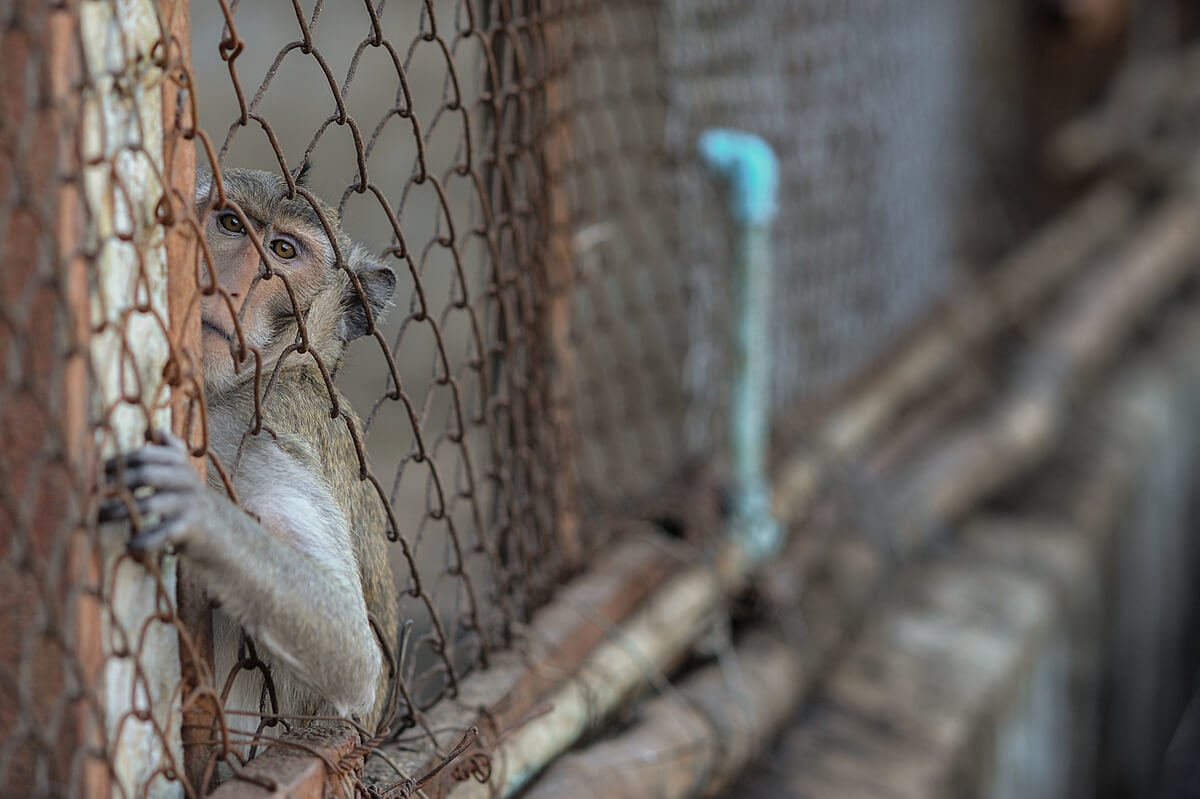
A macaque in breeding facility reaching out

Evidence of fraud in Vietnam’s official reports to the Convention on International Trade in Endangered Species of Wild Fauna and Flora (CITES), a global trade oversight body, goes back years, yet CITES leadership have failed to take meaningful action against illegal wildlife laundering. Meanwhile, government authorities in Vietnam and around the world fail to intervene.

Shut it Down

Please TAKE ACTION by urging the U.S. Centers for Disease Control and Prevention to stop the cruel and dangerous monkey-abduction pipeline:
Stop Monkey Abduction
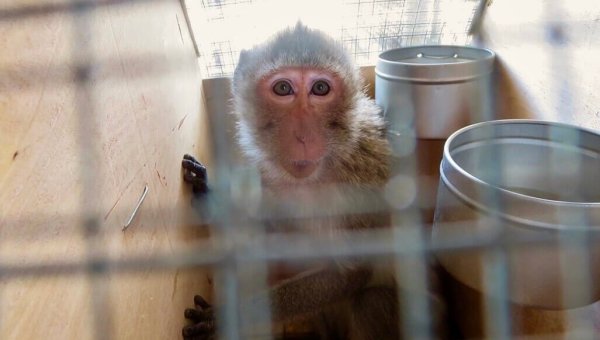
monkey in a transport crate

Related Posts
You Can’t Rebrand Cruelty: UW Primate Center’s Futile Name Change Proposal

After leaving a live baby monkey in a cooler, Washington National Primate Research Center leaders think they can solve their problems with a name change.

Take Action
February 18, 2026
Experimenters Jam Needles Into Dogs’ Spinal Cords at UMass Chan
A white and tan underweight dog
Experimenters Jam Needles Into Dogs’ Spinal Cords at UMass Chan

In a University of Massachusetts Chan Medical School laboratory, dogs endure painful procedures to create artificial aneurysms, are repeatedly sliced open, and ultimately killed.

Take Action
February 17, 2026
Oregon Primate Lab to Explore Becoming Sanctuary; PETA Praises OHSU Board
rhesus macaque in a tree
Oregon Primate Lab to Explore Becoming Sanctuary; PETA Praises OHSU Board

After intense pressure from state legislators, PETA, and thousands of Oregonians, the taxpayer-funded Oregon National Primate Research Center explores transition to a sanctuary! See how this great progress came about.

Take Action
February 9, 2026
© iStock.com/Al Carrera
JOIN US
Get urgent alerts, breaking animals rights news, and easy ways to take action for animals!
PETA bunny
This field is for validation purposes and should be left unchanged.
At least one of the following fields is required.
This field is hidden when viewing the form
Untitled

Current subscribers: You will continue to receive e-mail unless you explicitly opt out here.

By clicking, you agree to receive automated texts and calls from PETA and accept our terms and conditions. Message and data rates may apply. U.S. mobile users only. By submitting this form, you’re acknowledging that you have read and agree to our privacy policy and agree to receive e-mails from us.

Get the Latest Tips—Right in Your Inbox
We’ll e-mail you weekly with the latest in vegan recipes, fashion, and more!
Sign me up for the following e-mail:
Current subscribers: You will continue to receive e-mails unless you explicitly opt out here.

By submitting this form, you’re acknowledging that you have read and agree to our privacy policy and agree to receive e-mails from us.

Read More

“Almost all of us grew up eating meat, wearing leather, and going to circuses and zoos. We never considered the impact of these actions on the animals involved. For whatever reason, you are now asking the question: Why should animals have rights?”

— Ingrid Newkirk, PETA Founder and co-author of Animalkind

Read More
People for the Ethical Treatment of Animals
501 Front St., Norfolk, VA 23510
757-622-PETA (7382)
757-622-0457 (fax)
PETA is a nonprofit, tax-exempt 501(c)(3) corporation (tax ID number 52-1218336). CFC #11651

About PETA

  • Our Story
  • Careers
  • Why Animal Rights?
  • Victories
  • Volunteer
  • PETA Prime
  • Sign Up for E-Mails
  • Join PETA’s Text List
  • Contact PETA
  • International Publications

Help Animals

  • Urgent Alerts
  • Our Campaigns
  • Join the Action Team
  • For Students
  • For Teachers

For Media

  • Media Center
  • News Releases
  • PSAs
  • For Media: Order PSAs
  • Contact Media Team

Support PETA

  • Donate Now
  • Become a Member
  • Make a Monthly Gift
  • Make a Memorial Gift
  • Make an Honorary Gift
  • Make a Stock Gift
  • Gifts in Wills
  • What Is the Vanguard Society?
  • Membership Services
  • Gift Memberships
  • More Ways

International Sites

  • PETA U.K.
  • PETA France
  • PETA Germany
  • PETA Netherlands
  • PETA Switzerland
  • PETA India
  • PETA Australia
  • PETA Asia
  • 亚洲善待动物组织
  • PETA Latino
  • © 2026 PETA | Read Our Full Policy
  • Careers
  • Contact
  • Contest Terms & Conditions
  • Disclaimer
  • Texting Terms & Conditions
  • Privacy Policy
  • Terms of Use
  • Report Website Abuse
Next Article »
DonateDonate Now
✕Close