

PETA
Donate Now
  • Help Animals
    • Urgent Alerts
    • Our Campaigns
    • Action Team
    • Activist Guide
    • Get Active Online
    • Leaflets & Stickers
  • News
    • Features
    • Videos
    • Adoptable Animals
    • Rescue Stories
  • Investigations
    • Investigations & Rescue Fund
    • Report Cruelty to Animals
  • Animal Rights Issues
    • Animals Used for Experimentation
    • Food
    • Clothing
    • Entertainment
    • Companion Animals
    • Wildlife
  • Lifestyle
    • Lifestyle 101
    • Personal Care & Fashion
    • Food & Health
    • Recipes
    • Parents
    • Humane Home
    • Entertainment
    • Animal Companions
  • Students
    • peta2
    • PETA Kids
    • TeachKind
  • Shop
    • PETA SHOP
    • Cruelty-Free Database
    • Literature
    • PETA Shopping Guide
    • PETA-Approved Vegan
    • PETA Presents
  • About
    • Our Story
    • Our Views
    • Victories
    • Milestones
    • Volunteer
    • Work at PETA
    • Intern
    • FAQ
    • Contact Us
    • PETA Global
  • Donate Now
    • Donate Now
    • Vanguard Society
    • Tribute
    • More Ways to Support
    • Membership Services
    • Gifts in Wills
    • Corporate Partnerships
Report Cruelty to Animals
Skip to Content
PETA
Donate Now
People for the Ethical Treatment of Animals
Report Cruelty to Animals
PETA
Animals are not ours
to experiment on, eat, wear, use for entertainment, or abuse in any other way.
  • Help Animals
    • Urgent Alerts
    • Our Campaigns
    • Action Team
    • Activist Guide
    • Get Active Online
    • Leaflets & Stickers
  • News
    • Features
    • Videos
    • Adoptable Animals
    • Rescue Stories
  • Investigations
    • Investigations & Rescue Fund
    • Report Cruelty to Animals
  • Animal Rights Issues
    • Animals Used for Experimentation
    • Food
    • Clothing
    • Entertainment
    • Companion Animals
    • Wildlife
  • Lifestyle
    • Lifestyle 101
    • Personal Care & Fashion
    • Food & Health
    • Recipes
    • Parents
    • Humane Home
    • Entertainment
    • Animal Companions
  • Students
    • peta2
    • PETA Kids
    • TeachKind
  • Shop
    • PETA SHOP
    • Cruelty-Free Database
    • Literature
    • PETA Shopping Guide
    • PETA-Approved Vegan
    • PETA Presents
  • About
    • Our Story
    • Our Views
    • Victories
    • Milestones
    • Volunteer
    • Work at PETA
    • Intern
    • FAQ
    • Contact Us
    • PETA Global
  • Donate Now
    • Donate Now
    • Vanguard Society
    • Tribute
    • More Ways to Support
    • Membership Services
    • Gifts in Wills
    • Corporate Partnerships
  • Help Animals
    • Urgent Alerts
    • Our Campaigns
    • Action Team
    • Activist Guide
    • Get Active Online
    • Leaflets & Stickers
  • News
    • Features
    • Videos
    • Adoptable Animals
    • Rescue Stories
  • Investigations
    • Investigations & Rescue Fund
    • Report Cruelty to Animals
  • Animal Rights Issues
    • Animals Used for Experimentation
    • Food
    • Clothing
    • Entertainment
    • Companion Animals
    • Wildlife
  • Lifestyle
    • Lifestyle 101
    • Personal Care & Fashion
    • Food & Health
    • Recipes
    • Parents
    • Humane Home
    • Entertainment
    • Animal Companions
  • Students
    • peta2
    • PETA Kids
    • TeachKind
  • Shop
    • PETA SHOP
    • Cruelty-Free Database
    • Literature
    • PETA Shopping Guide
    • PETA-Approved Vegan
    • PETA Presents
  • About
    • Our Story
    • Our Views
    • Victories
    • Milestones
    • Volunteer
    • Work at PETA
    • Intern
    • FAQ
    • Contact Us
    • PETA Global
  • Donate Now
    • Donate Now
    • Vanguard Society
    • Tribute
    • More Ways to Support
    • Membership Services
    • Gifts in Wills
    • Corporate Partnerships
  1. Home
  2. /
  3. Features
  4. /
  5. Why Did a Diphtheria Outbreak in Alaska Lead to the Nome Serum Run of 1925?
Photo of a snowy mountain

Why Did a Diphtheria Outbreak in Alaska Lead to the Nome Serum Run of 1925?

In 1925, an outbreak of diphtheria in the town of Nome, Alaska, raised fears that an epidemic could kill thousands if antitoxin medicine were not supplied to the isolated town. The lifesaving antitoxin needed to halt the epidemic was nearly 700 miles away in Nenana. Extreme winter conditions ruled out air travel, so decision-makers made a harrowing choice: Dog-sled relay teams would transport the medicine. What unfolded became known as the Nome Serum Run, a desperate mission to save lives—but one that exploited hundreds of dogs.

How Long Was the Serum Run to Nome?

Dog-sled teams hauled the serum across nearly 700 miles of unforgiving wilderness. Twenty teams, consisting of about 150 dogs, took turns navigating icy trails during gale-force winds and subzero temperatures in a relay lasting five and a half days. These dogs didn’t run the entire route—teams handed off the serum at intervals—but the journey took a steep toll on their bodies. Many sustained injuries, and some died.

Today, the Serum Run is often romanticized, focusing on Balto, the lead dog who ran the final 55 miles. Yet this narrative ignores the dogs’ suffering and their lack of agency in the grueling ordeal. Worse, the story is frequently co-opted by proponents of the Iditarod to lend a veneer of heroism to a modern-day event that subjects dogs to even greater suffering.

Comparing the 1925 Serum Run to Nome and the Iditarod

Unlike the Serum Run, which was a one-time response to a health emergency, the Iditarod is a nearly 1,000-mile dog-sled race held annually for entertainment, cash prizes, and bragging rights. Over the past 50 years, the event has killed more than 150 dogs, and those are just the reported deaths. Dogs in the Iditarod are forced to run about 100 miles per day for up to two weeks, with many enduring exhaustion, dehydration, stress fractures, and bleeding stomach ulcers. Some collapse from aspiration pneumonia, the leading cause of death on the trail, after inhaling their own vomit.

Iditarod rules offer dogs minimal rest—just 40 hours total are required over the entire race—and they’re prohibited from taking shelter except during veterinary checks. Their only comfort is a thin layer of straw laid on the snow.

When not racing, many dogs used for sledding are subjected to appalling conditions, chained outdoors in all weather extremes with no companionship or stimulation. Dogs are forced to live in a muddy stew of urine, feces, and sometimes rotting food on a 6-foot chain attached to dilapidated doghouses or plastic barrels. Dogs who aren’t fast runners or who simply can’t run for days on end are discarded like defective equipment. Dogs used for sledding have been shot, bludgeoned to death, and abandoned to starve, and their throats have been slit.
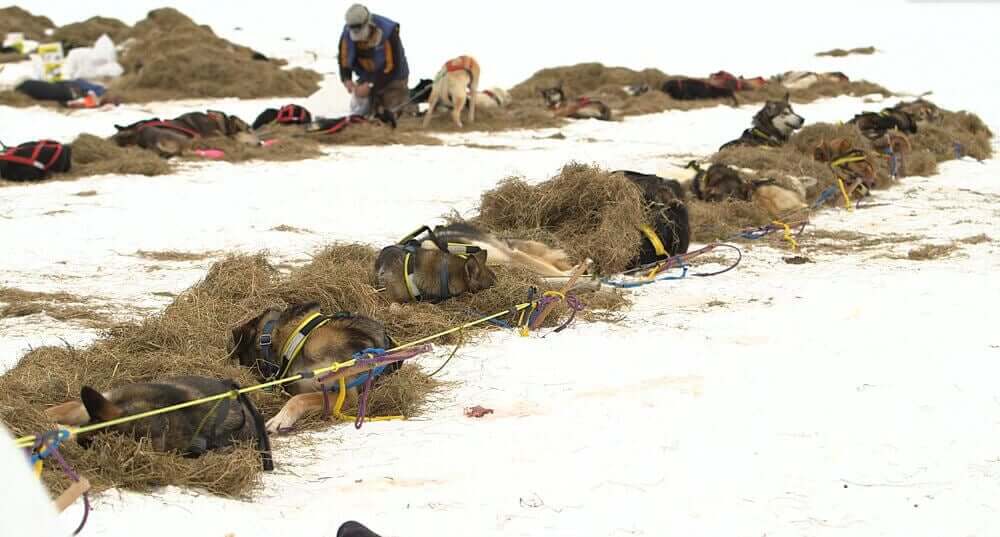
Dogs are highly social pack animals who suffer in isolation and crave and need companionship, praise, and play. They become excited when they’re around beloved human companions and get a rush of positive emotions when cuddled.
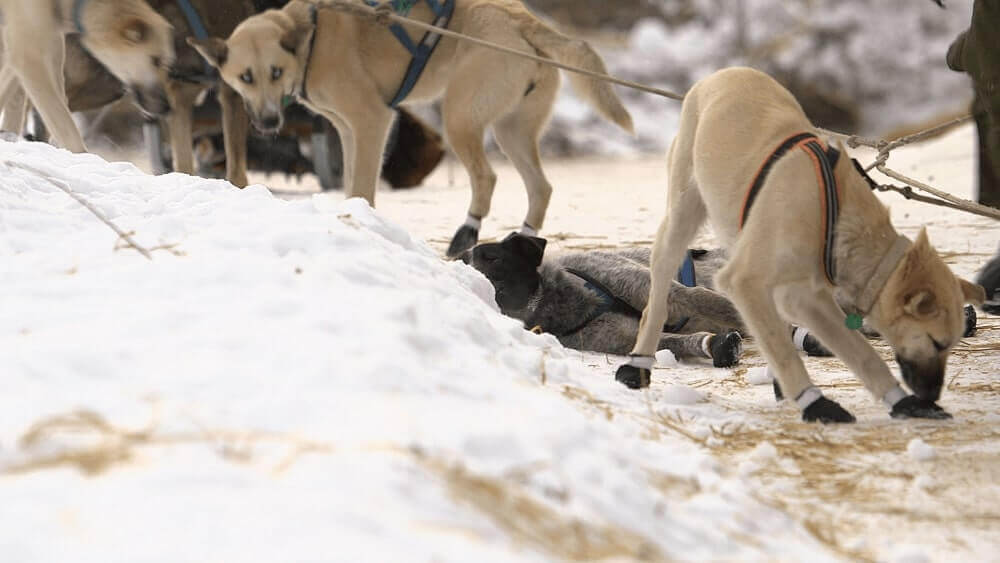
Tan dogs with wrapped paws tied in a line

The quest to find “winners” leads to a cycle of continual breeding, even though Alaskan shelters are overwhelmed with dogs who desperately need homes.

Who Was Balto?

Balto, celebrated as the “hero” of the Serum Run, ran the final 55 miles of the relay and is memorialized with a statue in New York City. His story has been popularized in movies, but the sanitized version of events ignores the plight of the dogs who suffered and died during the Serum Run—and those who continue to be exploited in the Iditarod. Instead of glamorizing the exploitation of dogs, let’s honor these animals by protecting them from deadly and pointless races.

Help Dogs Like Those in the Nome Serum Run

While we can’t help the dogs who died in the Serum Run to Nome in 1925, we can help those like them exploited by mushers today just to score cash prizes and bragging rights in the deadly Iditarod. Please urge event sponsors to cut ties with this deadly race:

Take Action Now
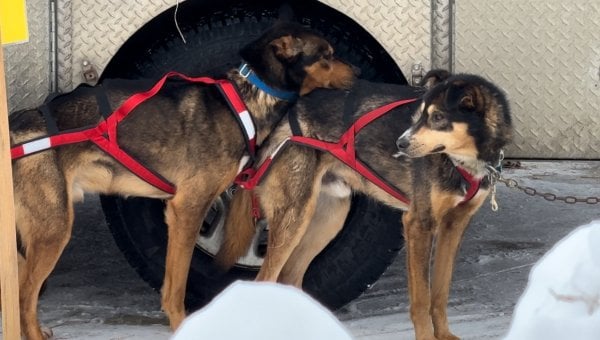
two dogs before 2024 iditarod
Related Posts
Don’t Let Punch Become the New ‘Moo Deng’: Why Internet Fame Is Bad for Captive Animals
Punch, the baby monkey, with his stuffed orangutan
Don’t Let Punch Become the New ‘Moo Deng’: Why Internet Fame Is Bad for Captive Animals

If you see videos of Punch the monkey, don’t click “share.”

Take Action
February 18, 2026
2026 Is the Year of the Horse: How PETA Is Helping Real Horses
Red colored paper cut horse on a floral background, the Chinese stamp means horse
2026 Is the Year of the Horse: How PETA Is Helping Real Horses

From exposing cruelty to pushing institutions to tell the truth, PETA is working to turn the symbolic Year of the Horse into a year of progress for horses everywhere.

Take Action
February 17, 2026
© iStock.com/exxorian
Even in SeaWorld’s Backyard, Voters Want Dolphins Out of Marine Parks
A dolphin jumping in an ocean
Even in SeaWorld’s Backyard, Voters Want Dolphins Out of Marine Parks

The tide is changing for SeaWorld, because even its neighbors are ready for change.

Take Action
February 13, 2026
JOIN US
Get urgent alerts, breaking animals rights news, and easy ways to take action for animals!
PETA bunny
This field is for validation purposes and should be left unchanged.
At least one of the following fields is required.
This field is hidden when viewing the form
Untitled

Current subscribers: You will continue to receive e-mail unless you explicitly opt out here.

By clicking, you agree to receive automated texts and calls from PETA and accept our terms and conditions. Message and data rates may apply. U.S. mobile users only. By submitting this form, you’re acknowledging that you have read and agree to our privacy policy and agree to receive e-mails from us.

Get the Latest Tips—Right in Your Inbox
We’ll e-mail you weekly with the latest in vegan recipes, fashion, and more!
Sign me up for the following e-mail:
Current subscribers: You will continue to receive e-mails unless you explicitly opt out here.

By submitting this form, you’re acknowledging that you have read and agree to our privacy policy and agree to receive e-mails from us.

Read More

“Almost all of us grew up eating meat, wearing leather, and going to circuses and zoos. We never considered the impact of these actions on the animals involved. For whatever reason, you are now asking the question: Why should animals have rights?”

— Ingrid Newkirk, PETA Founder and co-author of Animalkind

Read More
People for the Ethical Treatment of Animals
501 Front St., Norfolk, VA 23510
757-622-PETA (7382)
757-622-0457 (fax)
PETA is a nonprofit, tax-exempt 501(c)(3) corporation (tax ID number 52-1218336). CFC #11651

About PETA

  • Our Story
  • Careers
  • Why Animal Rights?
  • Victories
  • Volunteer
  • PETA Prime
  • Sign Up for E-Mails
  • Join PETA’s Text List
  • Contact PETA
  • International Publications

Help Animals

  • Urgent Alerts
  • Our Campaigns
  • Join the Action Team
  • For Students
  • For Teachers

For Media

  • Media Center
  • News Releases
  • PSAs
  • For Media: Order PSAs
  • Contact Media Team

Support PETA

  • Donate Now
  • Become a Member
  • Make a Monthly Gift
  • Make a Memorial Gift
  • Make an Honorary Gift
  • Make a Stock Gift
  • Gifts in Wills
  • What Is the Vanguard Society?
  • Membership Services
  • Gift Memberships
  • More Ways

International Sites

  • PETA U.K.
  • PETA France
  • PETA Germany
  • PETA Netherlands
  • PETA Switzerland
  • PETA India
  • PETA Australia
  • PETA Asia
  • 亚洲善待动物组织
  • PETA Latino
  • © 2026 PETA | Read Our Full Policy
  • Careers
  • Contact
  • Contest Terms & Conditions
  • Disclaimer
  • Texting Terms & Conditions
  • Privacy Policy
  • Terms of Use
  • Report Website Abuse
Next Article »
DonateDonate Now
✕Close