
How PETA Helped Shut Down Harvard’s Cruel Monkey Lab
Inside a secluded laboratory in rural Massachusetts, experimenters infected monkeys with deadly viruses, drilled implants into their heads, and strapped them into restraint chairs for hours on end. Our fellow primates died alone in their cages—forgotten, dehydrated, or too sick to survive the next procedure. For more than 50 years, Harvard Medical School’s New England Primate Research Center (NEPRC) subjected thousands of monkeys to painful experiments and systemic neglect—until PETA took action.
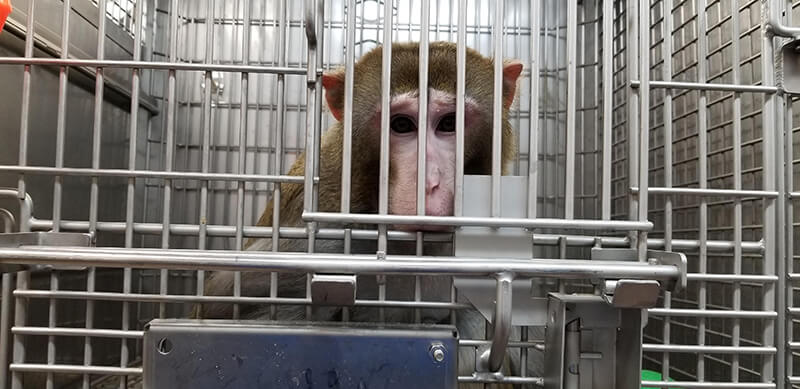
What Happened at Harvard Medical School’s New England Primate Research Center?
For the more than 2,000 Rhesus macaques, marmosets, and other monkeys imprisoned at the New England Primate Research Center, life meant experimenters jabbing them with needles, cutting their skin, and performing painful procedures. Experimenters purposefully infected some primates with debilitating diseases like simian HIV or hepatitis. Other experimenters restrained the animals and implanted devices into their bodies for “brain research.” When they became too sick to be “useful,” the workers often killed the monkeys. According to USDA inspection records and dozens of citations, the facility had filthy conditions, inadequate veterinary care, and failed to follow even the most basic animal welfare protocols, like providing access to water.
Monkeys experience pain, suffering, joy, and fear, just as you do. In nature, they live in large family groups, forming strong bonds with one another. They play, eat, explore, and hang out together. They’re also empathic, often risking their own lives to help others. Since the facility opened in 1966, all the imprisoned monkeys at the New England Primate Research Center knew was suffering.
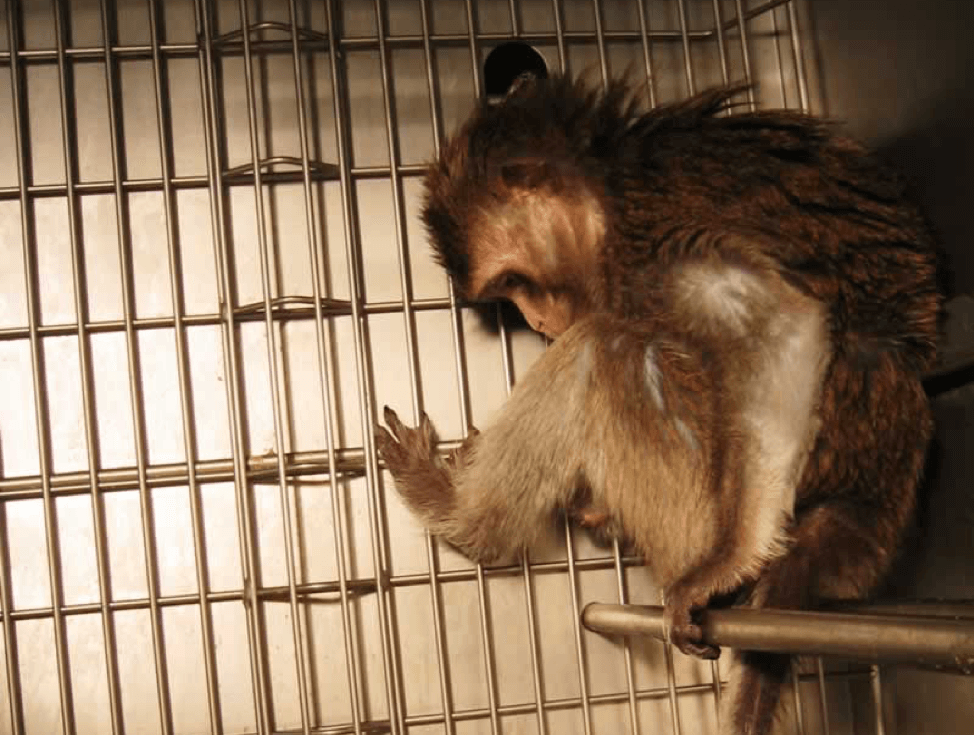
Monkeys Denied Water and Other Basic Care at the New England Primate Research Center
Experimenters at the New England Primate Research Center couldn’t even be bothered to ensure the monkeys imprisoned at the facility had access to water. According to documents obtained by PETA, at least a dozen monkeys at the NEPRC died from dehydration between 1999 and 2011. One monkey was found dead in her cage with her tooth caught in her restraint jacket, making it impossible for her to drink, and at least two others were forced to live—and die—in a cage with no functioning water line or spout at all. In response to their deaths, PETA filed federal complaints and called for criminal charges.

In June 2010, staff failed to notice an endangered cotton-top tamarin, a tiny monkey native to Colombia, inside the cage they sent to be sterilized. Although a necropsy revealed that the monkey died before being sent through the high-temperature sanitizing wash, the incident demonstrates a pattern of neglect and carelessness from staff at the facility. Other incidents, which led to the head of the facility to step down and the laboratory to briefly close in 2012, include:
- More incidents of malfunctioning water dispensers. This caused two monkeys to become dehydrated, one so severely that they had to be euthanized.
- A squirrel monkey’s leg being fractured in a cage door.
- A rhesus monkey injuring his foot while escaping a pen.
Six New England Primate Research Center Tamarins Die at Oregon Zoo
In 2014, Harvard shipped nine endangered cotton-top tamarins from the New England Primate Research Center to the Oregon Zoo. Within just two days, six of them were dead.
PETA filed a formal complaint with the Office of Laboratory Animal Welfare and submitted documents to the Worcester district attorney urging criminal charges under Massachusetts’ cruelty laws. No one could say for sure why the monkeys died, but their deaths triggered a new round of investigations and increased public scrutiny for the New England Primate Research Center.
PETA Pressure Paid Off: New England Primate Research Center Shut Down
In 2015, after years of pressure from PETA and concerned citizens, Harvard announced it would close the New England Primate Research Center. The school cited financial concerns and a shift in research strategy, but the truth was clear. The closure was not a strategic choice but a retreat in the face of growing outrage. In its 50 years of operation, NEPRC caged thousands of monkeys and subjected them to countless invasive experiments—yet most of the experiments were curiosity-driven, offering little to no benefit to human health while causing immense animal suffering. PETA’s advocacy, media outreach, legal complaints, and unwavering focus helped force one of the country’s most notorious primate labs to shut down.
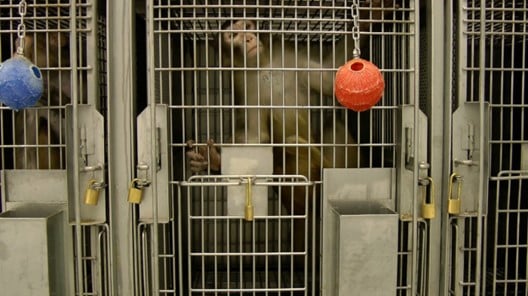
How You Can Help: No Monkey Should Ever Suffer Like This Again
The closure of the New England Primate Research Center was a landmark victory—but thousands of monkeys are suffering in laboratories across the U.S. They’re electroshocked, poisoned, cut open, and left to waste away—all in the name of “research.”
Experimenters at the seven remaining national primate research centers have tormented and killed hundreds of thousands of monkeys while siphoning billions of dollars from taxpayers for experiments that have consistently failed to deliver safe and effective vaccines or cures.
Please join our call to shut down these pits of misery:

PetSmart is ending sales of turtles, tortoises, and other animals after PETA investigations exposed how animals suffer when bought and sold.

Etsy’s new fur-free policy is a major win for animals—and a clear sign that compassionate consumers are changing the future of fashion and home goods.

Can Christians celebrate death’s defeat by being complicit in more?

